As NC maps are debated at Supreme Court, Democrats fear loss of Black political power
If North Carolina’s new political maps stand, around one in every four Black legislators in the state could lose their seats in this November’s election.
That’s part of what’s at stake in the redistricting case that the N.C. Supreme Court is now considering. Democrats and Republicans are making competing arguments about whether the maps amount to extreme and unconstitutional pro-Republican gerrymandering.
Many of the changes GOP lawmakers made to give themselves more seats in the future came at the expense of Black Democrats in Eastern North Carolina — particularly centered around Rocky Mount and Wilson — after Republicans decided to draw the maps without using racial data that would protect majority-minority districts.
“Now we have a situation where African Americans are being targeted,” said U.S. Rep. G.K. Butterfield, who grew up in segregated Wilson County and got his start in politics fighting for racial equality. “Unnecessarily targeted.”
Butterfield considers himself among those targeted, and at 75 is now retiring from politics rather than seek election in a seat that could very well flip Republican due to the new shape of the maps.
The former chair of the Congressional Black Caucus in the U.S. House of Representatives, Butterfield was a lawyer before he was a politician and helped work on a landmark U.S. Supreme Court case in the 1980s. It essentially required states with a history of racial discrimination to draw majority-minority districts — including one in Eastern North Carolina.
“It was ridiculed,” Butterfield said of their argument for strengthening Black political power. “There was nothing but laughter in the room when I presented it. But we were very serious.”
And it worked, leading to the election of Eva Clayton in 1992 as North Carolina’s first Black member of Congress in nearly a century. Butterfield has represented the district since 2004.
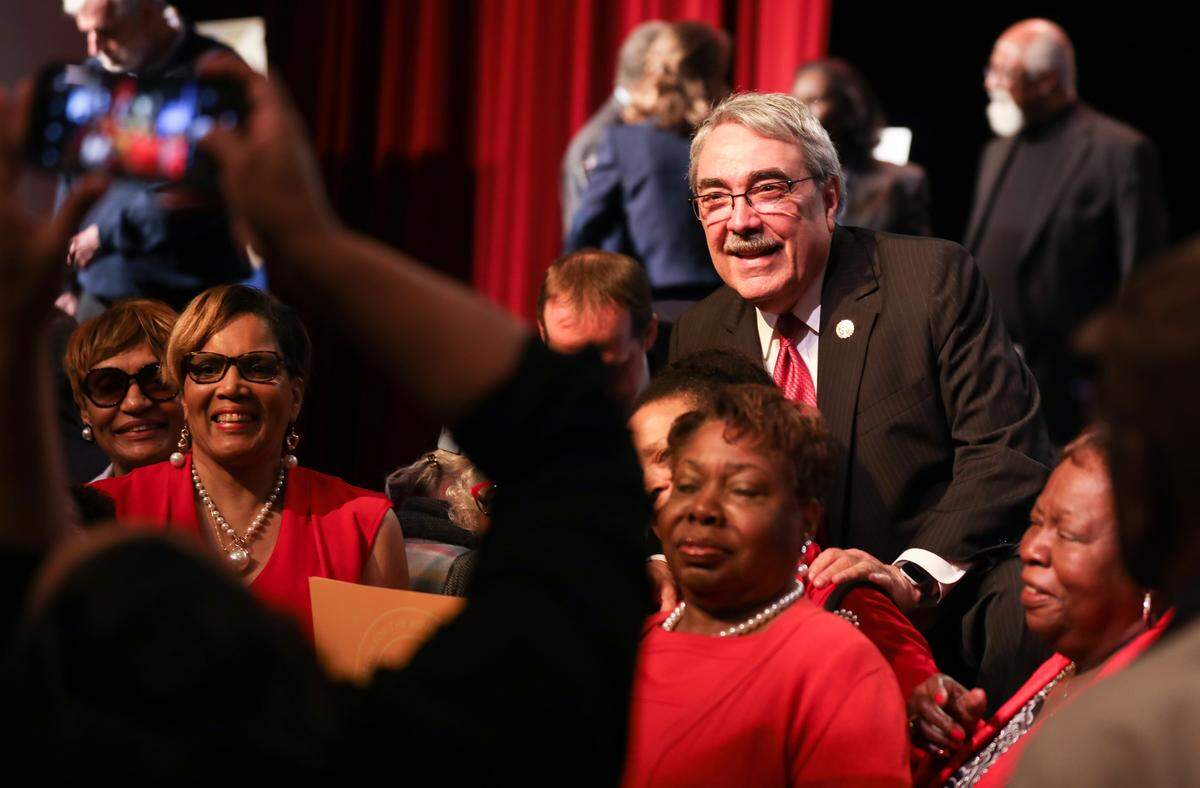
But in November when the legislature passed new maps, that district suddenly became majority-white again for the first time in decades. GOP lawmakers moved almost all of Pitt County — home to Greenville and a large number of Black residents — out of the district. They were replaced with voters from three rural, conservative counties on the Virginia border.
Between that and the new districts endangering Black members of the state legislature in the same part of the state, Butterfield — a former N.C. Supreme Court justice — said he has no doubts about how he would rule on the case if he were still on the court.
“That is unlawful,” he said. “It violates the Voting Rights Act, the state Constitution, anything you can think of. ... Black voters in northeastern North Carolina are going to be put at a disadvantage, and it’s wrong.”
No proof, Republicans say
At the trial last month, however, UCLA political science professor Jeffrey Lewis testified on behalf of Republican legislators that Black voters no longer needed majority-minority districts to elect their candidate of choice in North Carolina.
“The Black electorate yields, or has, a lot of influence over the selection of Democratic candidates in the Democratic primary,” he said. “And, because it’s quite cohesive, is able to win majorities in areas of the state where they have smaller-than-majority size.”
His report also showed that most white voters tend to oppose candidates that Black voters support.
That tracks with national trends: Black people overwhelmingly vote Democratic and most white people vote Republican.
So while Black voters don’t need a majority in a district to elect a candidate of their choice, Lewis found, they do need above-average numbers — although exactly how much depends on how much “crossover” there is in a given area, of white voters backing the candidate who Black voters also like.
The most racially divided congressional districts in the state are Butterfield’s northeastern district, Lewis’ report showed, plus the neighboring eastern district represented by Republican Rep. Greg Murphy, and Republican Rep. Ted Budd’s rural district in the central part of the state. All have less than 25% “crossover” support of white voters supporting the candidates their Black neighbors also prefer.
So the new maps that turn Butterfield’s district majority-white mean a Republican will have a much better chance at winning it than when it was a majority-minority seat. Republicans, however, said before they started drawing the maps that they didn’t believe there was enough evidence of racially polarized voting to require them to keep majority-minority districts. Democrats objected, but also never took up the Republicans on their offer to prove otherwise.
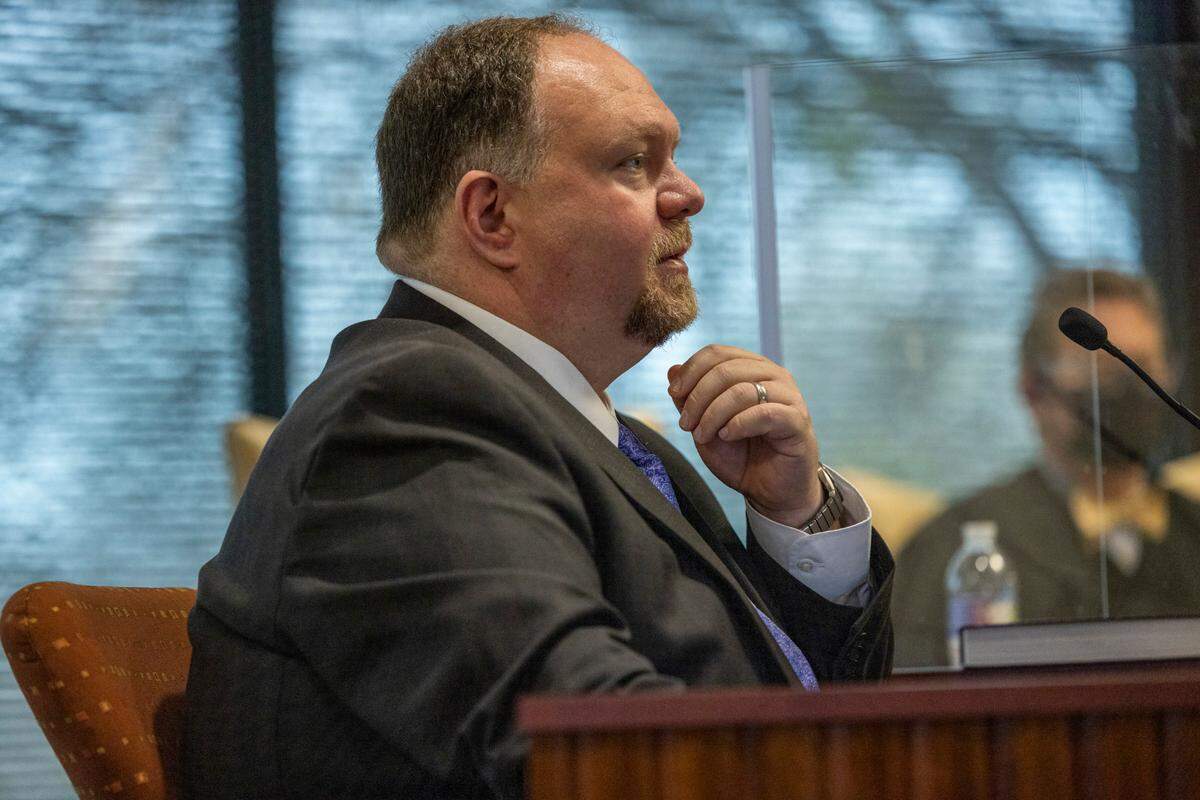
“If information does come forward regarding racially polarized voting, we will consider it,” Republican Sen. Ralph Hise, a top redistricting leader, said during one early meeting.
Democrats said GOP leaders should’ve done a study on their own, yet chose not to, because it served their political goals.
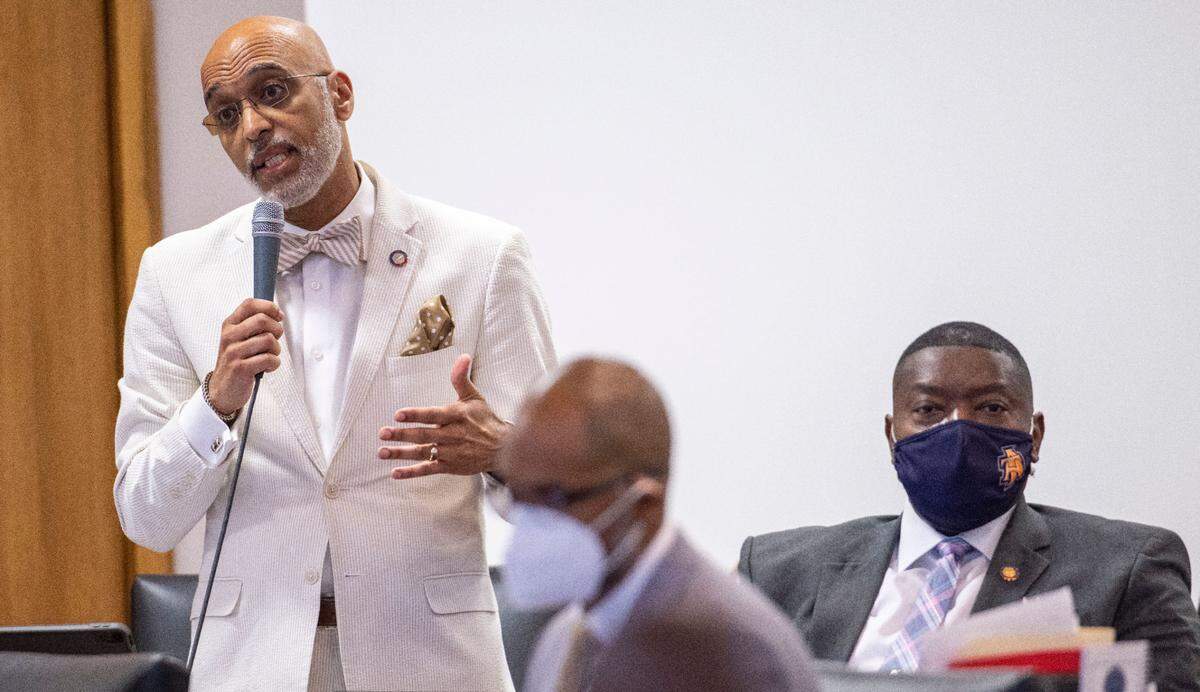
“From 1965 until this year, there were certain things you had to go through to make sure minorities could elect candidates of their choice,” said Raleigh Sen. Dan Blue, the top Democrat in the Senate. “This legislature simply decided not to do that.”
Who might lose out?
Analyses by outside groups like Dave’s Redistricting App and the Princeton Gerrymandering Project show that the following Black Democrats were drawn into new districts that are either tossups or are likely to elect Republicans in the future (listed with the counties they currently represent):
▪ Sen. Ernestine Bazemore (Beaufort, Bertie, Martin, Northampton, Vance, Warren)
▪ Sen. Toby Fitch (Wilson, Edgecombe, Halifax)
▪ Sen. Ben Clark (Hoke, Cumberland)
▪ Sen. Sydney Batch (Wake)
▪ Rep. Raymond Smith (Wayne)
▪ Rep. James Gailliard (Nash)
▪ Rep. Linda Cooper-Suggs (Wilson)
▪ Rep. Howard Hunter (Gates, Hertford, Pasquotank)
Of the state’s 170 lawmakers, 34 are Black. So these eight represent about one-fourth of the Black political power in the General Assembly.
There’s also currently only one Latino lawmaker, Rep. Ricky Hurtado (Alamance) and one Native American lawmaker, Rep. Charles Graham (Robeson). Both are Democrats, and Republicans redrew both their districts to make it more likely that the GOP will win there in the future.
A more diverse GOP?
Republican lawmakers who drew the new maps have said repeatedly that they didn’t target any of those politicians because of their skin color.
A panel of judges agreed, finding that the maps are gerrymandered in favor of Republicans but solely for political reasons. The judges upheld the maps at trial last month, ruling they are neither racially discriminatory nor unconstitutional. That was the opposite conclusion a different panel of judges reached in a similar 2019 case.
The Supreme Court is expected to issue its ruling in the case soon, following a hearing Wednesday.
And even if the maps stand and multiple Black Democrats in the newly GOP-leaning seats go on to lose in November, there’s a chance that the shift in power won’t be entirely to white Republicans.
Stephen Wiley, the NCGOP’s House Caucus director, said he has intentionally been trying to recruit a more diverse slate of candidates for the 2022 elections than the party has put forward in the past. He pointed to four seats in Eastern North Carolina — three held by Black Democrats and the one held by Graham, a member of the Lumbee Tribe — that Republicans could flip under the new Republican-drawn maps.
A Lumbee Republican, Jarrod Lowery, intends to run for Graham’s seat; Graham plans to run for Congress instead of seeking reelection. And in the three seats held by Black Democrats that Wiley identified, centered around Rocky Mount and Wilson, he said Black Republican candidates will run in at least two of the three.
“I think it’s important for people of different races to be involved at all levels of government, regardless of what their beliefs are,” Wiley said.
He added that there are parts of the map where Republican candidates might not just match Democrats’ diversity in 2022, but actually increase upon it. He pointed to an Asheville-area district, redrawn to be more Republican friendly. Democratic Rep. Brian Turner, who is white, has said he won’t seek reelection. Wiley recruited an immigrant from India, local businessman Pratik Bhakta, to run for the GOP nomination there.
“These things are important for how we continue to grow our party,” Wiley said.
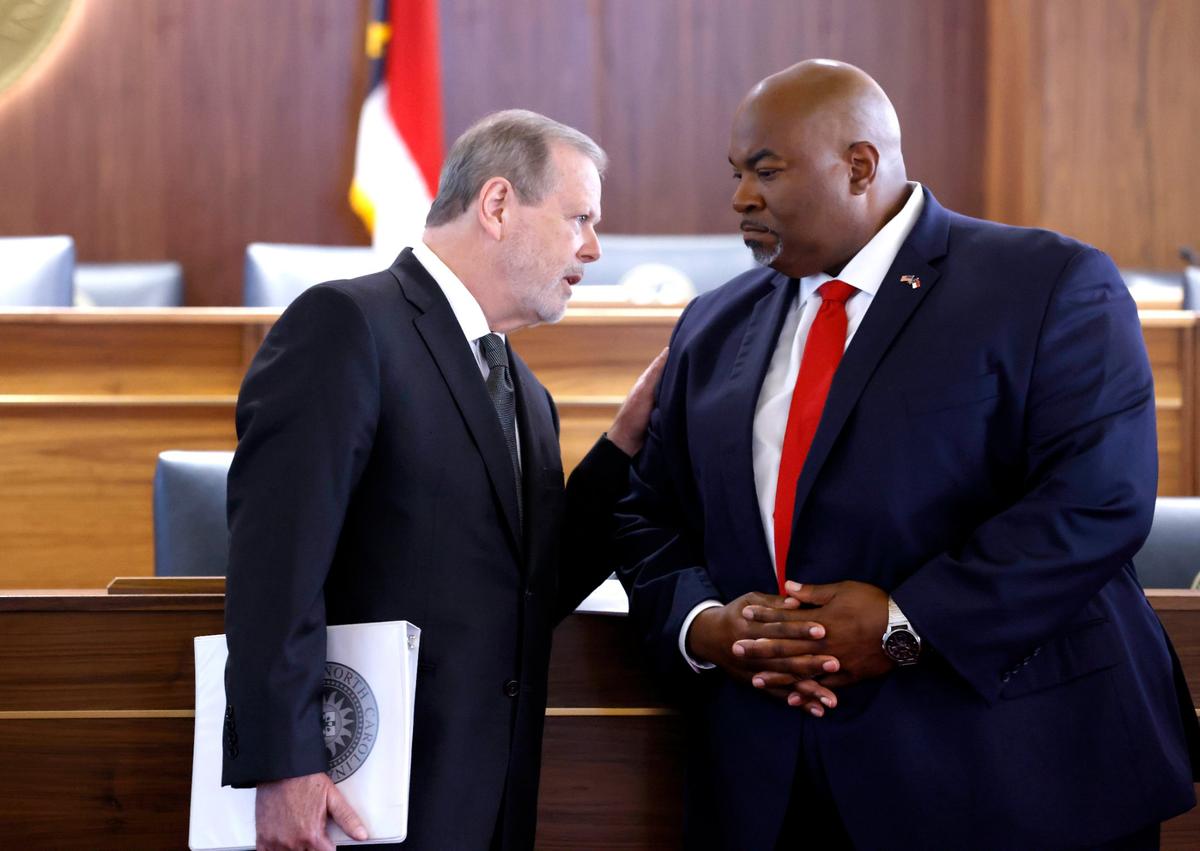
Every North Carolina Republican in Congress and the General Assembly identifies as white, in addition to most of the party’s statewide elected leaders. But there have been some indicators of change. The only Black Republican candidates to have won a statewide race since Reconstruction both did so in 2020 — Lt. Gov. Mark Robinson and N.C. Court of Appeals judge Fred Gore.
Politics and race in NC
Former Republican President Donald Trump increased his support from Black voters in 2020, winning just 5% of Black women but 19% of Black men, up from 13% in 2016, the BBC reported. And while Trump is a unique candidate who isn’t easy to copy, Wiley said, North Carolina Republicans have been trying to improve on their low level of support among Black voters.
He pointed to a series of criminal justice reforms the legislature passed in 2020 and 2021, many inspired by the murder of George Floyd. He said the protests over Floyd’s death made some Republicans realize there’s philosophical overlap between the pro-life movement and the Black Lives Matter movement.
“We’ve not had a lot of success winning over Black voters yet,” Wiley said, but he added: “We have some key similarities in that we believe that all life has value, and those who are at risk should be protected. So there are ways we can talk to these voters about the common values we have.”
But to activists like Melvin Montford, it’s impossible to look at the new maps that would oust Black Democratic incumbents from a number of seats and think that it’s just about politics, not race.
“Why did they feel like they had to do that, if it weren’t racially motivated?” said Montford, who leads the state chapter of the A. Philip Randolph Institute, a national civil rights group.
He said for Black voters who see their favored politicians losing not because of a shift in opinion but rather a shift in the district lines, it can also cause a domino effect: Many may feel disenchanted with politics in general, he said, and stop voting because they feel it doesn’t matter.
Then in the future, even if the lines do change again in a way that could give them more political power, they still may not exercise that power. That’s what he’s worried about — and what his group is trying to fight, including by hosting voter registration drives.
“That’s the scary part about this, is people look at this and throw their hands up in the air, because they act like they can do whatever they want to do,” Montford said. “It’s a threat to our democracy.”
For more North Carolina government and politics news, listen to the Under the Dome politics podcast from The News & Observer and the NC Insider. You can find it at link.chtbl.com/underthedomenc or wherever you get your podcasts.
This story was originally published February 2, 2022 at 11:00 AM with the headline "As NC maps are debated at Supreme Court, Democrats fear loss of Black political power."