
The EPA announces its ‘forever chemicals’ strategy. Here’s why it’s happening in NC
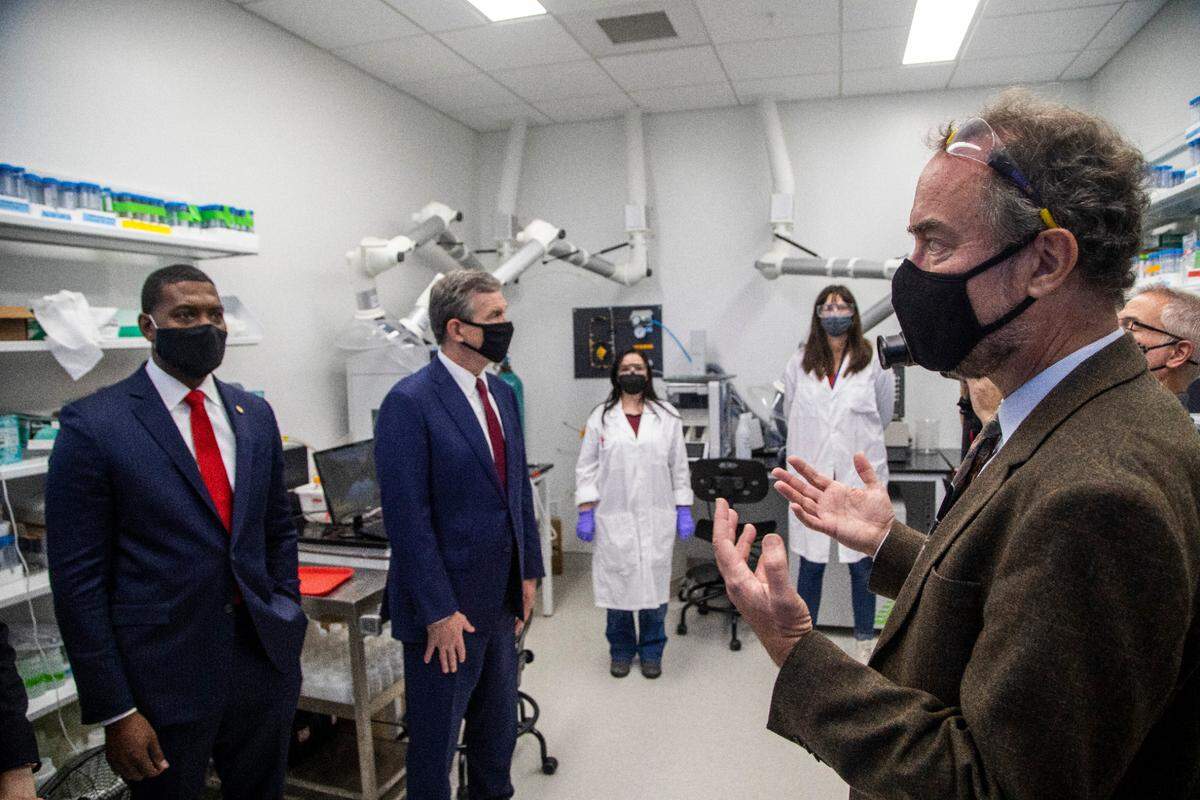
Environmental Protection Agency Administrator Michael Regan announced the Biden administration’s plan to address pollution from a persistent and widespread class of man-made chemicals during an event Monday at N.C. State University.
Frequently called “forever chemicals,” per- and polyfluoroalkyl substances — or PFAS — consist of thousands of chemicals that are used in a wide array of human activities from hamburger wrappers to non-stick pans. The same hard-to-break-down qualities that make the chemicals valuable also mean that they pose a risk to those who are exposed to them.
PFAS compounds have been detected in drinking water throughout North Carolina, from Wilmington to wells around Chemours’ plant near Fayetteville to Maysville to Pittsboro. Some PFAS compounds have been linked with health impacts ranging from increased risk of some cancers to reduced immune system effectiveness to decreased fertility. But there are thousands of compounds and many have not been studied, making regulation a challenge.
The EPA’s PFAS plan sets out to clean up existing contamination, keep additional chemicals from being released, and lead to additional research. The agency will set what it calls an “aggressive” timeline to set drinking water limits; it will designate PFAS as a hazardous substance under federal Superfund laws; and it will review previous actions the agency has taken under the Toxic Substances Control Act to find any that didn’t provide enough protection.
Additionally, the EPA will embark on a testing effort requiring manufacturers of PFAS to provide toxicity information about categories of the chemicals, with more than 2,000 chemicals grouped together by their features.
“It would take EPA decades to do this on our own at the expense of American families and the American taxpayer, but instead the polluters who are poisoning our nation’s waterways will be responsible for conducting and paying for this work,” Regan said of the testing effort during an announcement by Lake Raleigh.
EPA’s PFAS Roadmap
The first orders for toxicity information will be sent in a matter of months, Regan said, adding that he is “certain” some PFAS found in North Carolina will be among the first with mandatory testing.
Regan served as secretary of the N.C. Department of Environmental Quality from 2017 until he was confirmed as EPA administrator earlier this year. Gov. Roy Cooper, who hired Regan in North Carolina, joined him during Monday’s remarks.
“These chemicals are impacting communities all across the country, and so as I’ve been traveling all across the country, it’s been chilling to see how many stories mirror the experience we had here in North Carolina,” Regan told The News & Observer.
The EPA’s actions are based on the work of the agency’s Council on PFAS, a group of EPA experts Regan brought together in April to develop recommendations.
In his memo creating the Council on PFAS, Regan cited his experience in North Carolina. “In North Carolina, I also wanted strong federal leadership. Now, as the EPA’s Administrator, tackling this problem will be one of my top priorities. We will take meaningful action, following the science and following the law, to better understand and ultimately reduce the potential risks caused by these chemicals.”
Cooper echoed Regan’s comments about wanting additional guidance and expertise from the federal government, particularly under former President Donald Trump.
“We needed more action and more support with Washington but found ourselves disappointed time after time. Until now. Now, it’s here,” Cooper said.

‘Forever chemicals’ in North Carolina
In 2017, the Wilmington StarNews reported on an N.C. State University study that showed PFAS contamination from the Chemours plant near the Bladen-Cumberland county line was making its way down the Cape Fear River and into the drinking water of hundreds of thousands of people in Southeastern North Carolina.
Air emissions from the Chemours facility have also contaminated thousands of drinking wells around the plant. Under a consent order with DEQ, the company had to spend more than $100 million building a thermal oxidizer that would capture and burn PFAS emissions.
“What we know now is that the issue of emerging chemicals is bigger than one compound or one facility. Every day, we learn more about these compounds, their prevalence and their persistence in our environment,” said Elizabeth Biser, the secretary of North Carolina’s DEQ.
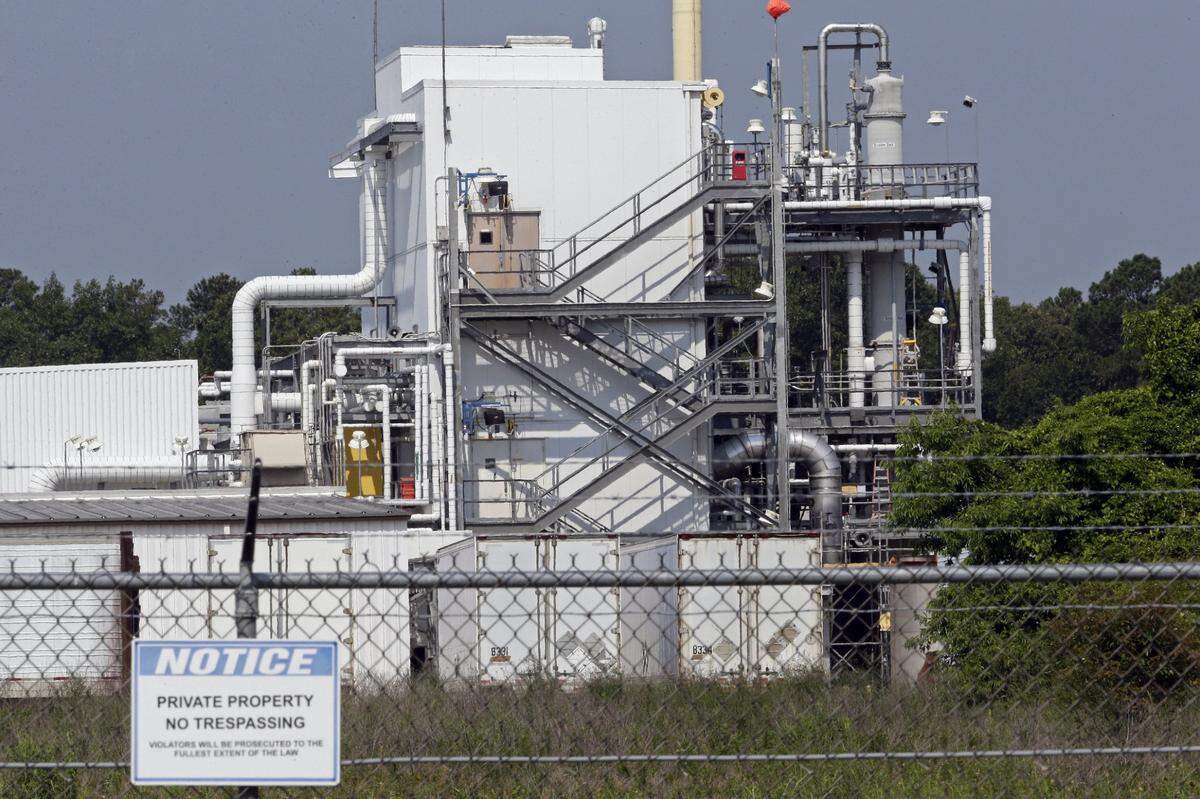
Earlier this month, DEQ hit Chemours with a $305,611 fine because the company’s GenX emissions exceeded a target of 23.027 pounds per year set out in the consent order.
PFAS chemicals have also been found in the Haw River basin, with particularly high levels in the drinking water of Pittsboro in Chatham County.
Geoff Gisler, a Southern Environmental Law Center senior attorney, said programs laid out in the road map would benefit situations like Pittsboro’s by requiring industries that likely use PFAS to limit their discharges instead of passing it through nearby treatment plants. Much of Pittsboro’s historic contamination, for example, passed through a treatment plant up the Haw River in Burlington.
“The solution to that problem is to go upstream, to go up to the industrial users, (and) treat 25,000 gallons a day instead of the 50 million gallons a day that you might have at a wastewater treatment plant,” said Gisler, who added that the EPA plan has all of the components he was hoping to see.
For North Carolina communities, particularly those around Chemours’ plant and in the WIlmington area, the EPA plan includes a toxicity assessment for GenX to identify more specifically the risks it poses. That assessment will be used to craft a federal health advisory that will be published next spring, setting the level at which a lifetime of exposure would be expected to not impact health.
The GenX toxicity assessment will be issued “in a matter of days,” Regan said Monday. If that toxicity assessment had been available in 2017, Regan said: “That would have been hugely important for us as we looked at attempting to set a drinking water standard, determine how to best protect communities and move forward as a state.”
North Carolina has set a GenX drinking water health goal of 140 parts per trillion.
Chemours was formed when DuPont split in 2015, with the company’s chemical manufacturing facilities moving under the Chemours banner. That split came shortly after the human health risks of PFOA and PFOS, two widely used PFAS, became clear and legal liabilities began to mount, a story that was captured in the 2020 film Dark Waters.
DuPont — and then Chemours — began manufacturing GenX after the public became aware of the health risks posed by PFOA and PFOS.
Under the PFAS Roadmap, EPA will set a national drinking water standard for PFOA and PFOS, the first enforceable federal regulation for any kind of PFAS. There is currently a federal health advisory of 70 parts per trillion for a combined level of PFOA and PFOS.
The agency plans to publish a draft of that rule next fall and finalize it in 2023.
Reaction to the announcement among North Carolina’s environmental groups was generally positive.
Cynthia Satterfield, director of the N.C. Sierra Club, said, “We’re pleased to see the EPA moving forward on holding polluters accountable for releasing forever chemicals into the environment. We hope this move will lead to less PFAS pollution being released into North Carolina’s water and air.”
Dan Crawford, the N.C. League of Conservation Voters’ director of government relations, noted the difference in approach between Regan’s leadership of EPA and that of his predecessors.
“Just as he did when PFAS reared its ugly head in North Carolina four years ago, Secretary Regan is taking decisive action to protect all Americans from forever chemicals and to hold corporations accountable,” Crawford wrote in a statement.
This story was produced with financial support from 1Earth Fund, in partnership with Journalism Funding Partners, as part of an independent journalism fellowship program. The N&O maintains full editorial control of the work.
This story was originally published October 18, 2021 at 10:00 AM with the headline "The EPA announces its ‘forever chemicals’ strategy. Here’s why it’s happening in NC."