
State employee raises and bonuses, extra tax cuts proposed in NC Senate budget
With a rosy economic outlook for North Carolina, lawmakers proposed a first draft of the state budget Monday, with bigger tax cuts along with raises for tens of thousands of state employees, though not as much as some might have hoped.
The budget proposal written by the Republican-led Senate is expected to get its final vote by the weekend. Then the House, which is also Republican-majority, will release its budget and the two General Assembly chambers will agree on a final version to send to Democratic Gov. Roy Cooper’s desk later this summer.
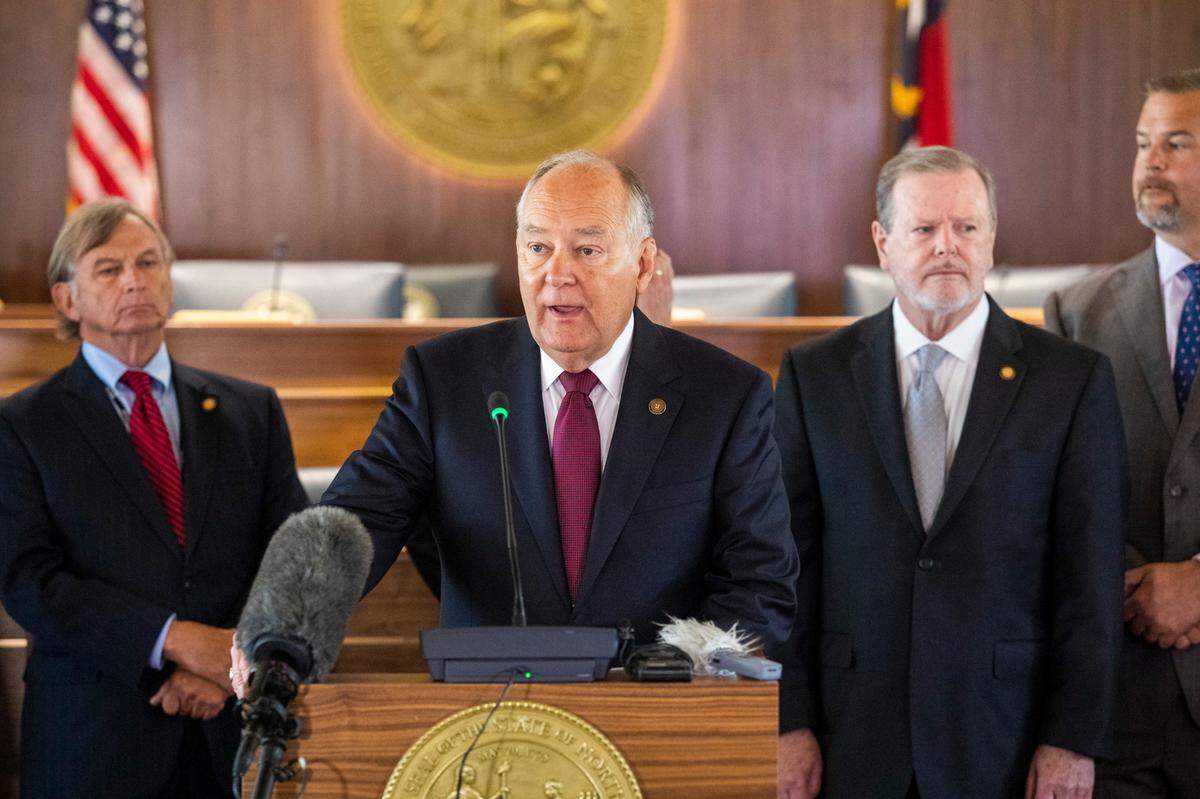
Sen. Brent Jackson, an Autryville Republican and the Senate’s head budget writer, said the budget process was more complicated this time because of greater than expected revenues and federal money from the American Rescue Plan.
Jackson told reporters that both factors “allowed us to both cut taxes on folks who need more money in their pockets right now, and also dedicated billions of dollars to infrastructure projects without taking on additional debt.”
The governor criticized some of the tax cuts in the proposal.
“Real budget negotiations will be critical because in order to have a shared recovery, we must invest in education, health care, child care and tax cuts for those who need it, not tax breaks for corporations and people making more than $200,000 per year,” Cooper said in an emailed statement.
Teacher, state employee raises and bonuses
The Senate’s proposed budget would give 3% raises over the next two years for most state employees, including teachers and UNC System and community college employees. State employees would also get bonuses, according to the proposal.
One category would get much higher raises — 7% on average for corrections officers, who will also get a newly created salary schedule based on their level of experience.
The budget calls for using federal money to pay bonuses for state employees, including teachers. State employees who earn less than $75,000 a year would receive $1,500, and those who make more than $75,000 would receive $1,000 bonuses.
There would also be bonuses of $1,500 for law enforcement, correctional officers and staff and employees of 24-hour residential and treatment facilities.
Additional bonuses across the board, using state funds, would go to teachers, who would get $300, and principals, who would get $1,800, respectively.
While some state employees received raises in the 2019 budget, teachers did not, as the budget battle stalled out between Cooper and the Republican-led legislature. Cooper’s budget proposal this spring called for 10% raises for teachers over the next two years.
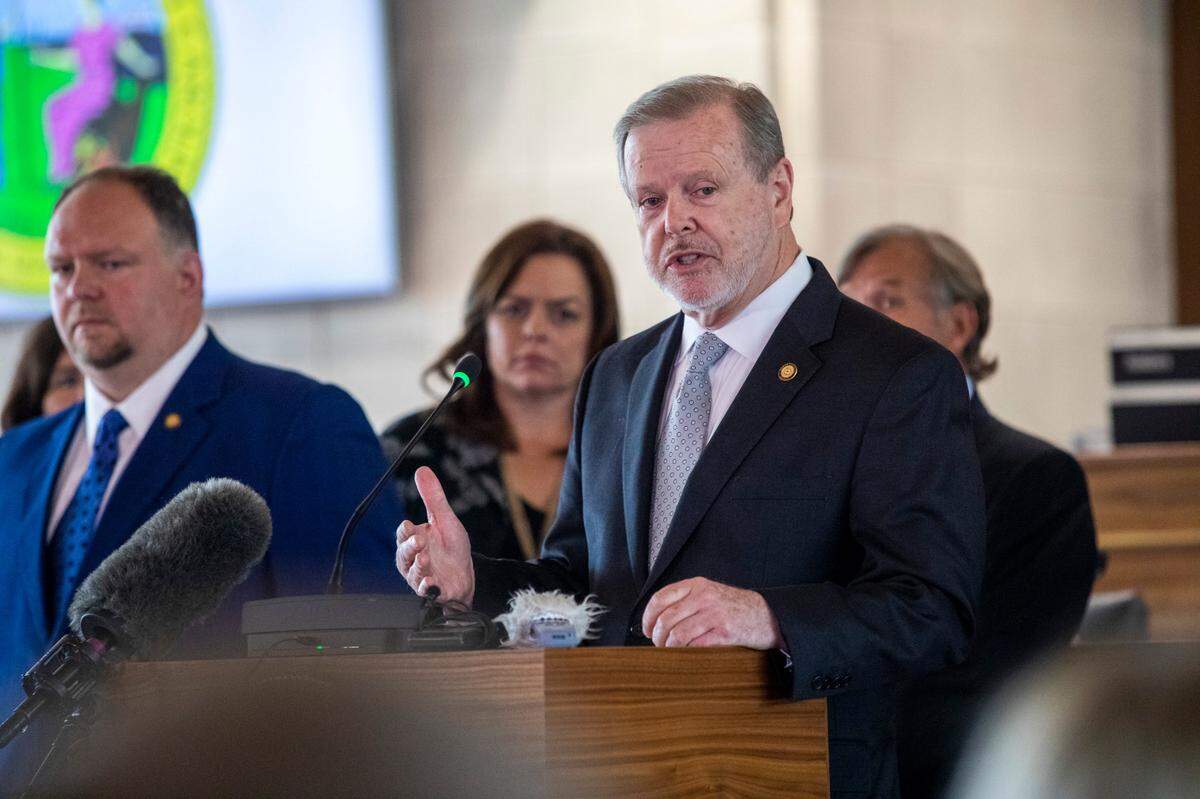
Senate leader Phil Berger, an Eden Republican, said the state has moved closer to the national average in teacher pay over the past decade.
“We quite frankly over the past two years, we made several attempts to provide larger raises, those attempts were voted against by many of the Democrats, certainly the Democrats voted against those raises when the governor vetoed those raises,” Berger said.
In January 2020, a bill to give teachers raises of about 3.9% was vetoed by Cooper, who said they weren’t high enough.
North Carolina Association of Educators President Tamika Walker Kelly said the low level of educator raises in the proposed Senate budget “shows that corporate tax cuts take priority over North Carolina students yet again.”
“When presented with an added $6.5 billion in unexpected revenue, the N.C. Senate has opted to reward North Carolina educators for working non-stop to support our students through the most difficult school year in history with a pitiful 1.5 percent annual pay raise,” Walker Kelly said in an emailed statement.
There is no cost of living adjustment for retired state employees in the Senate budget. Berger said it would fully fund the retirement plan and health fund and that “there is no ongoing promise or mandate that COLAs are provided.”
Tax cuts
The Senate previewed its budget tax plan in a bill passed last week. But the sunny new revenue forecast predicted even more money in tax collections coming into North Carolina coffers. So the tax cuts in the Senate budget are even bigger.
The budget’s tax cuts include cutting the personal income tax rate to 3.99% by 2026. The current tax rate is 5.25%, and the budget would reduce it to 4.99% in 2022.
The standard deduction, or tax bracket for paying zero taxes, would be raised to $25,500. The child tax deduction would be increased to $500 for each child. Senate Republicans said a family of four that earns the median household income would get a 37% income tax cut if the budget becomes law.
The budget also includes parts of the same tax-cuts plan the Senate already passed, including phasing out the corporate income tax entirely.
There is no taxpayer refund in the budget.
Berger said that they wanted to use the one-time money to address infrastructure needs, and that “we had the capacity to provide taxpayers with an ongoing reduction in their tax obligations.”
Democratic response
North Carolina Democratic Party Chair Bobbie Richardson said in an emailed statement Monday afternoon that the budget “puts corporations before families and tax cuts for the wealthy before investments in our communities.”
After budget documents were posted Monday evening, Democratic leaders of the House and Senate put out a joint release with statements saying that extra revenue presents an opportunity to spend more money on underfunded programs.
The debate comes as a judge has warned lawmakers they need to increase school funding to meet the state’s obligations.
“This pandemic has highlighted existing inequities, and now we have a once-in-a-lifetime opportunity to repair these faults while investing in the future of our state,” said Senate Democratic Leader Dan Blue, of Wake County.
House Democratic Leader Robert Reives said the budget proposal “falls incredibly short of what North Carolina needs at this critical moment.”
“We should be supporting our state’s small businesses, strengthening our schools, and securing access to health care. Not doing this right now is merely kicking the can down the road and ensuring economic emergencies in the future,” said Reives, of Goldston.
Senate spending
In the Senate budget, there is also $5 billion for the Rainy Day Fund, which Berger described as a cushion to handle natural disasters and other things that could come up.
The Senate’s budget would spend $25.7 billion in 2021-22 and $26.6 billion in 2022-23. The Senate and House agreed on a total spending number a few weeks ago after months of negotiations. Berger, House Speaker Tim Moore and Cooper have all said they hope to work together on getting a budget into law this year, after the 2019 stalemate that resulted in a series of “mini” budget bills.
The Senate budget also allocates $4.3 billion over the next two years to the State Capital Infrastructure Fund, which funds several building projects across the state, including the Department of Health and Human Services move from Dix Park to Blue Ridge Road in Raleigh. In the 2019 budget that failed to pass, the N.C. DHHS headquarters would have moved to Granville County. This time it stays in Raleigh.
The budget moves next to the Senate Appropriations Committee on Tuesday.
For more North Carolina government and politics news, listen to the Under the Dome politics podcast from The News & Observer and the NC Insider. You can find it at link.chtbl.com/underthedomenc or wherever you get your podcasts.
This story was originally published June 21, 2021 at 2:05 PM with the headline "State employee raises and bonuses, extra tax cuts proposed in NC Senate budget."
.jpg)