Some relief for unemployed workers in NC: Bigger state checks, more federal money
It has been six months since the Knight Theater in Charlotte closed due to the coronavirus pandemic. Six months since Charlotte Ballet’s spring show was removed from the theater. Six months since Lorenzo Mack Jr., the theater’s in-house audio engineer, has been able to work consistently.
“This is the longest I’ve been out of the theater in the last nine years,” Mack said in a telephone interview on Sept. 4.
Mack, like nearly one million North Carolina workers out of work due to the pandemic, filed for unemployment benefits.
Most recently, he applied for a pandemic benefits program and for lost wages assistance, a new $300-per-week program created by President Donald Trump when Congress failed to extend a $600-per-week federal supplement which expired more than a month ago. It is paid out by the Federal Emergency Management Agency through the states.
The federal supplement ended in July. Mack said his state benefits ended in August. He said Saturday that he is receiving both types of unemployment he filed for.
“It’s pretty scary. We do all these things right for so long and something out of our control comes along and now we have to worry,” said Mack of himself and his wife, who is still working full-time. “We’re back to this place that we clawed out of. If something bad happens, we’re in a position we don’t really want to be.”
Extra state benefits
North Carolina legislators passed a new law this month giving an additional $50 per week to everyone on state unemployment benefits.
Democratic Gov. Roy Cooper had called on the Republican-led legislature to also extend the number of weeks people can receive state unemployment benefits here, but lawmakers decided to increase only the weekly payment amount, not the number of weeks.
North Carolina, along with Florida, kick people off of unemployment faster than anywhere else in the country. Benefits stop after a maximum of 12 weeks under normal economic conditions, which is less than half the 26 weeks that most states offer. However, the extra $50 a week here will now boost North Carolina’s weekly payments up to one of the highest rates in the Southeast.
As of July, the average North Carolinian on unemployment was getting $218.20 per week from state benefits — nearly $100 less than the national average of $306.03. Neither of those amounts factor in the additional federal payments, which back then were an extra $600 per week.
The extra $50 from the state will expire at the end of 2020, but in a joint statement, Republican lawmakers Sen. Chuck Edwards and Rep. Paul Newton said it was important to get the extra money to people now.
“With a high unemployment rate, it’s not easy for someone who loses a job to go out and quickly find another one,” they wrote in a news release. “Recognizing that reality, Republicans in the House and Senate support boosting assistance for every unemployment insurance recipient by more than $200 per month.”
As of Sept. 10, the state had distributed nearly $7.6 billion in claims. That includes $1.7 billion in state unemployment insurance and $5.9 billion from the various federal programs created due to coronavirus.
New federal payments
After the previous $600-per-week federal payments ended at the start of August, more than 400,000 unemployed North Carolina workers were slated to receive the new $300-per-week payment last week.
North Carolina has received more than $492 million from FEMA to pay for four weeks of $300 supplemental payments to those who qualify.
The payments are for workers who were unemployed during the weeks ending Aug. 1, Aug. 8, Aug. 15 and Aug. 22. North Carolina is applying for additional weeks, as required by the program. It is unclear how long the program, which is allowed to tap $44 billion in FEMA money, will last.
Most estimates say the program could last four or five weeks.
“It isn’t just a replacement for the $600. It’s a different program and has different eligibility requirements,” said Kerry McComber, director of public relations for the North Carolina Commerce Department.
The new program through FEMA ends once any of the following happens: the $44 billion is spent from the Disaster Relief Fund, the total Disaster Relief Fund balance falls to $25 billion, or legislation is enacted that provides similar compensation. Otherwise, the program ends Dec. 27.
In order to be eligible for Lost Wages Assistance, unemployed workers must be eligible for at least $100 from one of several unemployment programs, including state unemployment insurance, and be unemployed or partially unemployed due to disruptions caused by the COVID-19 pandemic.
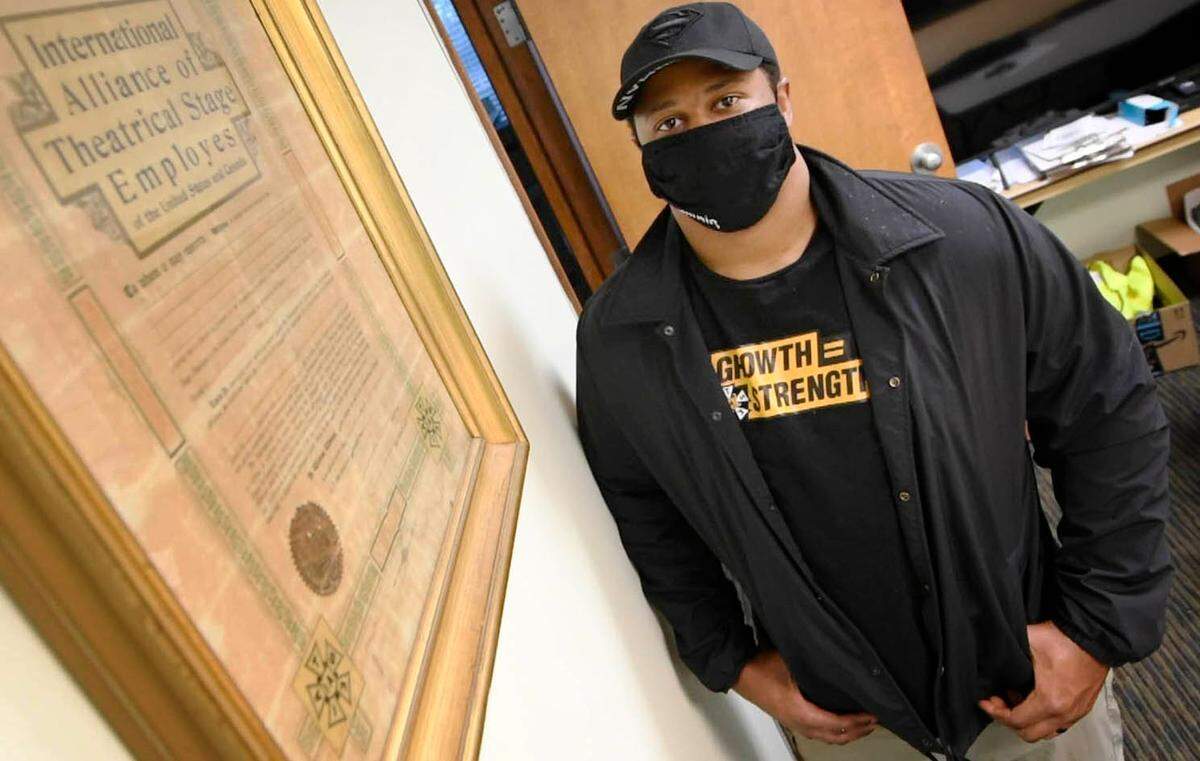
The previous $600 a week helped, Mack said.
“It was a really great boost at a time when we needed it. It definitely helped to balance out the uncertainty of what was happening and the shock of my entire industry being tanked,” said Mack, who has worked in the industry for 15 years.
Mack said he and his wife are trying to “tighten” their budget some more and he is considering looking for different work to help, but is concerned about being exposed to COVID-19.
He said that he’s angry, especially since other nations have been able to hold indoor concerts again. And fearful that the jobs available may not be able to protect workers.
“I’ve got a craft I’ve worked on and put a lot of time and studying and experience into. I don’t want to have to go out and just do something that may expose me and my wife to COVID just to get the bills paid,” he said.
The Knight Theater seats 1,191 people. Under its current Phase 2.5 rules, North Carolina allows mass gatherings of up to 25 people indoors and 50 people outdoors. The limits apply to entertainment and sports venues.
The theater is selling tickets for a show on Oct. 23 and many events in 2021. Charlotte Ballet was scheduled to perform “Sleeping Beauty” at the Knight Theater from March 13-22 and another show April 23-26.
The Republican-led U.S. Senate took a procedural vote on a so-called “skinny” COVID-19 relief package Thursday. The vote failed as expected, meaning the Senate will not take up the bill, which included a new $300 per week federal unemployment supplement program to extend and replace the current FEMA one.
Democrats, who voted against advancing the bill, said it does not go far enough in providing relief. It did not include Democrats’ requests for more money for state and local governments and $1,200 stimulus checks for many Americans. North Carolina Republicans Richard Burr and Thom Tillis voted in favor of advancing the measure.
For more North Carolina government and politics news, listen to the Domecast politics podcast from The News & Observer and the NC Insider. You can find it on Megaphone, Apple Podcasts, iHeartRadio, Stitcher or wherever you get your podcasts.
This story was originally published September 13, 2020 at 10:10 AM with the headline "Some relief for unemployed workers in NC: Bigger state checks, more federal money."