
‘Cautious’: Inside Gov. Cooper’s decisions about the state’s COVID-19 crisis
It was still winter when the coronavirus pandemic spread to North Carolina. The first case of COVID-19 was confirmed in early March. Now, six months later, the state has more than 170,000 confirmed cases and more than 2,700 deaths, but it never had the spike that some other states have had. Officials credit a “dimmer switch” approach to lifting restrictions.
On the cusp of fall, coronavirus in North Carolina has stabilized. The dimmer switch is clicking up, slowly. All summer long, Gov. Roy Cooper gave weekly updates via news conferences. Dr. Mandy Cohen, secretary of the North Carolina Department of Health and Human Services (NCDHHS), explained the statewide data. They told reporters — and therefore everyone else — how North Carolina was doing and how the state was going to continue to slow the spread of coronavirus.
That’s what the public sees. But what’s happening off-camera? Who makes the final call on the statewide orders that impact millions of people? How often does Cooper talk to the White House, and what was his team surprised to find out?
In exclusive interviews with The News & Observer, Cooper, Cohen and Emergency Management Director Mike Sprayberry talked about their jobs and decisions.
While Cooper’s administration has been criticized by Republicans as reopening too slowly, others think some mandates didn’t come soon enough.
Cooper is in his first term as governor and is being challenged in the 2020 elections by Lt. Gov. Dan Forest.
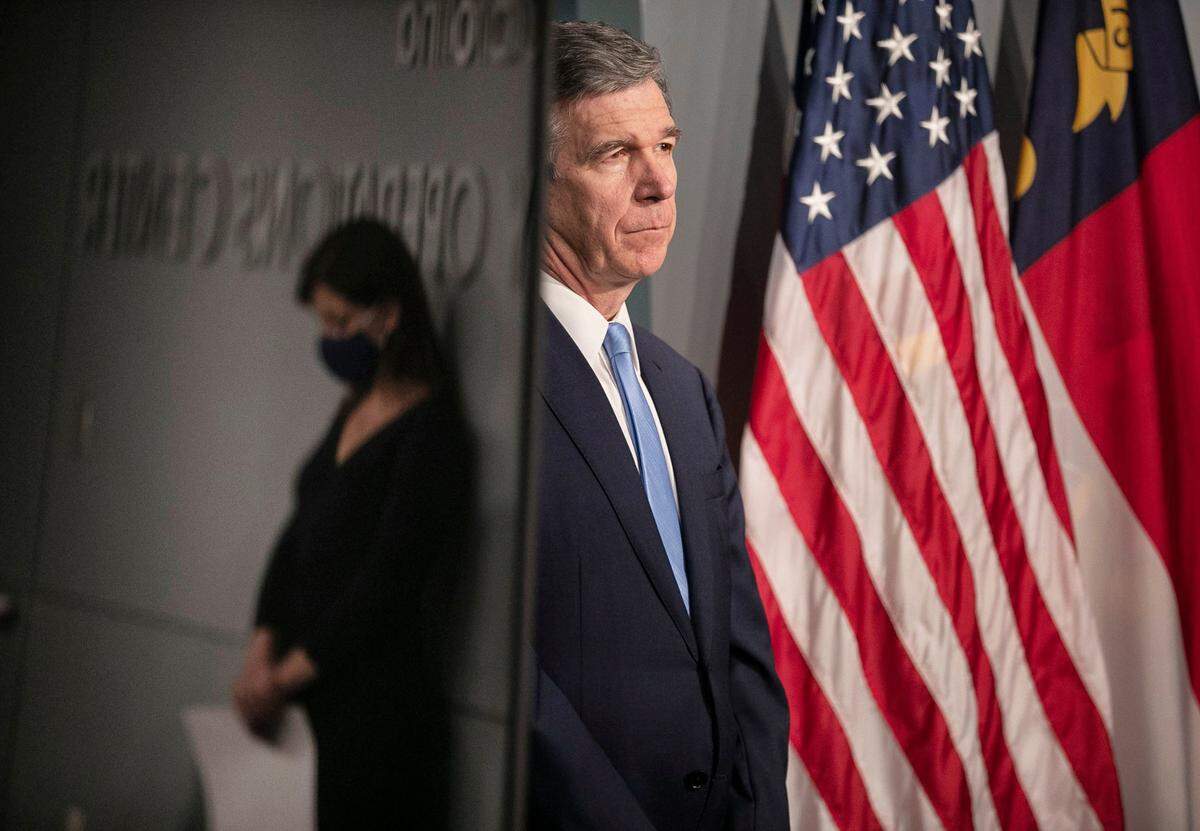
NC, states and feds
North Carolina joined most states across the country that were ordered by governors to stay home in April. Some of those orders, including North Carolina’s, extended into May.
Cooper, a Democrat, and several Republican governors from states including Ohio, Tennessee and Texas, went the same route. Some Democratic governors closed schools and issued stay-at-home orders sooner and for longer periods, like Gov. Ralph Northam of Virginia, but reopened faster than North Carolina once the orders were lifted. Other states’ governors left it mostly up to local governments to issue orders. In Georgia’s case, the governor tried to stop local orders.
Cooper and other governors are on weekly calls with the White House. Sometimes President Donald Trump or Vice President Mike Pence are on the call, and usually Dr. Anthony Fauci and Dr. Deborah Birx. Cooper said the picture they get from the White House has been rosier than what he has seen on the ground.
“The frustrating part of this, is particularly in the area of testing and personal protective equipment — if we governors had known there was not going to be a strong federal, national strategy like in these other countries, we would have gotten together as governors and leveraged our own buying power earlier in this process,” Cooper said in a video and phone interview with The News & Observer on Aug. 28.
“We were often competing with each other for testing supplies and personal protective equipment because of a lack of a federal strategy. And so governors had to step up and make these hard decisions about putting restrictions in place about a mask mandate and trying to put out as much testing as we possibly could,” he said.
Nursing homes
While state leaders were trying to ramp up testing availability for everyone, widespread testing in nursing homes did not come soon enough for some.
Cooper issued his first executive order around nursing homes in March, restricting visitors, with more to follow. However, after Pence said in May that both staff and residents in the facilities should be tested, by June that wasn’t happening in North Carolina. A DHHS initiative started in late June opened up testing. In early August, Cohen said that the state would require and pay for testing of nursing home staff through November.
Lauren Zingraff, executive director of Friends of Residents in Long Term Care, which is based in Raleigh, said the group was pleased with an announcement from Cohen recently allowing outdoor visitation for nursing homes.
“The easing of visitation restrictions has been our number one priority for months. We are grateful for NC DHHS to have taken this important first step,” Zingraff told The N&O in an email Wednesday. She said that it is up to long-term care facilities to decide if outdoor visitation will occur, however. She said other important steps by the state in controlling COVID-19 in long-term care include the recent move by DHHS to mandate biweekly testing of nursing home staff.
“Friends of Residents, along with other advocacy groups, had asked for universal testing since March of this year,” Zingraff said. She said that while advocates’ requests were delayed, they appreciate steps being taken now.
A lawsuit filed by the N.C. NAACP and other groups claims that Cooper, N.C. Department of Public Safety Secretary Erik Hooks and others aren’t doing enough to protect the state’s 31,000 people in state prisons. A judge might appoint a “special liaison” to help the state reduce COVID-19 risks in prison after a hearing last week, The N&O reported.
‘Stabilized numbers’
Cooper said in making decisions for North Carolina, he talked to other governors and looked at what other states were doing about reopening and restrictions.
“We had to look at North Carolina specifically and what was happening on the ground here in order to make our decisions, and our number one effort was to slow the spread of the virus, and we made those hard decisions in order to do that,” Cooper said.
“And I think we do have stabilized numbers now, and I think that we have been cautious about moving from Phase Two because we want to make sure that we slow the spread of the virus. What’s important too is that everybody has a personal responsibility here.”
That personal responsibility means the message his administration has been repeating for months: wearing a mask, social distancing at least 6 feet and washing your hands.
Cooper has left it mostly up to local law enforcement agencies to enforce statewide mandates. He has said that requiring masks in stores is good for business.
“It’s irresponsible for people not to take steps that would save the life of a member of their family or even people that they don’t even know. These executive orders were put in place to bolster the efforts, and I’ve been proud that so many North Carolinians have done the right thing despite the bad examples of some of the leaders in the state,” he said.
Cooper didn’t name those leaders, but Forest has campaigned without wearing a mask and some Republican state lawmakers did not wear masks in public after the city and state mask mandates.
Who makes the call?
The decision-making process is layered. Cooper told The N&O that he is the one who makes the final call on what goes in his orders. He is briefed daily in meetings that sometimes last hours. He is still reading reports before going to bed each night and brings questions to the morning briefings he has with Cohen, Sprayberry and others.
Cohen and Sprayberry have their own quick meeting every day at 8:15 a.m., either in person or by phone or video.
Cohen has two deputies who filter the workflow, but the “science and data” she and Cooper mention so often in news conferences comes from hundreds of people, sometimes thousands. Those morning meetings include the latest numbers, trends and outbreaks overnight. Cohen described the meetings as the “ready, set, go” for the day.
While Cooper’s news conferences are now usually held weekly, Cohen appears before cameras more often. Before a recent morning phone interview with The News & Observer, Cohen was editing her remarks for a news conference later that day.
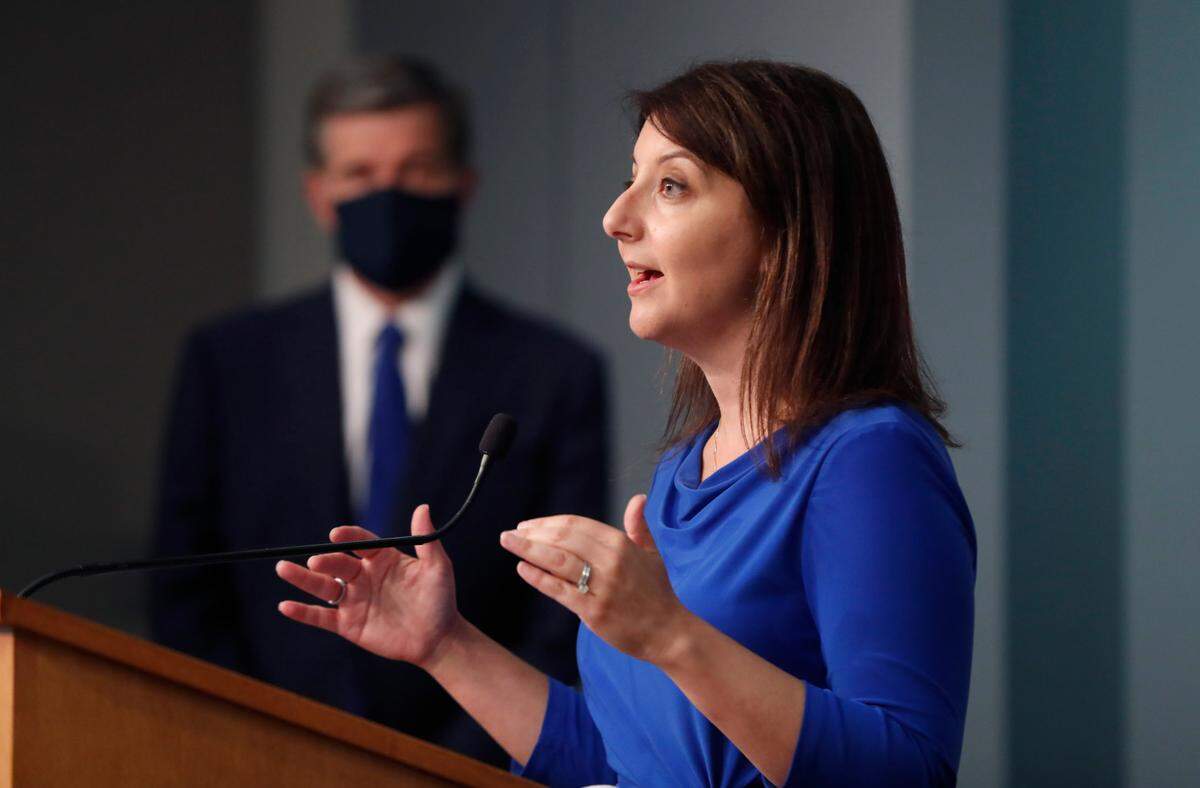
But first, she and Sprayberry were set to brief Cooper, who she describes as “very involved in the day-to-day.” Cohen said that Cooper usually has a lot of questions. Those meetings happen mid-morning, usually by conference call.
Sometimes the meetings last hours. Sometimes they happen twice a day, and on weekends, too.
Mondays are their weekly long meetings with Cooper, when they spend more time on a particular topic, like vaccines or schools. Some days Cohen meets with Cooper three or four times depending on what’s happening.
Sprayberry said he, Cohen and Dr. Betsey Cuervo Tilson, the state health director and DHHS chief medical officer, meet again every day in the late afternoon with some of their staffs. They look at hospitalizations and capacity, PPE supply and percent positive tests. They talk about strategies, vaccines and potential treatments.
“We’re dealing with a lot of smart folks here, so it’s great to be part of a team who’s passionate and so smart,” Sprayberry said.
This isn’t the first time Sprayberry has worked extensively with Cohen, who became DHHS secretary in 2017.
“I knew she was a force to be reckoned with back during Hurricane Florence,” Sprayberry said. He said she brought her team to the emergency operations center.
“I’m proud of her to be the lead in this response. I think she knows what she’s doing. I think she’s very intentional about her approach. She can make a course correction about moving forward,” he said.
She described what they mean by decisions being guided by science and data.
“Science means me and my team bring him the science to lead these decisions. That has been our north star. Now, we learn new things as we go,” Cohen said, and tailor the response.
NC strategy
Cohen said she repeats the three Ws — wear a mask, wash your hands, wait 6 feet apart — so often people can hear it in their sleep. But there’s a reason for that.
“We know repetitiveness is what changes behavior,” Cohen said. “COVID time is feeling like we’ve lived 60 years in six months, but we’ve moved and changed human behavior so rapidly.”
She said they’ll look at the spread of coronavirus cases, wait the cycle time to see how much that changes overall numbers of cases, hospitalizations and deaths, and then do it again.
Phase Three reopening was postponed for weeks as universities and K-12 schools reopened. After multiple COVID-19 clusters at UNC-Chapel Hill and other campuses, some colleges switched to online-only classes. The majority of K-12 schools in the state started the year remotely.
Cohen said cases spiked in some other Southern states and credits state government’s approach for avoiding that in North Carolina. They were able to hold steady on cases while other states didn’t, she said.
The Harvard Global Health Institute found a summer surge in Southern states’ coronavirus cases and deaths was from relaxing restrictions “too soon.”
All summer, Cohen and Cooper talked about lifting restrictions as being like a “dimmer switch.” In an interview, Cohen said they are most concerned about the virus spreading in bars, so that’s why those were closed. Grocery stores weren’t, she said, because though they present a risk, people still need to get their groceries.
“Each activity has a risk — how many risky things do you do all at the same time?” she said.
Asked if she would have done anything differently for the state’s response, Cohen said they are making decisions with the evidence and data they have at that moment in time.
“I don’t think it’s fair to Monday morning quarterback a pandemic,” she said.
“I feel very proud of the work that we’ve done. Are we perfect? No. We’re in a pandemic, we’re in a crisis,” Cohen said. “I’m very proud and I think the numbers show we’ve done very good work in North Carolina.”
Cohen did say that there are challenges in the state’s data collection system, which she described as decentralized so at first there wasn’t a way to collect lab data about testing.
“Remember we had no PPE in April, we had no tests in April. So we’ve come a long way,” she said.
The lack of a national PPE supply took Sprayberry by surprise.
“I think one of the things that I would have done a little bit differently is I had made an assumption about just how much PPE was in the strategic national stockpile. Nobody has good visibility ... but you make an assumption: OK, this is the United States of America, the strategic national stockpile preparing for a pandemic would be ready to put it out,” he said.
He said that looking back as an emergency manager, the way he looks at any threat is to study it better. He would have looked at how the state could “hold the fort” until the federal government was ready. Sprayberry said they are now planning a state strategic stockpile of PPE.
Sprayberry said it is bewildering to him why some people don’t follow guidance on social distancing, face-covering and hand washing and don’t value taking care of themselves and others.
“I wonder why people aren’t more serious about it. You can be riding around and see people mixing it up. I have not been to a restaurant since this whole stuff started, and I’m not going to. I want to make sure to minimize the chance of me to get it.
“I’m an optimist. I‘m ever hopeful there will be a well-vetted vaccine,” he said.
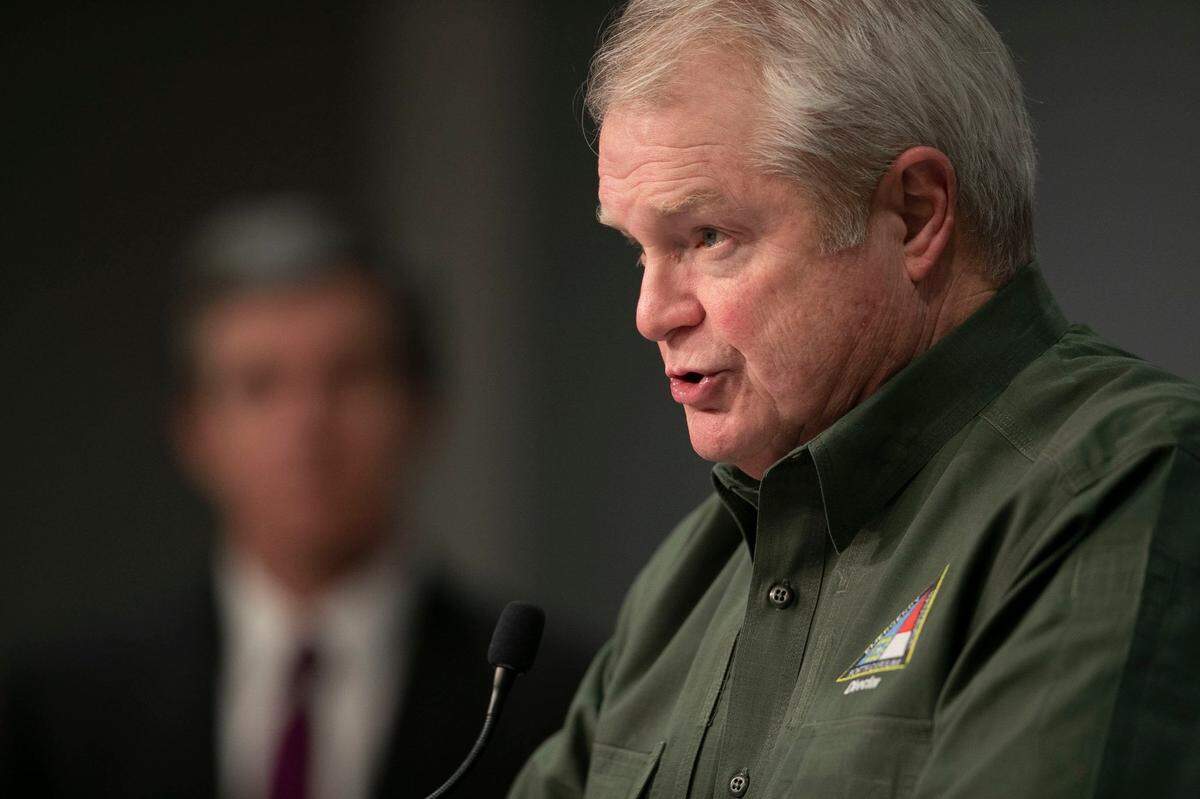
Sprayberry said he has not been tested for COVID-19. Cooper said he has been tested once. It was after he was criticized this summer for briefly removing his mask outside the Executive Mansion around protesters.
He made no apologies for that.
“I wear my mask,” he said. “I went out that day to talk to people who were protesting in front of the mansion, briefly, and I think it’s important that we listen to all voices now in this very tumultuous period of time where we live. I think it’s absolutely critical that leaders listen and act accordingly.”
What former NC governors say
Former Gov. Jim Hunt, a Democrat, described Cooper’s handling of coronavirus as “measured.”
“He keeps learning. He doesn’t hurry up and make mistakes. A lot of people criticize him for not going faster,” Hunt said in a phone interview with The N&O. Hunt said that Cooper learns every week from the latest data.
“But you know, Roy Cooper takes his time, like a good lawyer and good judge should. I hope I would have handled it as well. I’m apt to jump off on things quicker. He’s a judicious person,” Hunt said.
Hunt said that smart people generally know how little they know. Cooper is smart but doesn’t think he knows everything, Hunt said.
Cooper defeated incumbent Republican Gov. Pat McCrory in a squeaker election in 2016. McCrory considered challenging Forest in the 2020 Republican gubernatorial primary, but decided he “just wasn’t ready to re-enter the field,” he said in a recent phone interview with The News & Observer. McCrory hosts a radio show.
He told The N&O he thought in the first month of the pandemic that Trump and all the governors would just be winging it.
“All leaders at the federal and state level are dealing with things that they never have before,” McCrory said in a phone interview.
“My constructive criticism is he has been secretive, not quite transparent and has gone solo. It didn’t seem to be a team approach except maybe with Mandy Cohen,” he said. McCrory also said there is an inconsistent policy, like allowing certain businesses to open while keeping places like gyms closed.
“I think everything should be open with guidelines. With reasonable and clear guidelines, and an inclusive team being involved in those decisions,” he said. McCrory wants both the public and private sector at the table in public meetings to decide executive orders.
“The major focus from the very beginning should be protecting those most vulnerable from dying from this virus,” McCrory said. He said resources should target nursing homes and those with underlying conditions like obesity or diabetes, and that restrictions should be directed at them.
Lifting restrictions
Cooper told The N&O that making decisions on executive orders “isn’t about making people happy,” but rather protecting the health and safety of North Carolinians.
When the General Assembly made its first round of decisions on how to spend federal CARES Act funding for COVID-19 relief, Cooper was joined by House and Senate leaders from both parties. His decisions in the spring received bipartisan support.
But the state legislature’s summer session included reopening bill after reopening bill — which Cooper vetoed — and calls from Republican Council of State members for more transparency and a say in decisions. Forest, Cooper’s Republican opponent for governor, filed a lawsuit over the orders. But a Superior Court judge decided against Forest, and Forest dropped the lawsuit.
Republicans in the state legislature have balked at finding out about the latest executive orders when everyone else does, too. On the Council of State, Republican members have asked for more briefings and discussions. State Treasurer Dale Folwell invited other council members to meet in person, socially distant, even though Cooper’s office planned the meetings to be remote only. State Superintendent Mark Johnson joined Folwell for the July meeting.
Steve Troxler, the Republican agriculture commissioner running for reelection, said in an N&O candidate questionnaire that “at the very least I would like to see more information passed on to the Council of State members before decisions are released to the public.
“Thus far we have had to depend on media reports to ascertain that decisions have been made,” Troxler said.
Cooper said there is a combination of factors leading to the timing of executive order announcements.
“Our staff contacts businesses that are going to be affected and talks to them, and in addition we’re trying to make sure that all the legal aspects are covered correctly. We want these orders to be effective at slowing the spread of the virus,” he said.
On Monday, Cooper issued an executive order that extends the 11 p.m. alcohol sales curfew in restaurants through September. It is now set to expire Oct. 2. Bars are still closed. However on Tuesday, Cooper lifted some restrictions on businesses and crowd size. Calling it Phase 2.5, Cooper reopened playgrounds. He also reopened museums and aquariums at 50% capacity, and gyms at 30% occupancy. He brought that same phrase back, about the dimmer switch.
“We’re encouraged but cautious. Stability isn’t victory,” he told reporters.
This story was originally published September 3, 2020 at 1:35 PM with the headline "‘Cautious’: Inside Gov. Cooper’s decisions about the state’s COVID-19 crisis."
.jpg)