A divided NC Elections Board narrowly approves newly ‘tweaked’ voting machines
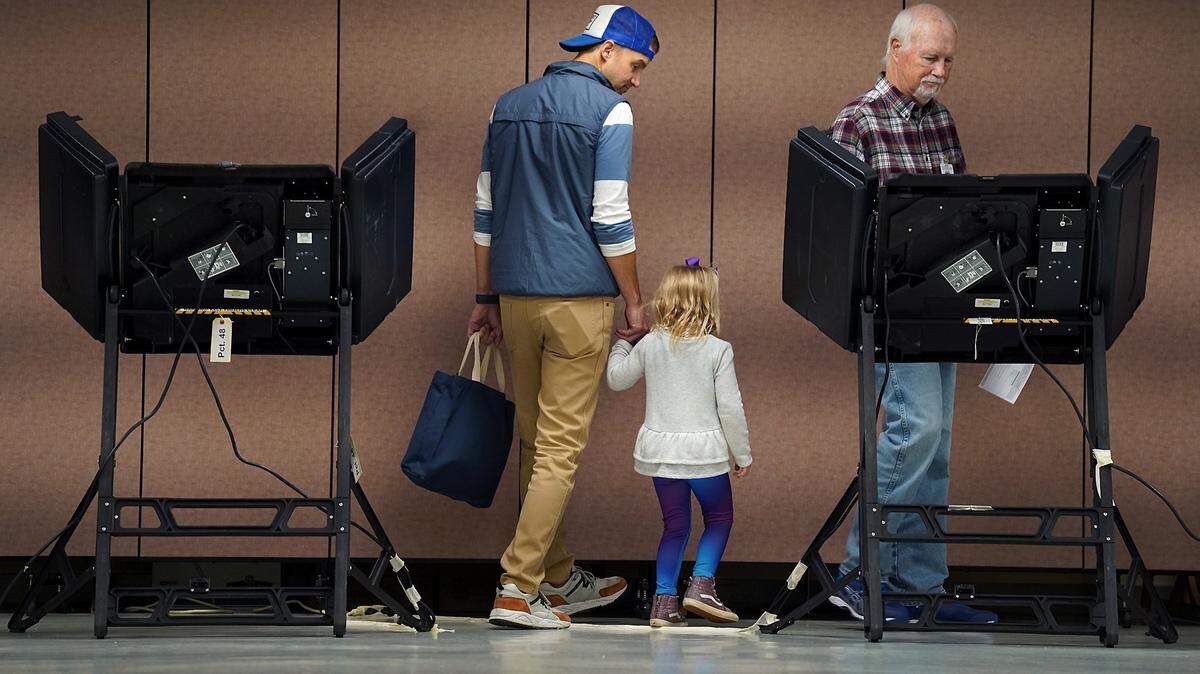
North Carolina elections officials approved a new type of touchscreen voting machine Friday over the objection of outside advocates and two elections board members who said the machines haven’t been properly tested.
Election security and hacking concerns are at the center of the debate, with the 2020 election just a few months away. Federal government agencies have said foreign countries tried to interfere in the 2016 elections — including potentially in North Carolina — and will likely try to do so again next year.
There are two main types of voting methods approved for the 2020 elections in North Carolina. Most counties plan to use hand-marked paper ballots. But some counties, including Mecklenburg, the state’s largest, plan to use touchscreen voting machines.
Some election security advocates say touchscreen voting is more susceptible to hackers. But the state’s professional election experts have vouched for those machines, saying they’re confident in their ability to stop hackers. And in August the political leadership of the Board of Elections voted 3-2 to approve voting machines made by three different companies — ES&S, Clear Ballot and Hart InterCivic.
A month ago, however, ES&S — the nation’s largest voting machine company — told state officials it actually didn’t have nearly enough of the voting machines the state had approved. The company asked state officials to fast-track approval for a different machine.
The same board members who had objected to the machines approved this summer also objected Friday to the new approvals ES&S requested.
Karen Brinson Bell, the top state elections official, told members of the elections board Friday that she trusted the security of the new voting machines. After a brief debate, the board took her advice and approved the machines in a 3-2 vote.
Brinson Bell defends state security system
Brinson Bell didn’t directly address the critics, but she did defend the state’s security procedures at length.
“Before and after each election, checks are in place to ensure that the voting systems continue to comply with the certification program, and are secure and accurate,” she said.
In an email to The News & Observer, election security advocate Susan Greenhalgh said the machines approved Friday were substantially different from the ones approved in August, although state officials disagree.
In a letter before Friday’s vote, Greenhalgh had urged state officials to not approve the replacement machines without more thorough testing.
“In the last three years, reports of unprecedented cyber threats against election infrastructure in the United States have blanketed the news and rattled the public,” wrote Greehalgh, a vice president of the National Election Defense Coalition.
After the meeting, Greenhalgh said she was disappointed in the decision and pointed to some recent examples of high-profile problems with ES&S machines, like a Pennsylvania election last month where “votes appeared to be severely undercounted,” according to the local Morning Call newspaper in Allentown, Pennsylvania.
“The State Board of Elections should be strengthening the testing and certification, not weakening it,” Greenhalgh said Friday.
An ES&S spokeswoman defended the new machines and their fast turnaround in front of state regulators. She said there are “no operational differences between this version” of the voting machine and the version the board approved previously.
The main changes, she said, are improvements like a tweak to make the machines more accessible for disabled voters, plus various security updates.
Touchscreen versus paper ballots
Stella Anderson, an Appalachian State University professor and one of the election board’s three Democratic members, said the state should use this opportunity to promote the use of hand-marked paper ballots, which in North Carolina are counted by a different type of ES&S machine.
She said it’s not true that places like Charlotte wouldn’t have an option for voting in 2020 if the new touchscreen machines weren’t approved. She suggested they simply use hand-marked paper ballots, like most of the state already does.
“I know they don’t want to,” Anderson said. “But let’s be clear. This is a false choice here.”
She was not able to sway enough other board members. Fellow Democrats Jeff Carmon and Board Chairman Damon Circosta split. Carmon dissented along with Anderson, while Circosta joined Republicans Ken Raymond and David Black in voting to approve the new machines.
Carmon criticized ES&S for its last-minute request.
“It just really concerns me because this particular vendor has just pushed our back up against the wall,” Carmon said.
For more state government news, listen to Domecast, the politics podcast from The News & Observer and the NC Insider. You can find it on Megaphone, Apple Podcasts, iHeartRadio, Stitcher or wherever you get your podcasts.
This story was originally published December 14, 2019 at 7:30 AM with the headline "A divided NC Elections Board narrowly approves newly ‘tweaked’ voting machines."