
Robotic crab claw ‘Wavy Dave’ challenges real crabs to fight — then loses badly
Like many people around the world, animal behavior researcher Joe Wilde took up a new hobby during the COVID-19 pandemic.
Wilde — a scientist with the Centre for Research in Animal Behavior (CRAB) at the University of Exeter at the time — spent his time learning about 3D printing.
The researcher was looking at freely available 3D print scans of fiddler crabs when he got an idea.
What if he could print a crab’s claw and put it in front of real crabs to see how they reacted?
Wilde considered it a “pipedream,” according to an Aug. 5 news release from the University of Exeter, but soon, that dream became a reality.
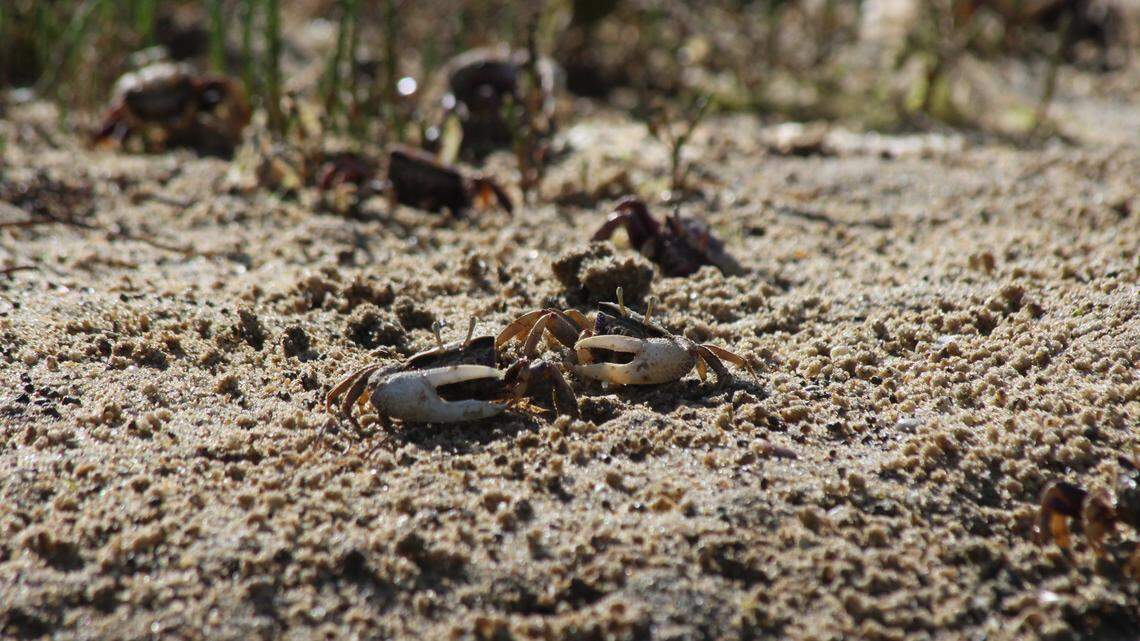
Fiddler crabs, or Afruca tangeri, is a species found in mudflats and sandbanks, often in underground burrows, according to a study published Aug. 6 in the peer-reviewed journal Proceedings of the Royal Society B.
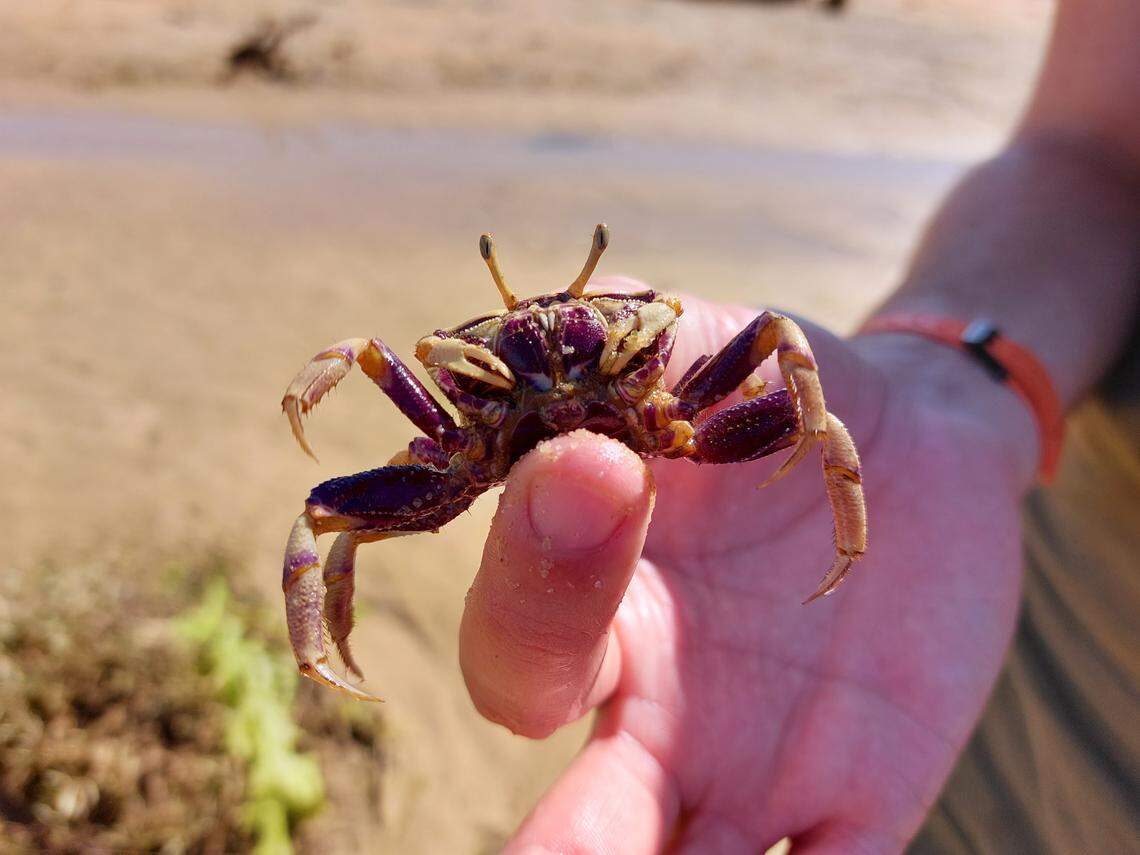
The crabs defend their burrows during mating season, researchers said, and males of the species will wave their large claws to attract mates.
Previous research shows female fiddler crabs prefer males with larger claws and faster waves, so Wilde and his team wondered what would happen if those real crabs were forced to compete with an artificial replacement that was not only bigger but also faster, according to the study.
Between May and July 2022, Wilde and his team created “Wavy Dave,” an artificial fiddler crab with a robotic claw that could wave back and forth. It was placed in the Ria Formosa Natural Park in the crab’s natural habitat of southeastern Portugal along the mudflats and salt marshes.
“We know many animals adjust their sexual displays if rivals are nearby, but less is known about how they react to the actual displays themselves,” Wilde said in the release. “If you own a shop and your rivals start selling things really cheaply, you might have to change how you run your business.”
Researchers said the female crabs caught on quickly, recognizing that Wavy Dave wasn’t the same as the other male crabs from which they were used to getting attention.
“The females realized he was a bit odd,” Wilde said.
The males, however, didn’t quite notice their efforts were in vain.
The study found males were more likely to spend more time out of their burrow when Wavy Dave was in action, according to the study, though they didn’t appear to change the pace at which they waved.
Some males were also less likely to engage with Wavy Dave if their claw was smaller than the robots, possibly because they believed it was a fight they couldn’t win, according to the release.
Other male crabs, on the other hand, were braver.
“One male broke Wavy Dave by pulling off his claw,” Wilde said. “We had to abandon that trial and reboot the robot.”
The research team suggests some of the males may have been “eavesdropping” on Wavy Dave when they came out of their burrow but chose not to speed up their waves, according to the study.
Seeing Wavy Dave would suggest a female was in the area, but until they saw the female themselves, they saved their waving energy.
“Our findings reveal the subtle ways in which these crabs adjust their behavior to compete in a dynamic environment, investing more in signalling when it is likely to be most profitable,” Wilde said.
Ria Formosa Natural Park is on the southern coast of Portugal, along the Atlantic Ocean.
The research team includes Wilde, Safi K. Darden, Jordan D. A. Hart, Michael N. Weiss, Samuel Ellis and Tim W. Fawcett.
This story was originally published August 7, 2025 at 1:10 PM with the headline "Robotic crab claw ‘Wavy Dave’ challenges real crabs to fight — then loses badly."
