
‘Strange’ fossilized teeth found in Caribbean. It’s a ‘giant’ prehistoric species
A mystery has been building in the Caribbean.
Decades ago, fossilized teeth were discovered in Cuba dating to about 18 million years ago. They were small but tapered, sharp and serrated. They were the teeth of an apex predator.
Researchers didn’t believe there was such an animal in the Caribbean, until they found another tooth in Puerto Rico, this time 29 million years old, according to an April 30 news release from the Florida Museum of Natural History.
Still, the teeth alone weren’t enough to identify the prehistoric species.
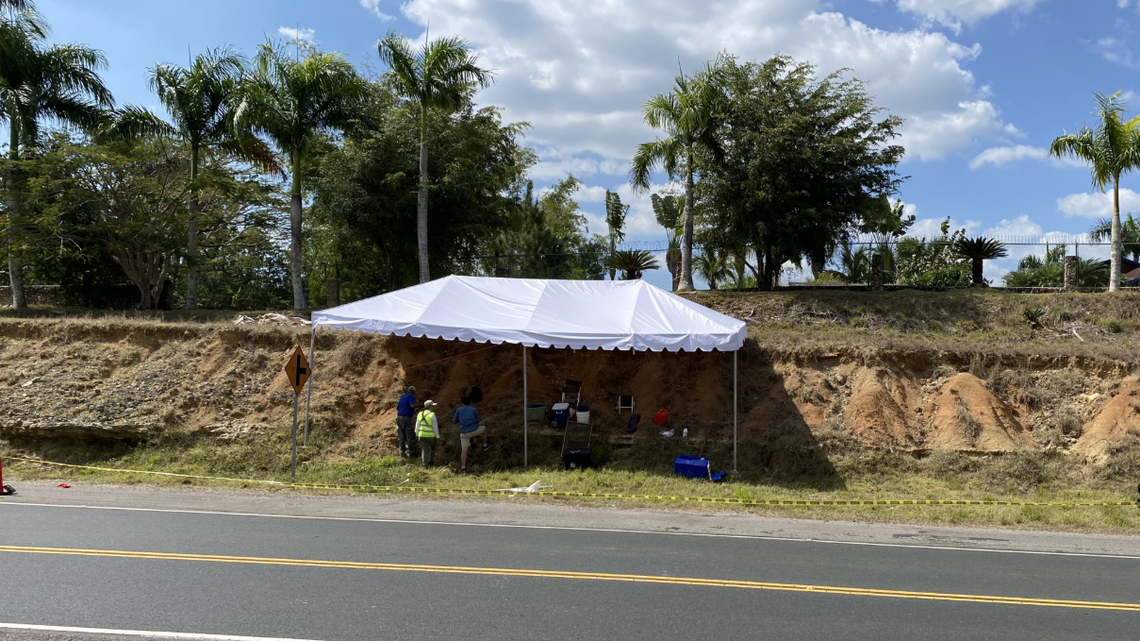
Then, along a road in the Dominican Republic in 2023, paleontologists unearthed not only another tooth, but vertebrae to match, the museum said.
They had an identity. It was a crocodile-like reptile “built like a greyhound” and sometimes reaching 20 feet long — a sebecid.
Not only did the Caribbean house these “giant” predators after all, but the animals were living there millions of years after their extinction everywhere else, the museum said.
Researchers described the findings and what it might mean in a study published April 30 in the peer-reviewed journal Proceedings of the Royal Society B.
(1).jpg "Teeth (all)(1).jpg")
The cervical vertebrae and teeth were found in an embankment along the Juan Pablo II highway when roadcuts revealed sediment from the late Miocene and early Pliocene epochs, according to the study.
“Outcrops don’t last too long, so you go there when you can. When they’re cutting the road or a few months after that, you find the fossils. If you’re looking in a few years, it will be gone,” Lázaro W. Viñola López, a former graduate student at the University of Florida and lead author on the study, said in the release.
“That emotion of finding the fossil and realizing what it is, it’s indescribable,” he said.
Sebecids belonged to a group of prehistoric crocodilians called Notosuchia, a group that was all but wiped out 66 million years ago, according to the museum.
With dinosaurs out of the way, sebecids thrived in South America as the new apex predator, able to move quickly on land and use their teeth to rip apart their prey, the museum said.
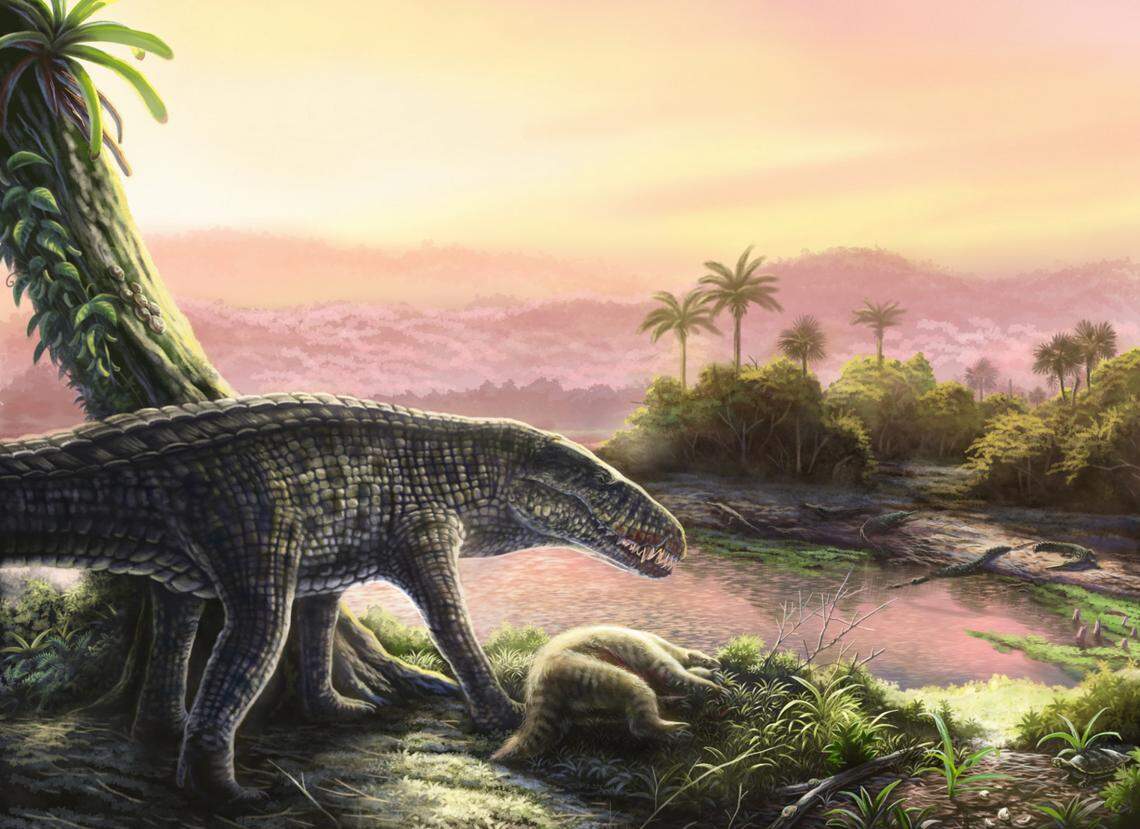
Sebecids likely wouldn’t have been able to swim from mainland South America to the Caribbean islands, researchers said in the study, suggesting the landmasses were once connected by some kind of land bridge millions of years ago.
There could have also been a chain of smaller islands, making the swimming distance more manageable, for the sebecids to survive in the Caribbean, the museum said. This idea is called the GAARlandia hypothesis and suggests these connections were present about 34 million years ago.
“You wouldn’t have been able to predict this looking at the modern ecosystem,” Jonathan Bloch, curator of vertebrate paleontology at the Florida Museum of Natural History and co-author on the study, said in the release. “The presence of a large predator is really different than we imagined before, and it’s exciting to think about what might be discovered next in the Caribbean fossil record as we explore further back in time.”
The new fossils were found in Sabana Grande De Boya in central Dominican Republic, an island nation in the eastern Caribbean.
The research team includes Viñola López, Bloch, Jorge Velez-Juarbe, Philippe Münch, Juan N. Almonte Milan, Pierre-Olivier Antoine, Laurent Marivaux and Osvaldo Jimenez-Vasquez.
This story was originally published May 5, 2025 at 1:26 PM with the headline "‘Strange’ fossilized teeth found in Caribbean. It’s a ‘giant’ prehistoric species."
