592 wildlife cameras running for 31 days make first-of-its-kind sighting in India
.jpg "The species has an IUCN status of “Least Concern,” but it is given the highest protection in India.")
In central India, 592 camera traps running 24 hours a day for 31 consecutive days caught a single but exciting glimpse of an elusive species never before seen in that part of the country.
Researchers said that in 2018 alone, they had 15,291 chances to spot the small species using camera traps, but it never revealed itself.
Just after 2 a.m. on Feb. 7, a leopard cat was spotted in Pench Tiger Reserve in the Nagpur District of Maharashtra, according to an April 26 study published in the Journal of Threatened Taxa.
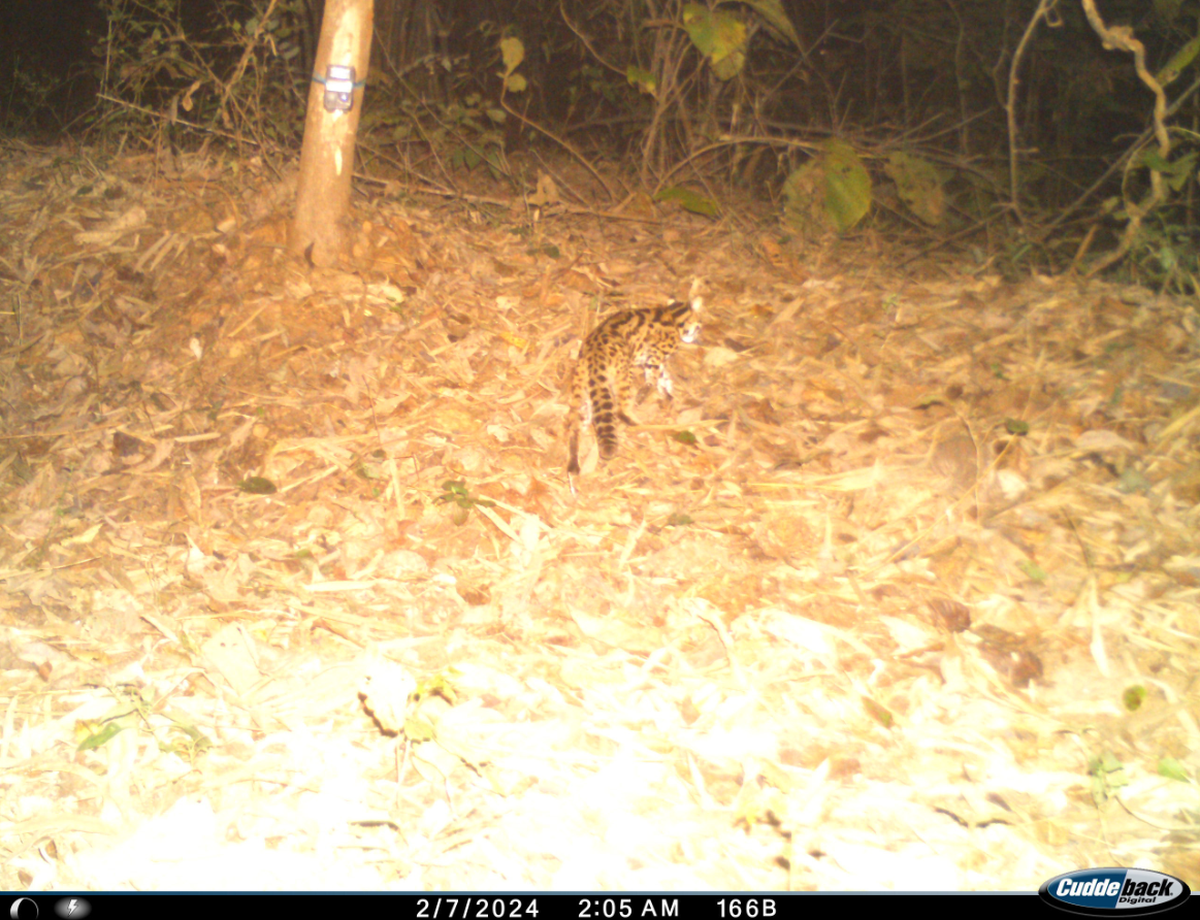
Leopard cats — Prionailurus bengalensis — are found throughout southern and eastern Asia, researchers said, and are about the size of a house cat, but with longer legs.
They occupy a wide range of habitats, including “tropical dipterocarp, evergreen, temperate broadleaf, and coniferous forests,” as well as shrublands and grasslands, according to the study.
While the species is listed as “Least Concern” on the International Union for Conservation of Nature’s Red List, it is afforded the highest level of protection in India, where it is often found in protected areas, according to the study.
The sighting “significantly” expands the known range of the species, researchers said.
It also challenges some research that suggests leopard cats are unlikely to be found in areas where temperatures exceed 100.4 degrees Fahrenheit, as temperatures in Pench can reach 113 degrees in the summer, according to the study.
Researchers said “extensive studies” are needed to devise a conservation strategy for the leopard cat.
The research team included Prabhu Nath Shukla, Bilal Habib, Virendra Kumar Mishra, Sumedh Lomesh Bobade, Eshaan Chaitanya Rao and Kanishka.
This story was originally published April 30, 2025 at 2:14 PM with the headline "592 wildlife cameras running for 31 days make first-of-its-kind sighting in India."