Poisonous frog calling ‘incessantly’ for captured mate is new species in Brazil
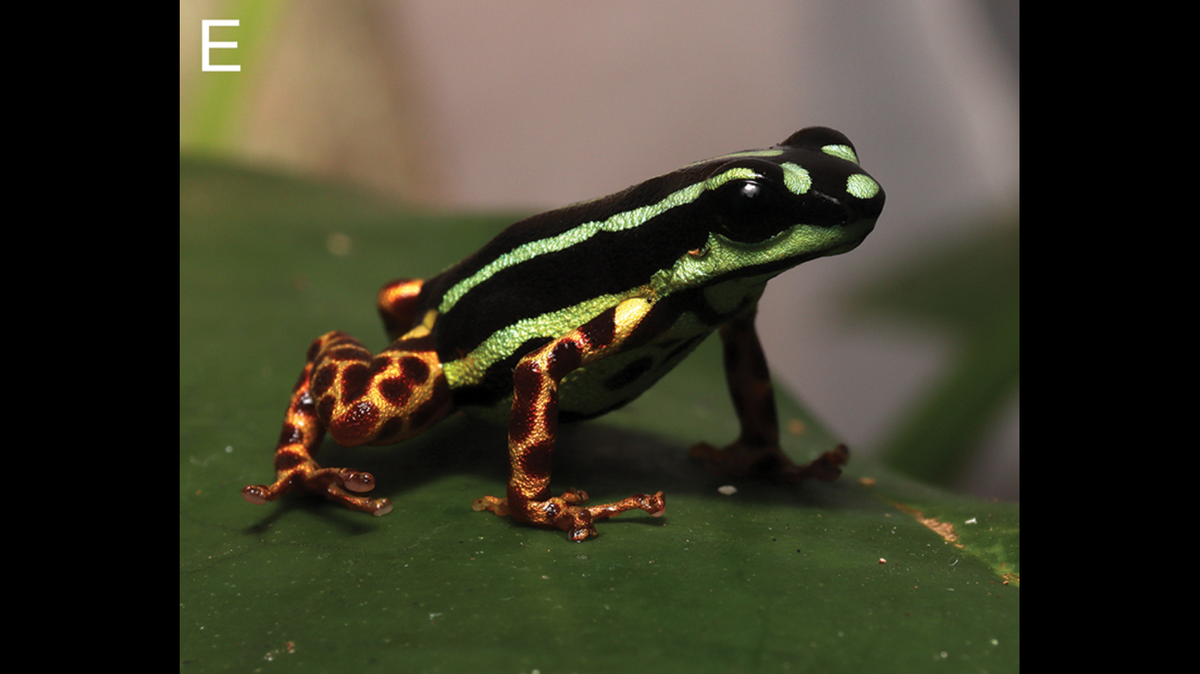
In the forests of western Brazil, along the banks of a Juruá River tributary, researchers came upon more than a dozen tiny creatures, smaller than a nickel, flaunting bright colors that warned: “stay away.”
They were poison dart frogs, and they were unlike any others the expedition team had seen before.
Jet back with metallic turquoise-green stripes and orange “chrome” limbs, these frogs were members of a new species, according to an April 25 study published in the peer-reviewed journal ZooKeys.
Ranitomeya aquamarina, or the metallic poison frog, is the first new poison frog species of the Ranitomeya genus discovered in 13 years, according to researchers.
According to the study, the frogs were found in one section of preserved forest along the Eiru River, specifically clustered around bananeira brava plants, suggesting the species prefers the habitat these plants create.
The adult frogs were usually observed as couples, suggesting they are monogamous, according to the study. “When we captured the females, the respective males called incessantly,” researchers said.
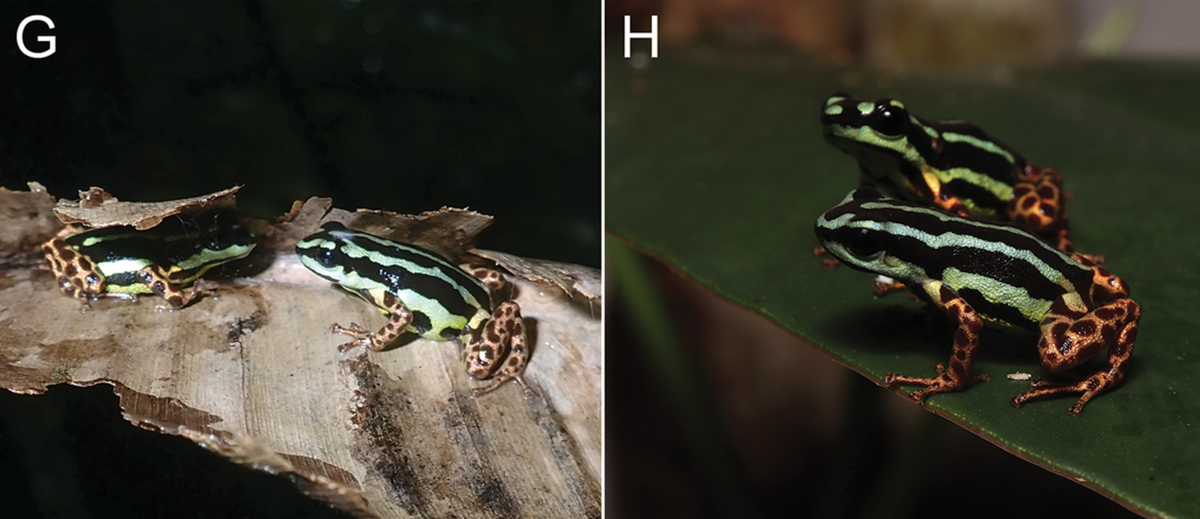
The metallic poison frog, active during daytime hours, has a long-lasting trill, or call, of 21–45 notes. While perched on leaves, the males begin calling out at dawn and vocalize for several hours before trailing off in the late morning.
Frogs may call to find a mate or establish their territory, according to experts.
When researchers played a recording of their own calls, the males acted territorial, responding to and approaching the sound, according to the study.
The species was noted to be active all day on rainy days.
’Metallic’ warning colors
In life, the metallic poison frogs, just over half an inch big, have “bright and aposematic” coloring, which is used as a defensive adaptation to warn predators they are toxic and don’t taste good.
The species is described as having a jet black body with parallel metallic stripes ranging from light turquoise to pale yellowish green.
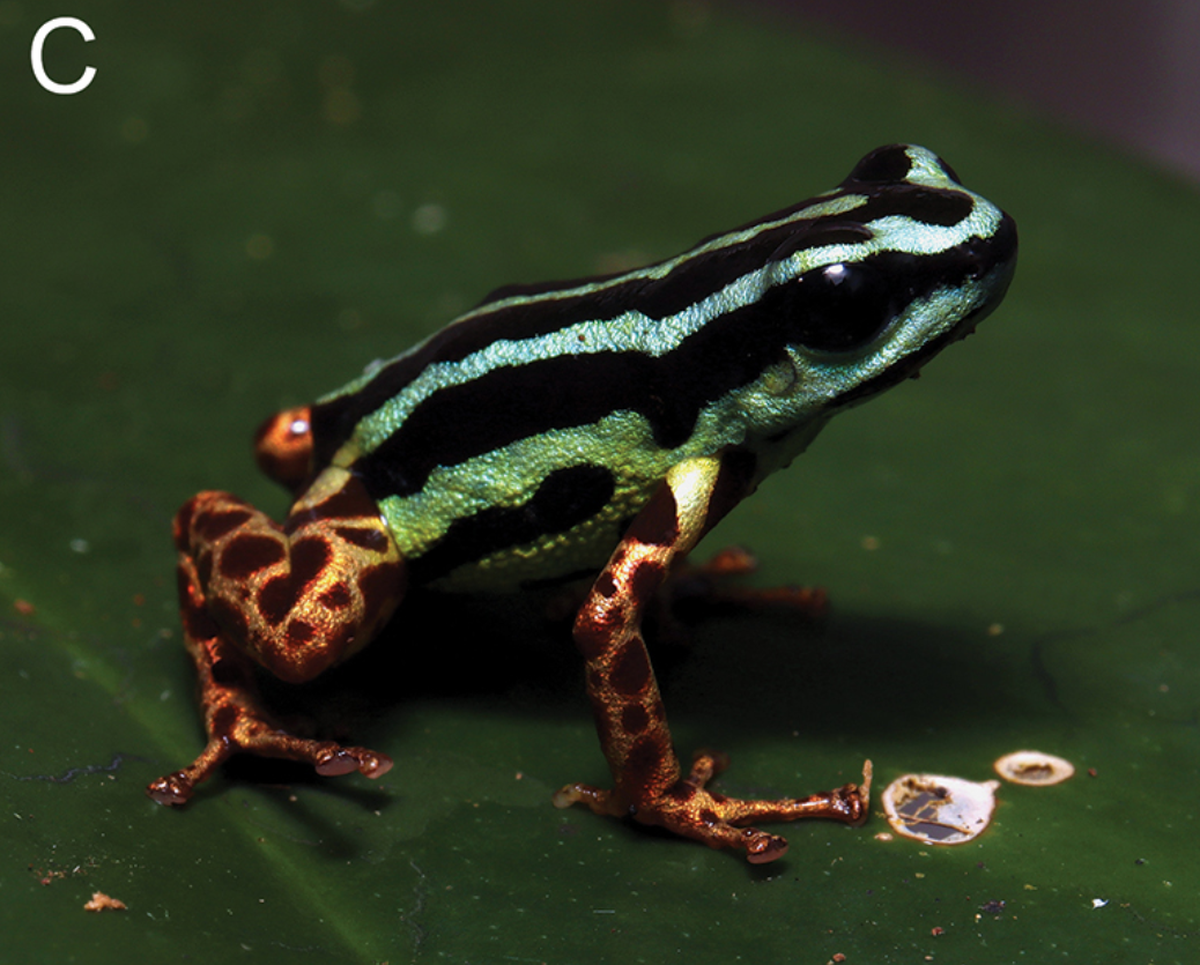
Their limbs are a “metallic chrome orange” with dark crimson spots. They have relatively large hands and disc-shaped fingertips, several of which are significantly larger than the others, making them “very agile,” according to the study.
Researchers said they don’t believe the metallic poison frog is abundant throughout its range as it was only found in one of the four sites they searched. More information is needed to determine its conservation status.
The Eiru River is a tributary of the Juruá River in Brazil’s Amazonas state.
The research team included Alexander Tamanini Mônico, Esteban Diego Koch, Jussara Santos Dayrell, Jiří Moravec and Albertina Pimentel Lima.
This story was originally published April 25, 2025 at 4:19 PM with the headline "Poisonous frog calling ‘incessantly’ for captured mate is new species in Brazil."