Trail cams catch chimpanzees sharing fruit — with alcohol. See ‘boozy’ encounter
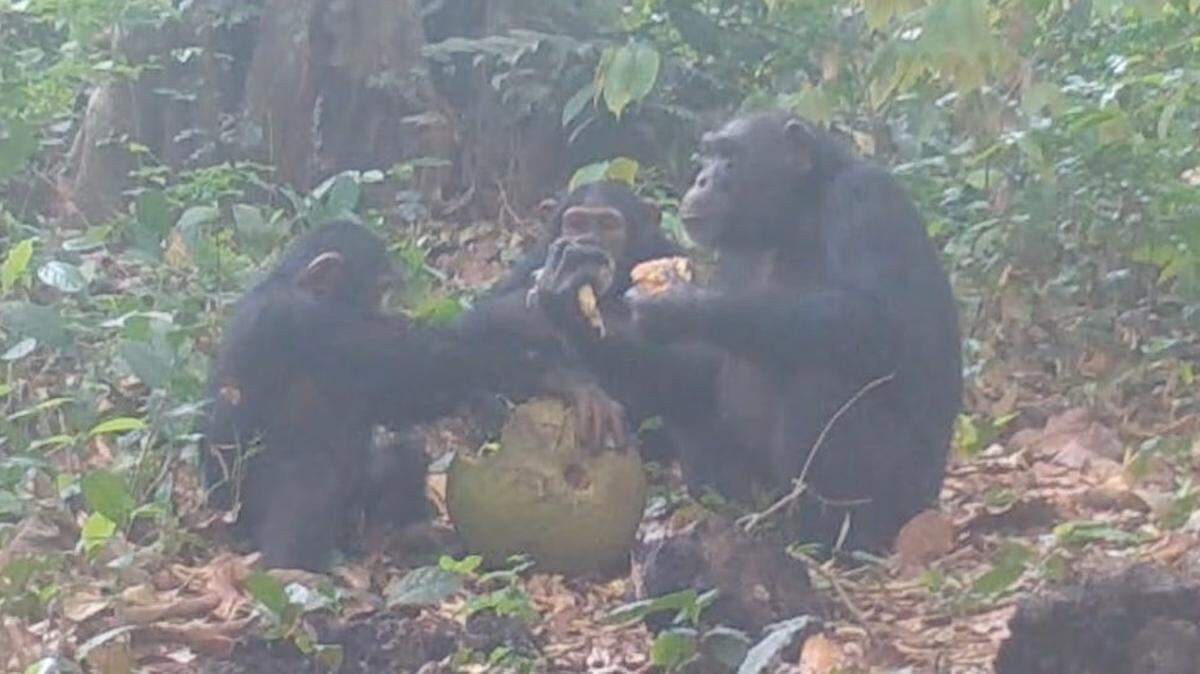
In what is believed to be a world first, trail cameras in western Africa have filmed and photographed wild chimpanzees sharing fruit containing alcohol.
But, was it intentional?
The first-of-its-kind discovery has raised more questions than answers for researchers working in Guinea-Bissau’s Cantanhez National Park, according to a study published April 21 in the peer-reviewed journal Current Biology.
The team set up motion-activated trail cameras throughout the park to better study the feeding and sharing behaviors of wild chimpanzees. The chimpanzees in this park are “unhabituated” to researchers, according to the study.
“Chimpanzees were seen to regularly select and feed on T. africana (African breadfruit) when available. Sharing was observed on 10 separate occasions between 17 individuals across all age- and sex-classes,” researchers said. “At the time of sharing, 90% of the shared fruits contained ethanol.”
African breadfruit contains ethanol when fermented, so the researchers tested the fruit to see just how “boozy” it really was, according to an April 21 news release from the University of Exeter.
When they calculated the fruit’s alcohol by volume — the same measure used for alcoholic drinks — they found values up to 0.61% ABV, a “relatively low” amount, according to the release.
A single serving of beer is 12 ounces, for example, and has an ABV of 5%, while a typical 5 ounces of wine has a 12% ABV. The ABV in the booziest African breadfruit was similar to that in kombucha, a fermented tea drink, which can have about 0.5% ABV.
“But the researchers say it may be the ‘tip of the iceberg’, as 60-80% of chimps’ diet is fruit — so low levels of alcohol in various foods could add up to significant consumption,” according to the release.
The chimpanzees are, however, unlikely to get “drunk” as it would be a significant hindrance to their survival chances, researchers said.
“Chimps don’t share food all the time, so this behavior with fermented fruit might be important,” researcher Kimberley Hockings, from the University of Exeter, said in the release. “We need to find out more about whether they deliberately seek out ethanolic fruits and how they metabolize it, but this behavior could be the early evolutionary stages of ‘feasting.’ If so, it suggests the human tradition of feasting may have its origins deep in our evolutionary history.”
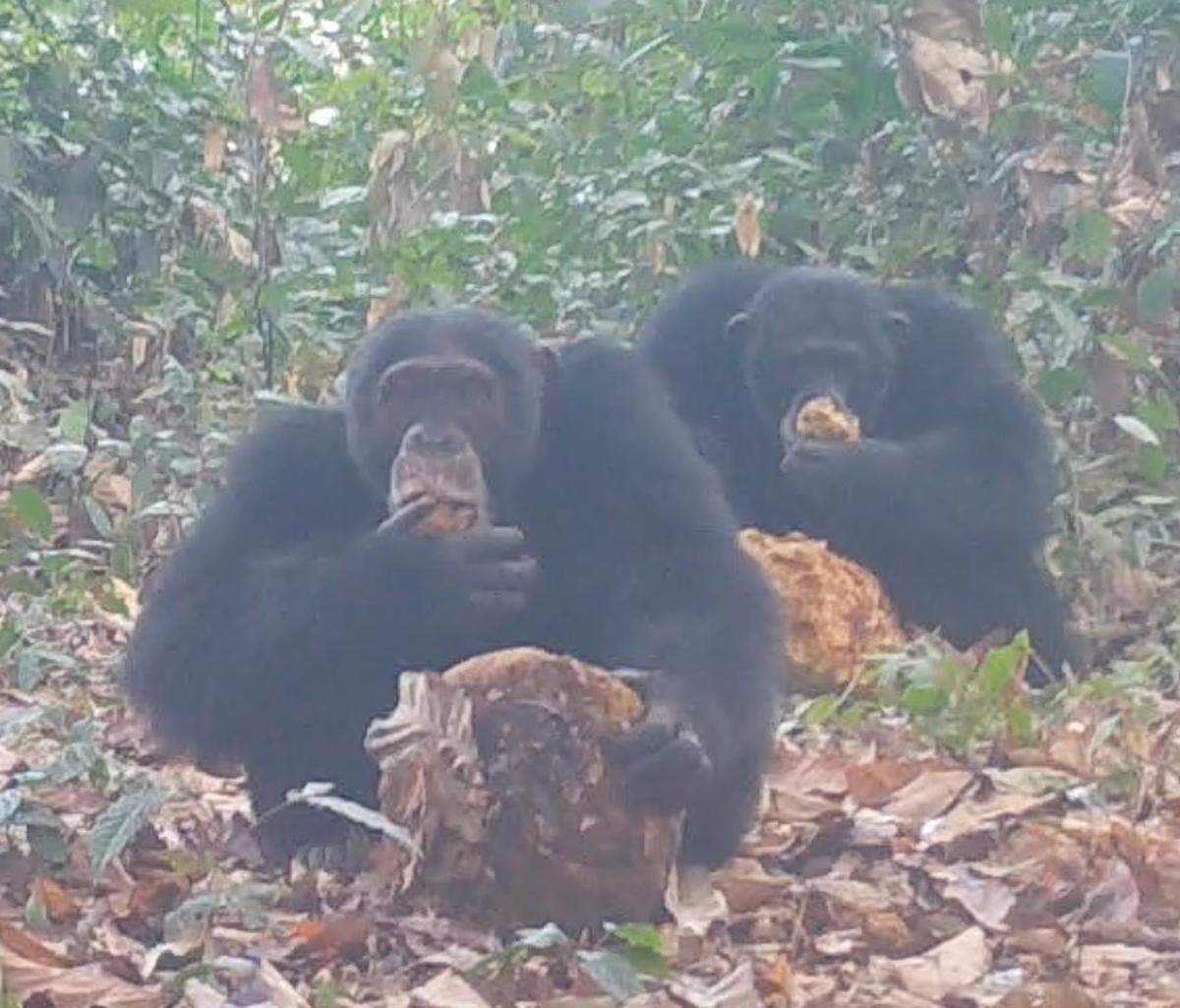
The tradition of drinking and sharing alcohol runs deep in human history, with beer possibly being made as far back as 13,000 years ago, according to History.com.
“For humans, we know that drinking alcohol leads to a release of dopamine and endorphins, and resulting feelings of happiness and relaxation,” lead author Anna Bowland, from the Centre for Ecology and Conservation with the University of Exeter, said in the release. “We also know that sharing alcohol — including through traditions such as feasting — helps to form and strengthen social bonds. So – now we know that wild chimpanzees are eating and sharing ethanolic fruits — the question is: could they be getting similar benefits?”
Cantanhez National Park is in southern Guinea-Bissau, a country on the west-central coast of Africa.
The research team includes Bowland, Hockings, Elena Bersacola, Marina Ramon, Joana Bessa, Amanda Melin, Matthew Carrigan and Xavier Harrison.
This story was originally published April 22, 2025 at 11:44 AM with the headline "Trail cams catch chimpanzees sharing fruit — with alcohol. See ‘boozy’ encounter."