Cave guide enters unknown passage for first time — and helps make ancient discovery
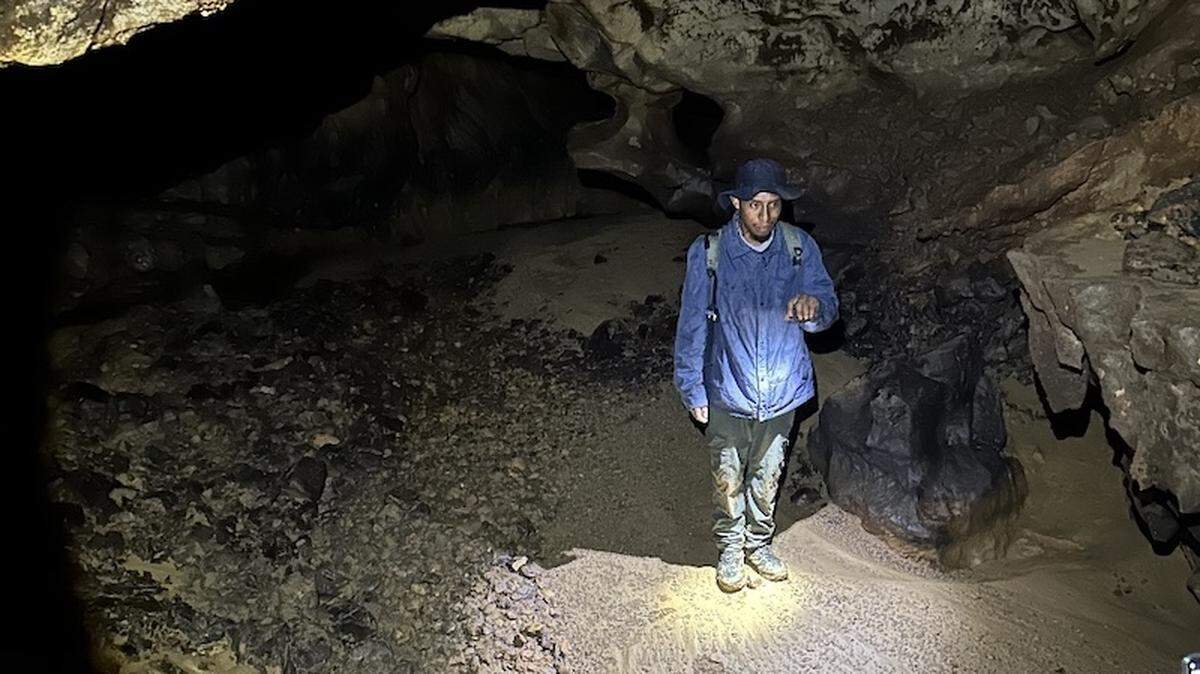
In the Guerrero mountains of southern Mexico, young cave guide Adrián Beltrán Dimas met up with Yekaterina Katiya Pavlova in the fall of 2023.
Pavlova is a Russian speleologist, or a scientist studying caves, and she was on a mission to map caves in the region. Dimas was enlisted to provide local knowledge and experience.
The two joined forces to enter Tlayócoc cave, a system that had been explored before, according to an April 9 news release from the National Institute of Anthropology and History.
They quickly reached the bottom of the cave, archaeologists said, but then noticed a submerged passageway. The unknown tunnel had never been explored before, so the two cavers decided to take a leap of faith.
The passage led to another room — with centuries-old artifacts inside.
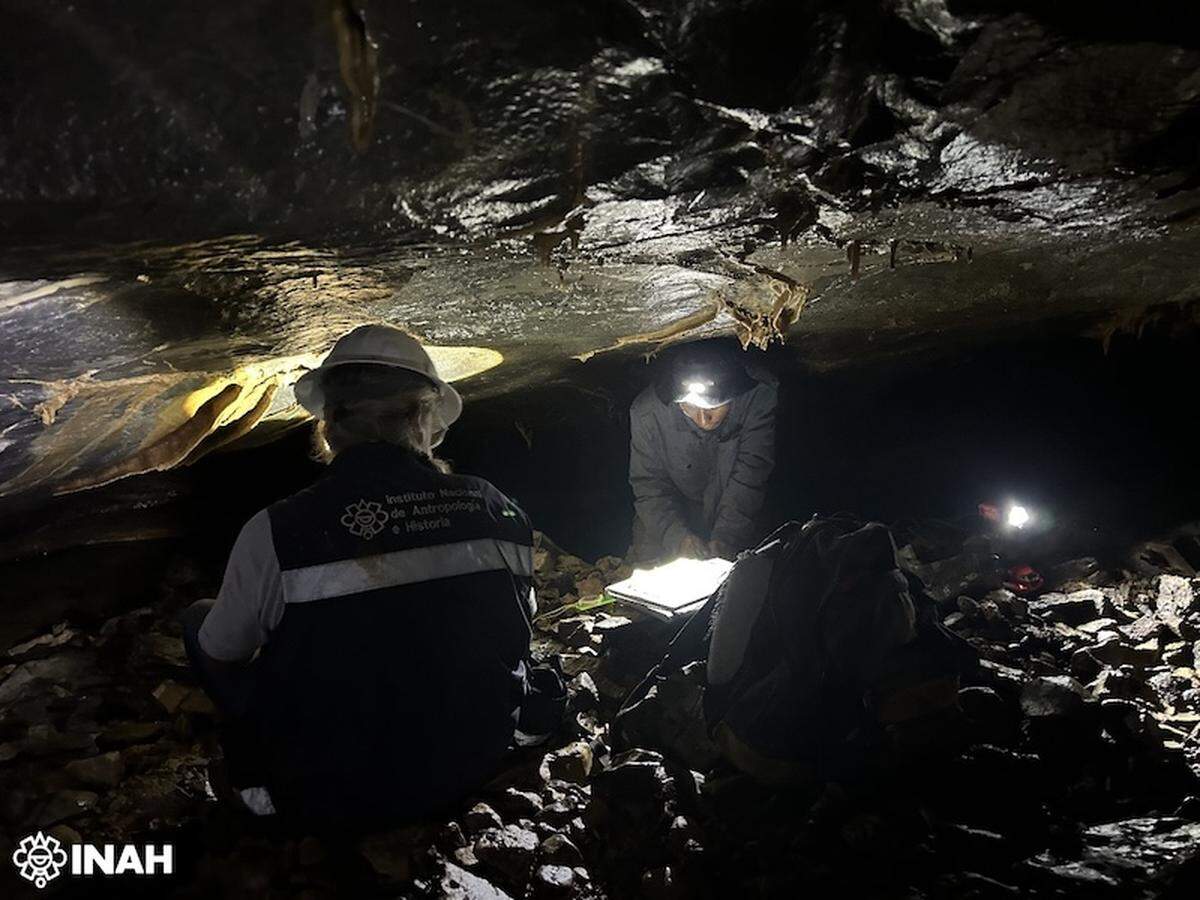
Dimas and Pavlova discovered two shell bracelets with engraved images, or motifs, that were set into the stalagmites, or towering stone pillars built up from the bottom of the cave, archaeologists said.
They also found pieces of a third bracelet, a giant snail shell and scattered black stone discs, according to the release.
The cavers immediately alerted local officials, and archaeologists were called to re-enter the cave in March.
Dimas once again guided the archaeologists into the cave and down into the hidden room, where the experts noticed the stalagmites had been retouched in pre-Hispanic times, making them a more rounded shape than the pointed conical shape they form naturally, according to the release.
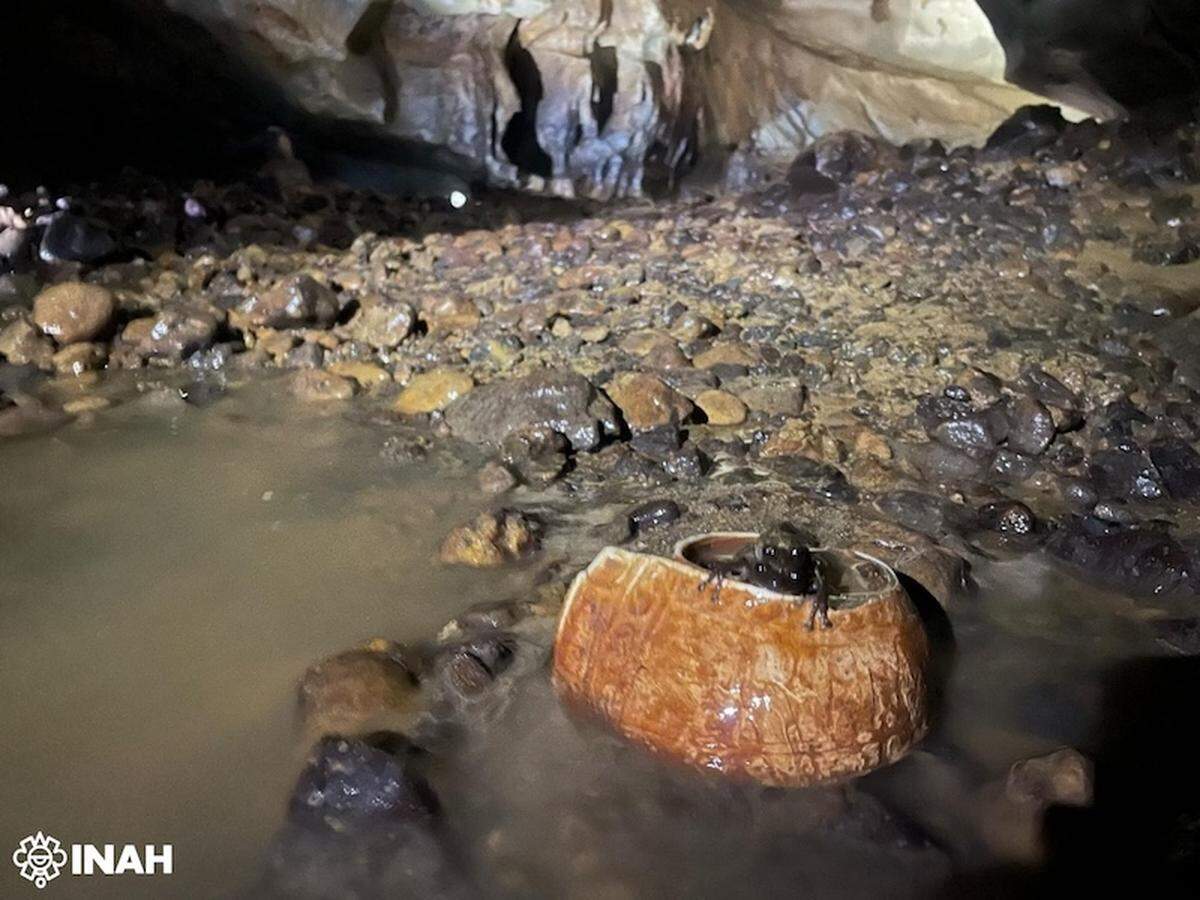
In total, archaeologists recovered 14 objects showing the use of the cave by earlier cultures: three shell bracelets, one bracelet fragment, the giant snail shell, a burned piece of wood and eight stone discs, both complete and fragmented, according to the release.
The bracelets are engraved with symbols and human-like figures, including S-shaped symbols, zigzag lines, circles and the faces of characters, archaeologists said.
Pavlova shared images of the site from the initial discovery, allowing archaeologists to better understand how each piece was left before it was moved, as well as her cave maps.
The pieces were dated to the Postclassic period, between 950 and 1521 AD, making the artifacts anywhere from 500 to 1,000 years old, archaeologists said.
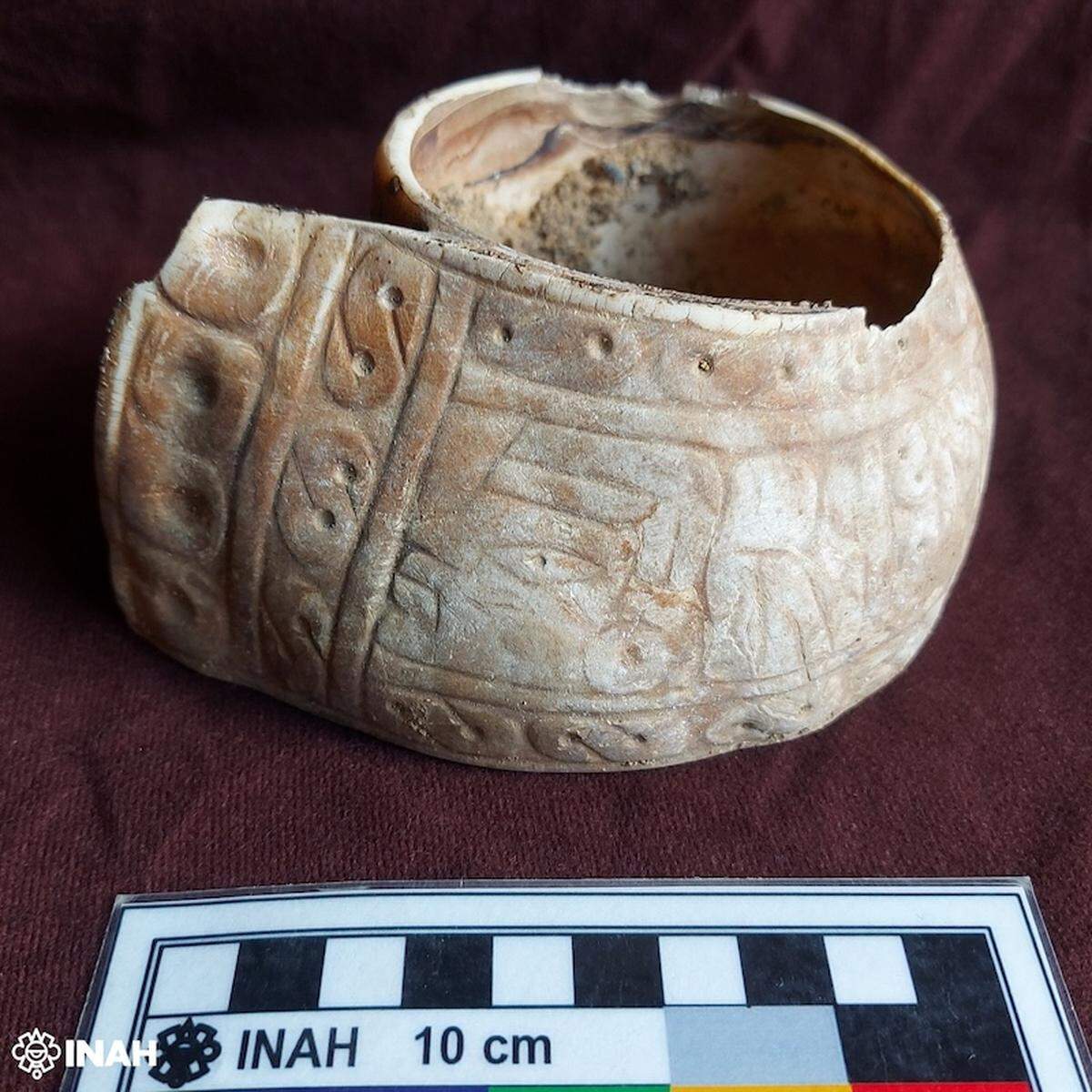
The imagery on the bracelets is similar to historical sources from the 16th century, belonging to the Tlacotepehua ethnic group, a culture that has since disappeared, according to the release.
Caves were considered part of the underworld and the Earth’s womb, archaeologists said, meaning these artifacts may be connected to ideas of creation and fertility.
Some of the bracelets also have some similarity to other cultures in the Guerrero mountains and more distant regions, archaeologists said.
The nearby community of Carrizal de Bravo was first settled by nomadic cattle herders who lived at such a high elevation that about a century ago, they moved their settlement to a lower altitude where they still live today, according to the release. There is very little known about their history and early culture, archaeologists said.
Carrizal de Bravo is in southwestern Mexico, about a 200-mile drive southwest from Mexico City.
Google Translate was used to translate the news release from the National Institute of Anthropology and History.
This story was originally published April 11, 2025 at 10:45 AM with the headline "Cave guide enters unknown passage for first time — and helps make ancient discovery."