‘Velvet’ creature — with visible eggs in its belly — discovered as new species
As night fell across a remote region of northern Australia, a “velvet” creature emerged from a pile of rocks. Its hard-to-reach habitat and camouflaged coloring helped it go largely unnoticed — until a visiting scientist spotted it.
It turned out to be a new species.
Conrad Hoskin ventured into a sparsely populated region of Queensland multiple times in 2022 to survey wildlife. The rocky, inland area “is a hotspot of diversity,” he wrote in a study published Feb. 4 in the peer-reviewed journal Zootaxa.
During the visits, Hoskin encountered some unfamiliar-looking lizards. Intrigued, he captured a few and photographed over a dozen more in the wild. Taking a closer look at the animals, Hoskin quickly realized he’d discovered a new species: Oedura atra, or the basalt velvet gecko.
Basalt velvet geckos are considered “medium-sized,” reaching about 5 inches in length, the study said. Their “robust” bodies have “a relatively wide head” and “moderately long” limbs. Their tails are “short” and “broad” originally but, if lost, regrow with a “bulbous” shape.
Zootaxa shared a photo of the new species in a Feb. 3 post on X, formerly known as Twitter. The brown, blotchy gecko blends in with the surrounding rock and looks relatively smooth.
Other photos, shared on X by @HerpsInTheNews, show the color variation of basalt velvet geckos, ranging from reddish brown to blackish brown.
Hoskin said he named the new species after the Latin word “atra, meaning black or dark,” because of its coloring. Its common name refers to its preferred habitat.
Basalt velvet geckos live on “exposed, piled, black basalt rocks,” the study said. Hoskin saw them “active at night.” When “disturbed,” the geckos retreated “into deep crevices and holes in the rocks.”
During both of his visits, Hoskins found female geckos “with two well-developed eggs visible” in their bellies, the study said and a photo shows. Still, much of the new species’ lifestyle remains unknown.
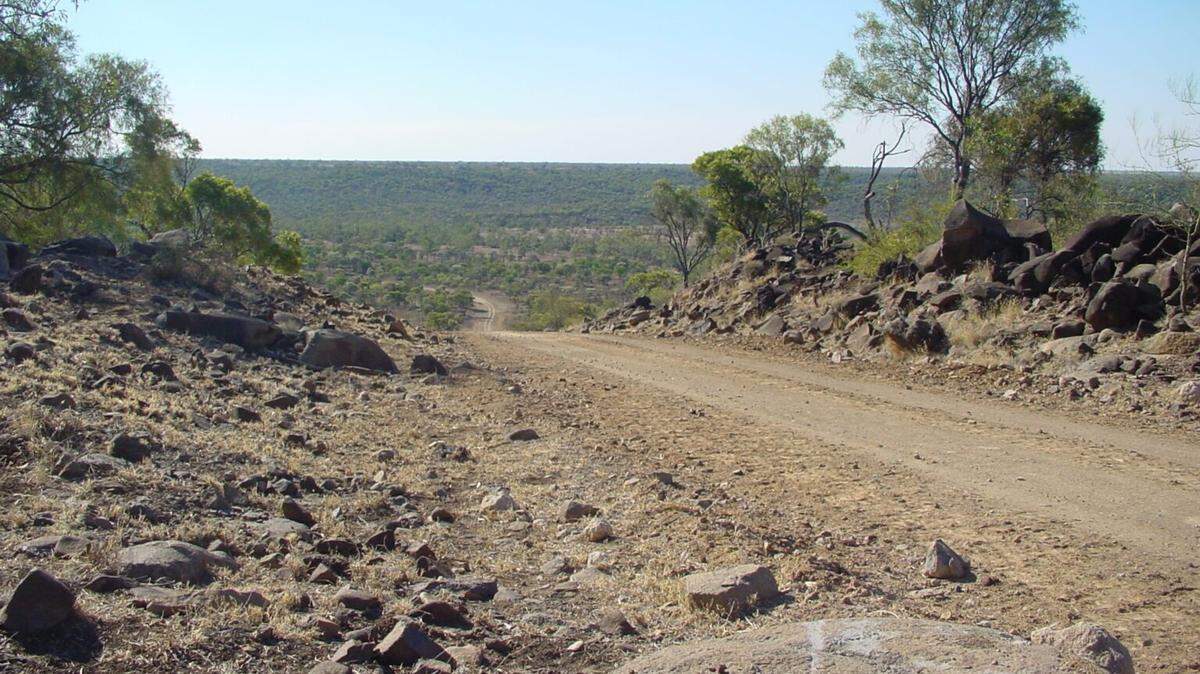
So far, basalt velvet geckos have been found at two sites near Hughenden, a rural town in Queensland roughly 1,200 miles northwest of Sydney, but is likely more widespread. A photo from the Flinders Shire Council shows some basalt rocks around Hughenden.
The new species was identified by its coloring, pattern, head and tail shape as well as other subtle physical features, the study said. DNA analysis found the new species had at least 11% genetic divergence from other related gecko species.
This story was originally published February 4, 2025 at 2:26 PM with the headline "‘Velvet’ creature — with visible eggs in its belly — discovered as new species."