‘Elusive’ creature was missing in Himalayas for 91 years — until angler caught one

Nearly two centuries ago, an employee of the Bengal Civil Service gave two men a fish.
J.T. Pearson, curator of the museum of the Asiatic Society of Bengal, received his fish and described it as the “Bora Chung,” or “Ground-fish of Bhootan (Bhutan)” in 1839.
John McClelland, a British medical doctor working for the East India Company, received his fish from the employee and described it in 1845, identifying it as a species of snakehead, and naming it Channa amphibeus
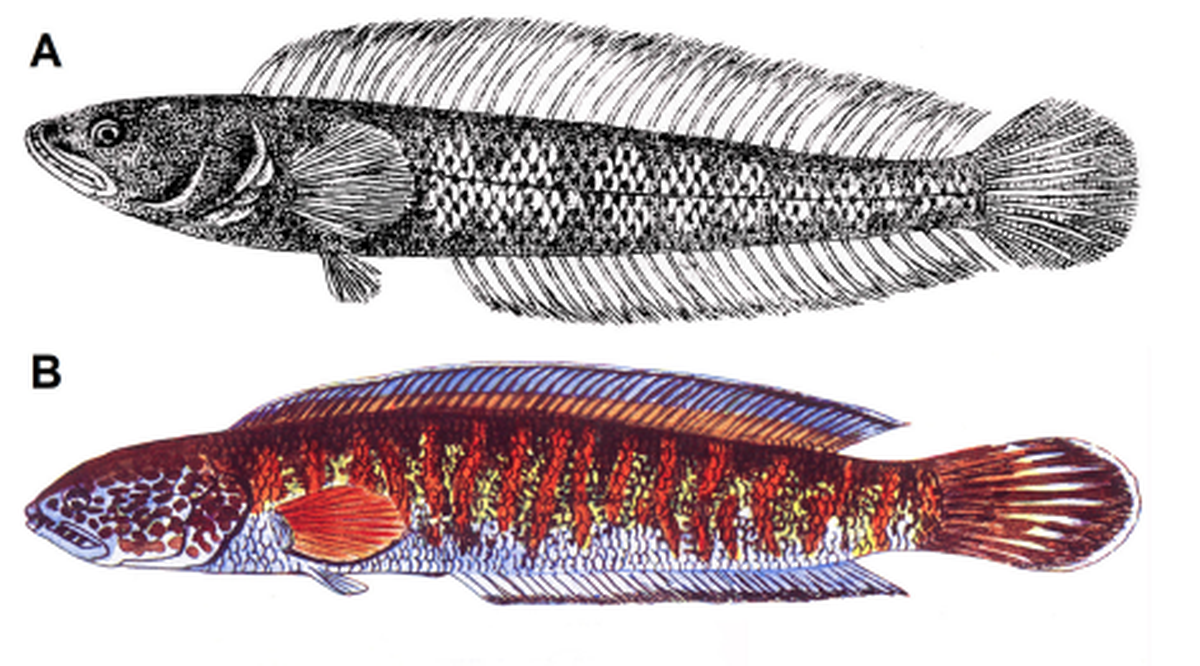
In the century that followed, the snakehead was caught and identified a handful of times, sometimes mistaken for other species, but described and drawn as “olive green, with orange stripe; and the head speckled with crimson spots,” according to a study published Jan. 31 in the peer-reviewed journal Zootaxa.
The fish was last collected in 1933 and later identified in the scientific record in 1938, but then it all but disappeared, researchers said.
Researchers believe its absence must have been the result of extinction, considering there were “several surveys carried out across northern Bengal and Assam by aquarium traders and fish hobbyists in recent decades, according to the study.
Then, on Sept. 27, 2024, researchers were looking through the fish brought in by a local fisherman in West Bengal, India, when they saw one Channa amphibeus still alive among the rest of the catch, according to the study.
The “lost” fish had been found.
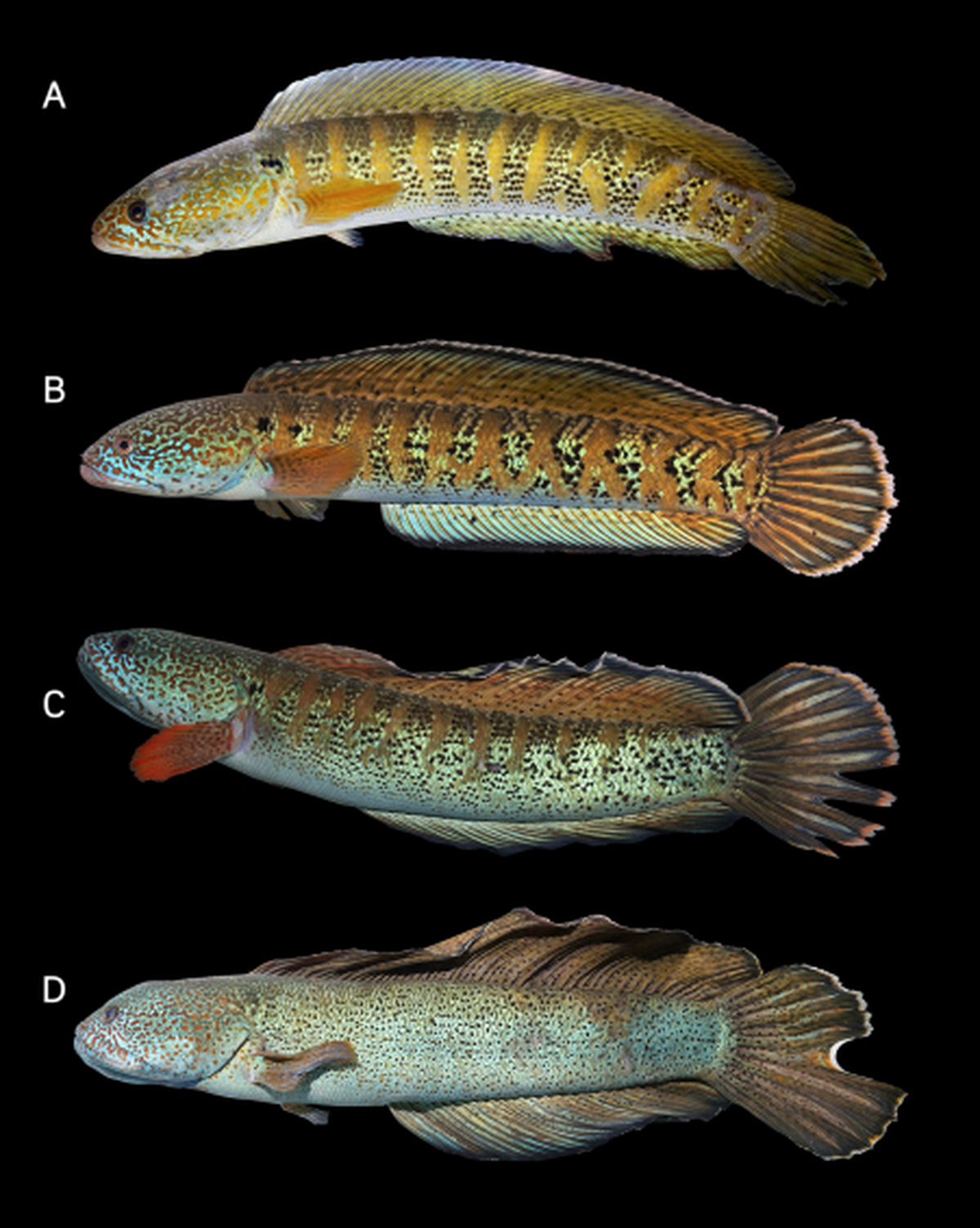
The fish was about 8 inches long, according to the study, but local fishers told researchers they could be much bigger, reaching more than a foot in length.
The snakehead’s head is “wedge-shaped” with “bulging” cheeks, researchers said.
Smaller fish of the species have a “base color of body iridescent-green with numerous black spots,” and “orange or chrome- to ochre-yellow bars,” according to the study.
Larger snakeheads are more “bluish-green,” researchers said, with “maroon bars” and “broken blotches.”
Fish of all sizes have “neon-blue” mouths, lips and areas below their eyes.
Many of these colors match how the fish had been described a century ago, though researchers relied on sketches or black and white photos.
“A gorgeously colored fish. The ground-color is blue when viewed obliquely and iridescent green when viewed at right angles to the surface,” researchers wrote in 1938, according to the study. “On the body this colour is sprinkled with dark spots, uniform in size but irregular in shape. These spots are absent from the belly, sparse below the lateral line and increasingly plentiful towards the back where they coalesce. On the head, the spots are larger and rounded, rich brown below the level of the eye and becoming darker and more plentiful towards the top of the head where they coalesce.”
Researchers consider this species the “world’s most elusive snakehead” and overall a rare kind of fish, according to the study.
They live in rivers fed by the Himalayas, an area they called the “Third Pole” based on its massive store of glacier ice. The rough terrain makes it hard to survey, but it’s known to be home to other famously rare creatures like snow leopards, red pandas and the Himalayan black bear, researchers said.
“Globally, freshwater fish are experiencing a range of stressors that have resulted in large-scale population declines, and many species have already gone extinct,” according to the study. “A species may be considered lost when its presence in the wild cannot be confirmed by photographs, specimens, or genetic samples, and when there is no (captive) population under human care.”
Researchers are now worried because while the snakehead was “missing” from the scientific record, the fishers that helped them find the fish in the first place also said it is “relished as local delicacy,” threatening the potentially small population.
“Urgent research is required to better understand the distribution range and threats faced by this elusive species, re-assess its conservation status for the IUCN Red List and develop systematic conservation plans for securing its future,” researchers said.
The fish was rediscovered in the Kalimpong District of West Bengal, in the northeastern tip of India between the borders of Nepal and Bhutan.
The research team includes Jayasimhan Praveenraj, Tejas Thackeray, Nallathambi Moulitharan, Balaji Vijayakrishnan, and Gourab Kumar Nanda.
This story was originally published February 3, 2025 at 4:19 PM with the headline "‘Elusive’ creature was missing in Himalayas for 91 years — until angler caught one."