Ancient secret labyrinth — thousands of feet long — uncovered under Peru city. See it
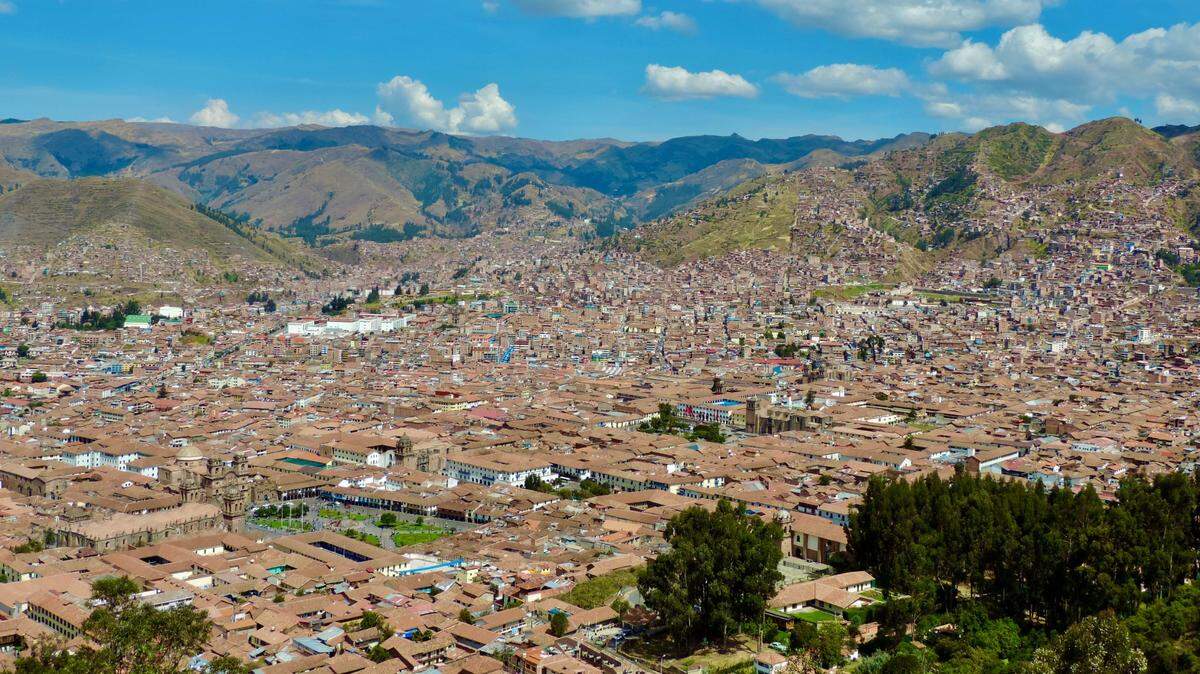
High in the Andes mountains of Peru, the city of Cuzco once served as the center of Incan power.
Cuzco, also spelled Cusco and named after the Quechua word for “naval or “center,” was built between the 11th and 12th centuries and became the capital of the Inca empire, according to Britannica.
There may have been as many as 200,000 people living in the city when the Spanish conquest arrived, but there was one major secret hidden below the cobbled streets.
For the first time, researchers have discovered a hidden labyrinth of tunnels under Cuzco thanks to ground-penetrating radar, archaeologists and directors of the Chincana – Sacsahuaman Project, Jorge Calero and Mildred Fernández, announced in a news conference earlier in January, Lima Gris reported.
The report was shared Jan. 7 by the Association of Archaeologists of Peru.
An unknown Jesuit wrote about the Chincana, or Incan tunnels, in 1594 when the Jesuits were building the temple of the Society of Jesus, the archaeologists said. The Jesuit noted that the tunnels had not been damaged during the construction, and that some tunnels ran through bishop houses, indicating a possible layout.
But the physical tunnels stayed secret for another nearly 500 years until researchers analyzed more documents from the 16th, 17th and 18th centuries that provided a possible entry point, archaeologists said.
Other written works said the tunnels ran straight through the city, from the Temple of the Sun to a citadel on the northern side, according to the report.
Researchers used these landmarks to direct their ground-penetrating radar and discovered one central tunnel with three branches, archaeologists said.
The main branch is more than 5,700 feet long, according to the report, and was made by digging a trench underground and then lining it with stone walls and propping up the ceiling with carved beams.
The tunnels were built before the roads, streets or platforms were built on top of them, researchers said.
The tunnels pass through the Sacsahuaman esplanade, or level patch, next to a pre-Hispanic road, then take a turn toward the Choquechaca River, according to the report.
Now that the tunnels have been found, targeted excavation can begin, researchers said. All of the tunnels are located under existing platforms and streets, particularly the main streets cutting through the city.
Many Incan structures still survive in Cuzco today, following the Spanish occupation in 1533, according to Britannica. The city acted as the capital of Spanish-occupied Peru until it was moved to Lima in 1535.
A major earthquake in 1650 caused significant damage to the city, and the rebuilding era brought a new style of architecture heavily influenced by Baroque and Roman Catholic work. The city was hit again by a major earthquake in 1950, starting the rebuilding process again.
It is not known how and if the seismic activity of the region impacted the tunnels below.
The city itself is said to be designed by the Inca in the shape of a puma with the Sacsahuaman site forming the animal’s head.
Google Translate and Facebook Translate were used to translate the Lima Gris report and the Association of Archaeologists of Peru Facebook post respectively.
This story was originally published January 14, 2025 at 5:57 PM with the headline "Ancient secret labyrinth — thousands of feet long — uncovered under Peru city. See it."