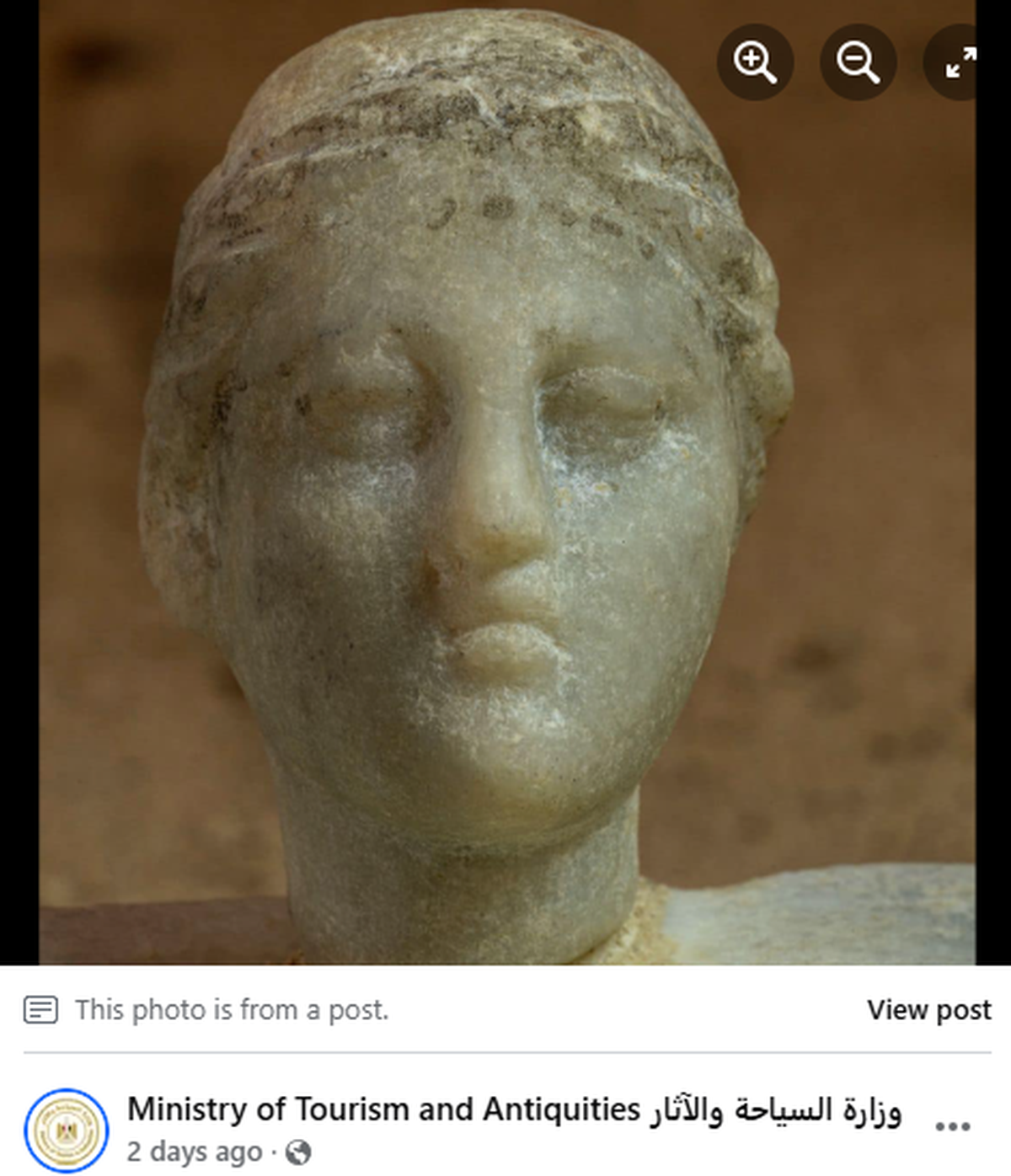
Tiny marble bust — depicting royal woman — discovered under Egypt temple wall. See it

As queen of Egypt, lover of Julius Caesar and Marc Antony, and a crucial player in the origins of the Roman Empire, Cleopatra VII solidified her place in history during her relatively short, 39-year life. However, she may be most famous for her death.
After taking her own life with Marc Antony as Roman troops descended on Alexandria, her tomb has never been found. Researchers believe she was likely buried in the city, so her final resting place may have fallen beneath the waves of the Mediterranean Sea like other parts of the ancient metropolis.
A missing tomb also means it has been impossible to create a facial reconstruction of Cleopatra, and historians are forced to see her only through artistic depictions.
Now, a tiny marble bust potentially depicting the famed queen has been discovered under a temple wall outside Alexandria, but archaeologists disagree on whether they are looking into the face of the last pharaoh of Egypt, or some other royal woman.
Archaeologists searching the area of Taposiris Magna temple near Alexandria discovered a portion of the western wall and a foundation deposit buried underneath, according to a Dec. 8 news release from the Egypt Ministry of Tourism and Antiquities.
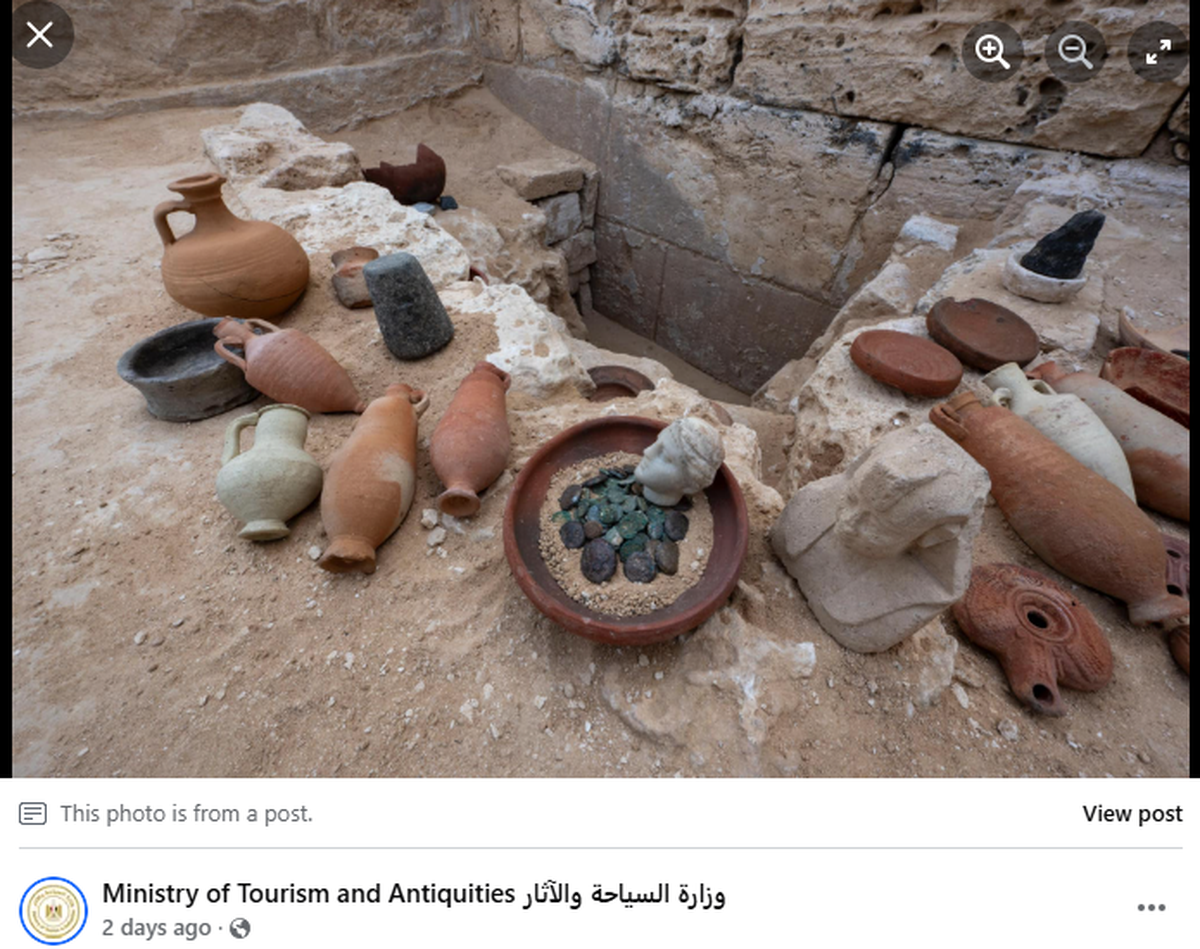
Foundation deposits were a common practice in ancient Egypt of placing important items at the corners of temples or tombs to mark the beginning of their construction.
The deposit was filled with artifacts, but most notably, a small marble statuette of a woman wearing a royal diadem and a partial limestone bust of a king with a Nemes headdress (the famous stiff linen cloth with bright colors) were uncovered, officials said.
Archaeologist Kathleen Martinez, from the Universidad Nacional Pedro Henríquez Ureña in the Dominican Republic, said she believes the marble bust depicts Cleopatra VII, making it one of the few contemporary depictions of the queen, according to officials.
However, Egyptian archaeologists disagree.
The secretary-general of the Supreme Council of Antiquities, Mohamed Ismail Khaled, said he believes the facial features don’t match Cleopatra, and it likely depicts a different royal woman or princess, according to the release.
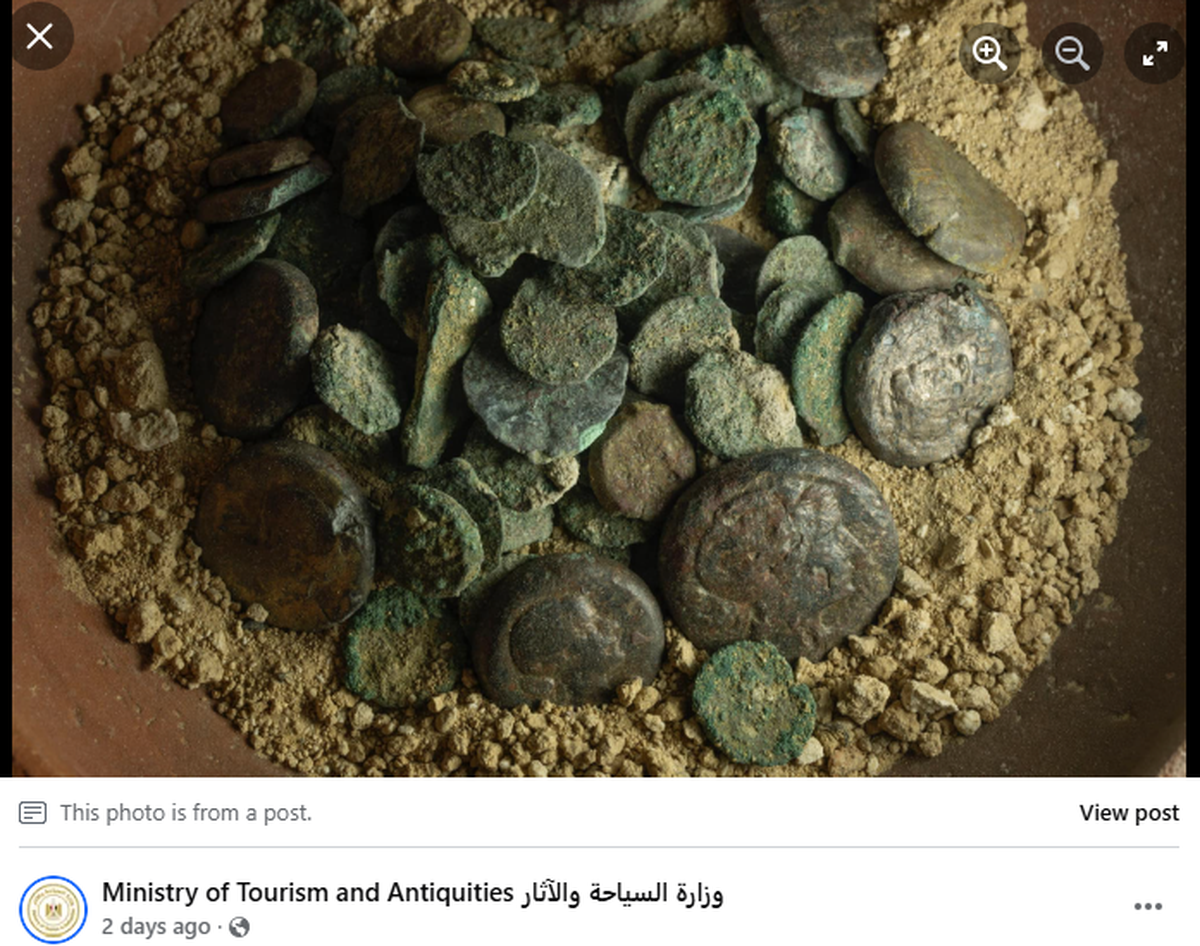
The connection to Cleopatra was made through some of the other artifacts discovered in the deposit.
More than 300 coins, many of which do bear an image of Cleopatra VII, were uncovered, officials said. There were also ceremonial pieces of pottery, oil lamps, bronze statues, a limestone cosmetic container and a scarab amulet.
The amulet was inscribed with a message to the sun god, Ra, officials said. A translation of the message reads “The justice of Ra has arisen,” according to the release.
Archaeologists also found a bronze ring dedicated to the goddess Hathor and pieces of ceramics dating to the late Ptolemaic period.
This means the temple wall was likely built during the first century, B.C.
Martinez also announced the discovery of portions of a Greek temple from the fourth century B.C. that was later destroyed during the second century B.C., officials said.
It was found near a system of tunnels running from a lake to the Mediterranean Sea and was accompanied by a necropolis with 20 catacombs and an underground tomb, according to the release. The tomb was made of three chambers, one filled with white marble busts.
Portions of the Taposiris Magna temple are underwater, officials said, and excavations of the submerged portions exposed human-made structures, human remains and pottery.

Taposiris Magna temple is about a 35-mile drive southwest from Alexandria, on Egypt’s northern coast.
Facebook Translate was used to translate the Facebook post from the Egypt Ministry of Tourism and Antiquities.
This story was originally published December 10, 2024 at 4:07 PM with the headline "Tiny marble bust — depicting royal woman — discovered under Egypt temple wall. See it."