Pompeii — an ‘endless treasure trove’ — is in a ‘golden age’ of research. What’s new?
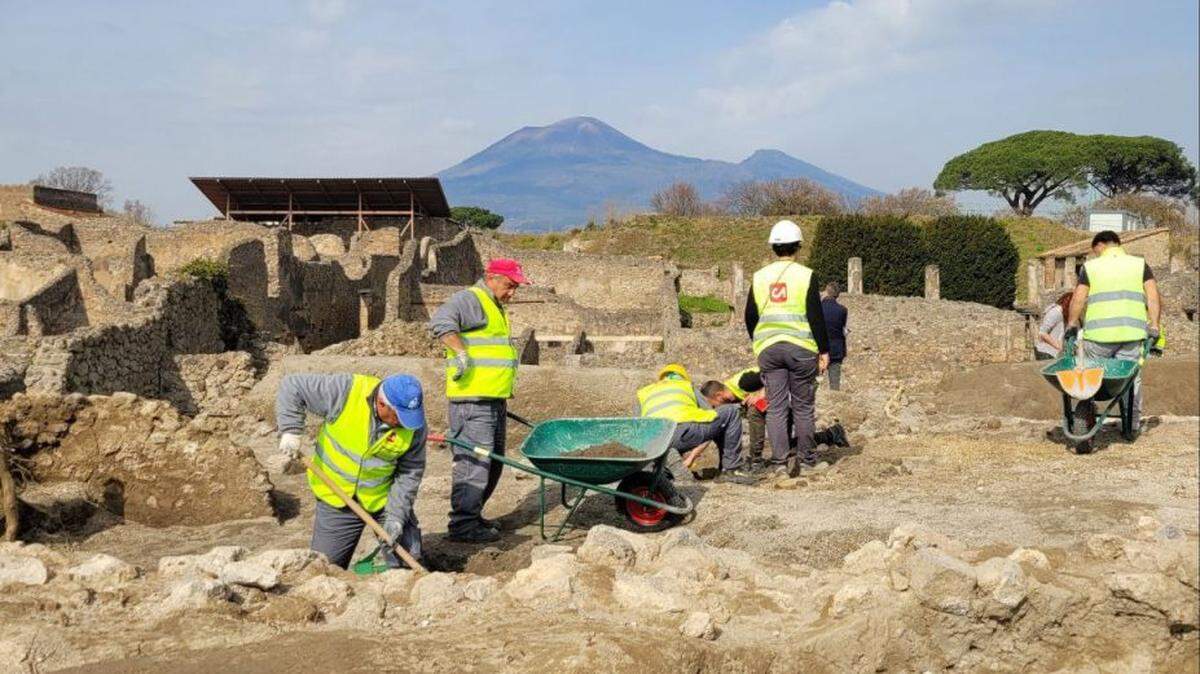
When Allison Emmerson tells people that she studies Pompeii, she usually gets the same response: “‘Hasn’t that been done? What else is there to know?’”
But, as she points out, there’s “an endless amount, truly an endless amount.”
Thanks to countless books and movies, most people know the basics about Pompeii: it was an ancient Roman city destroyed by Mount Vesuvius roughly 2,000 years ago and is now an iconic tourist destination in modern-day Italy.
But what you’ve heard about Pompeii being a time capsule or being frozen in time is wrong.
“When we study Pompeii, we’re looking at a city that was utterly destroyed,” Emmerson, an archaeologist and professor at Tulane University, told McClatchy News. “It was not preserved. It was utterly destroyed in a volcanic eruption.”
“Most people think (the eruption) happened quick,” Jared Benton, a professor of classical archaeology at Old Dominion University, told McClatchy News. The eruption in 79 A.D. actually took place over two days, giving Pompeii residents roughly a day to escape but still killing over 1,000 people.
The ruins catch people “in the act of making hard decisions,” Benton said. “‘Do I stay? Do I go? If I go, what do I take with me? If I stay, how will I try to survive sheltering in place?’ Decisions you might make if you were stuck in a hurricane or got the order to leave.”
Even after the eruption, Pompeii was not static. Looters returned to pick over the ruins. Explorers occasionally dug into it, and natural forces wore it down further.
Today, researchers approach Pompeii as a dynamic place. New discoveries routinely surprise archaeologists and force experts to rethink past assumptions about the city, the eruption and the Roman world.
The new insights stem from three types of ongoing archaeological work at Pompeii: new excavations, subterranean excavations and non-excavation work.
The so-called “new excavations” began in 2017 and focus on the one-third of Pompeii that remains buried. Here, archaeologists remove volcanic material and document what the city looked like at the time of the eruption. This type of work is currently centered on a neighborhood known as Regio IX, or Region Nine.
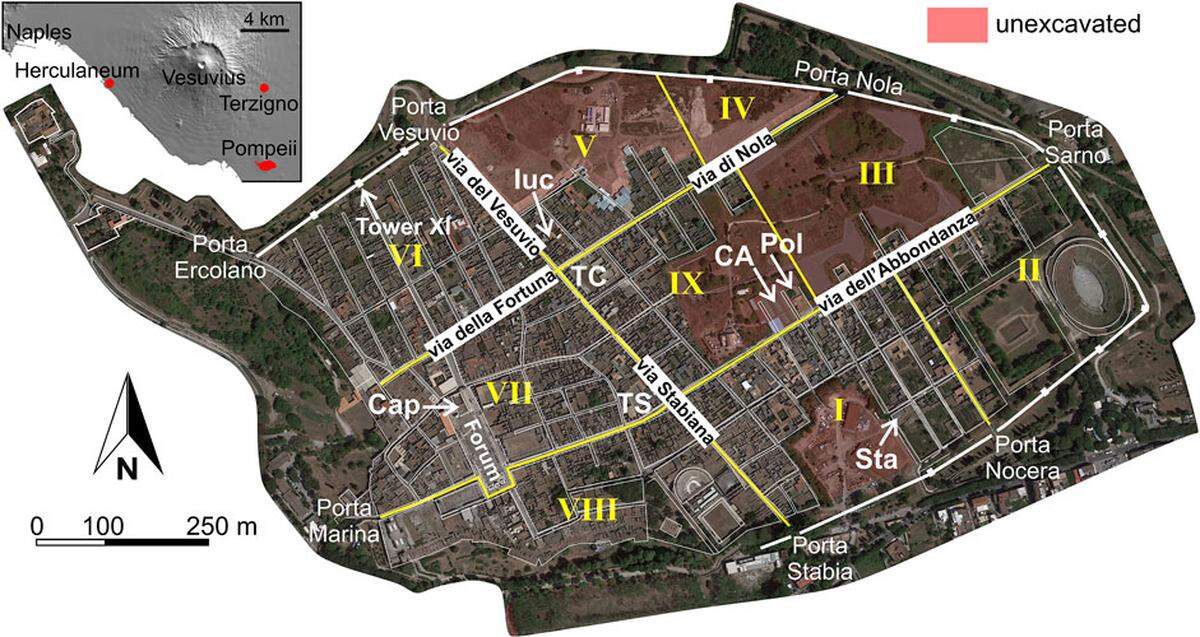
Subterranean excavations focus on previously excavated areas and involve digging through floors or roads to reveal different phases of Pompeii’s history.
Finally, non-excavation work focuses on studying the city’s architecture, artifacts or other archive materials in new ways.
“These three branches are coming together right now to make a real golden age for research in Pompeii, which is why we’re learning so much at the moment about the city,” Emmerson said.
So what are we learning?
Vesuvius may not have erupted on the date we thought
For decades, experts believed Mount Vesuvius erupted Aug. 24 of 79 A.D. based on an account written by Pliny the Younger, an ancient author and civil servant, who witnessed the disaster as a teen.
Some of the first people to challenge this date were archaeologists specializing in the study of ancient plants, Benton said. Their work at Pompeii identified fruits, such as pomegranates and figs, more common in the fall.
Other evidence against the Aug. 24 date soon began to mount.
New excavations uncovered a coin referencing an imperial proclamation in September and some charcoal graffiti mentioning events in mid-October. Analysis of historical weather patterns suggested the ash followed a wind pattern more consistent with November. Questions surfaced over the accuracy of the original Aug. 24 translation.
“It’s all these little types of things,” Benton said. Any individual find could be explained away as just an anomaly that August, but overall the evidence “has hit on almost critical mass.”
A comprehensive 2022 study concluded the available evidence “definitely” supported an eruption date “between October and November.”
But not all experts are convinced. Alessandro Sebastiani, a Roman archaeologist and professor at the University at Buffalo, told McClatchy News that “until substantial and irrefutable evidence emerges to change the August date, we should adhere to what the written sources have passed down to us without risking the manipulation of history.”
Slavery in Pompeii had a “dark side”
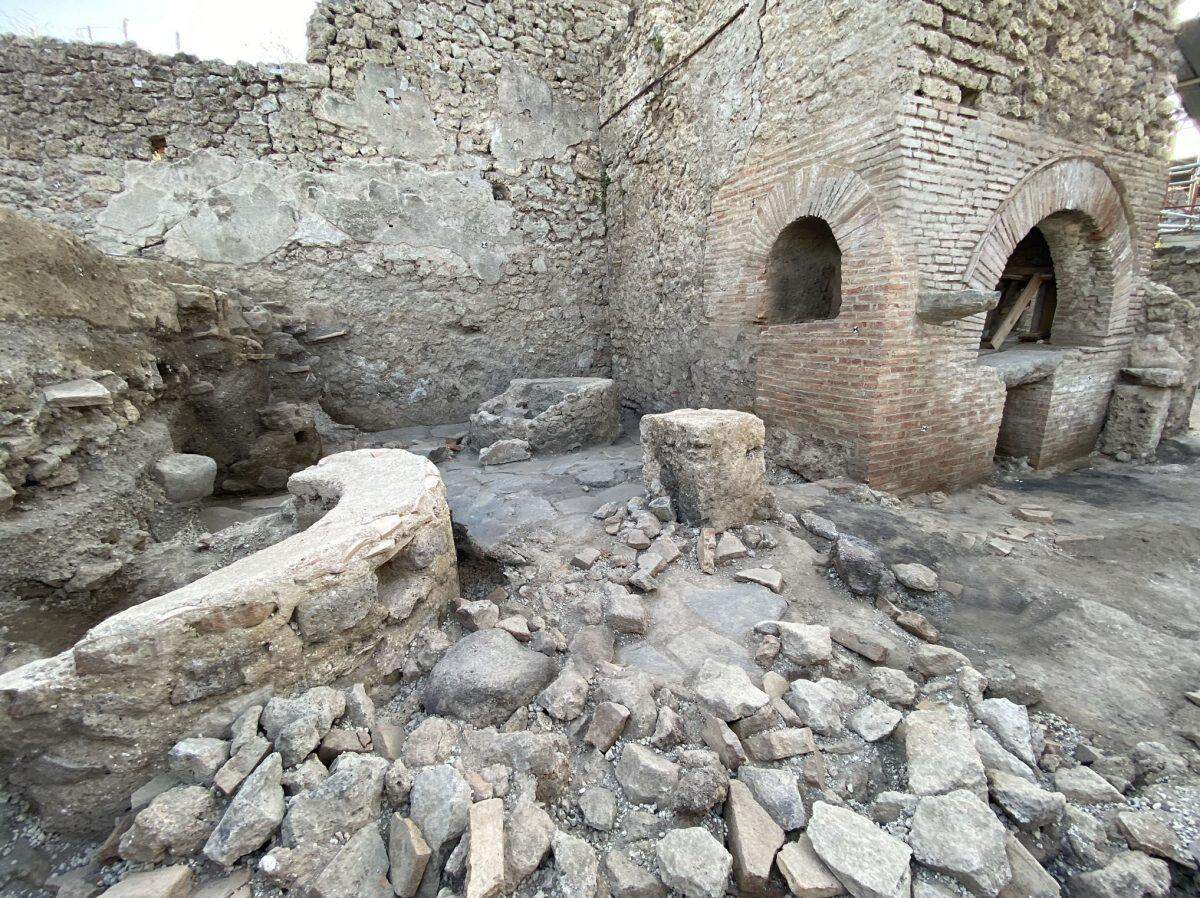
Archaeologists call it the “prison bakery”: a cramped production building with no external doors and iron bars across the small out-of-reach windows. The room provides a glimpse into the hard labor enslaved workers endured.
Giuseppe Scarpati, an archaeologist with the Archaeological Park of Pompeii, described the building as possibly “the first clear indication” of enslaved labor in Pompeii.
“Rome was a slave society,” Emmerson said, “but Roman slave society worked in very different ways than our most common touchstone, which is the American slave system. It wasn’t based in race … People who were enslaved were very much a part of every aspect of life in a city like Pompeii, and people who had formerly been enslaved also could rise very high in society.”
In recent decades, Benton said, “we’ve experienced a real profound paradigm shift in how we understand enslaved people in the Roman world. Even just using words like ‘enslaved people’ rather than ‘slaves’ is a huge shift in humanizing them.”
“There’s also a really dark side to enslavement that we kind of have overlooked, and now we’re shifting to understand better,” he said.
Sebastiani described Pompeii’s prison bakery as ”shedding light on the lives of the slaves themselves. For the first time, archaeologists have vividly reconstructed the spaces where these individuals lived, revealing how and where they slept, the contents of their rooms and the everyday items they used” — details usually lost to history.
Daily life in Pompeii is still being pieced together
“Pompeii is an almost endless treasure trove for studying aspects of daily life,” Sebastiani said.
Ancient written sources and early archaeological work tended to focus on the top of the hierarchy, but ongoing work has revealed new insights into the everyday lives of non-elite people in Pompeii, such as their diets and living conditions.
“Their diets were really rich and incredibly varied,” Emmerson said. The menu included meat and eggs but also mustard seeds and peppercorns “added just for flavoring.”
Non-elite people also ate out at restaurants, she said, something elites saw as “a very low class activity.”
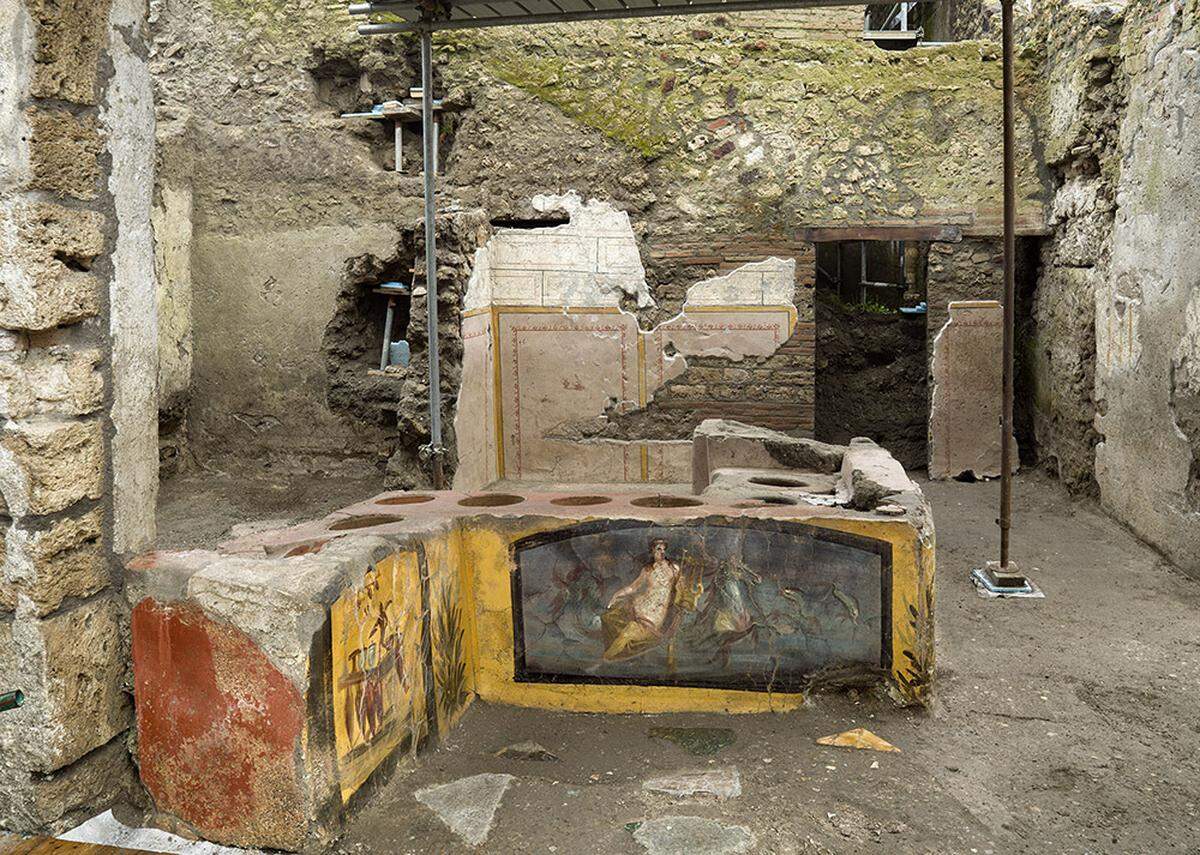
A recently unearthed snack bar, or thermopolium, with preserved decor and food remnants “allows us almost to relive a moment of social interaction within the city,” Sebastiani said.
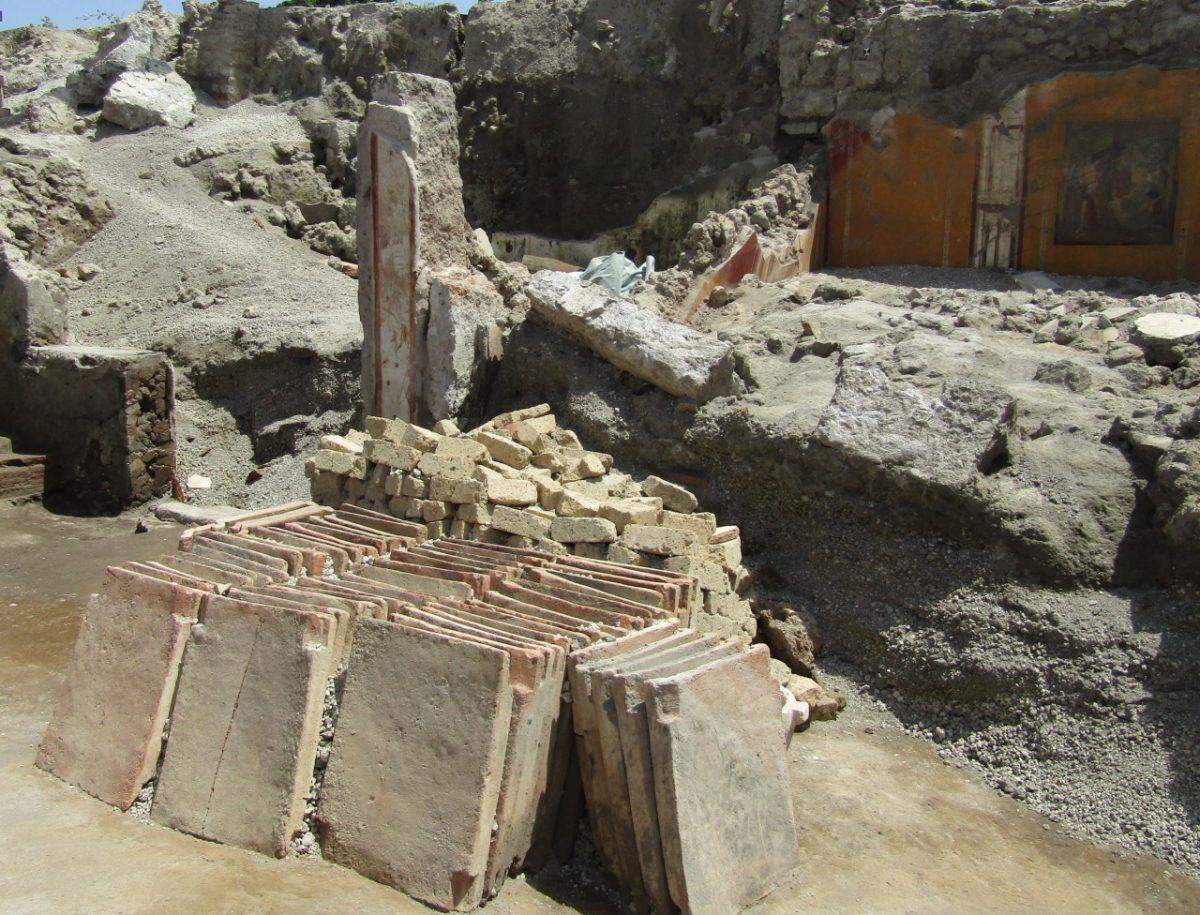
On another Pompeii street, archaeologists found an ancient construction site with tools, stacks of bricks and tiles and other common building materials. The unfinished room offered an extreme example of a city-wide trend.
“What we’re seeing is that (it) was actually really common for spaces that Romans were living in to have building materials around them,” Emmerson said. “We still need to figure out exactly why that is, but it seems like in a modern city you have a lot of construction happening.”
The “pristine condition” of Pompeii’s mosaics, paintings or other architecture “can create a misleading impression of the city as exceptionally luxurious and important,” Sebastiani said. “In reality, Pompeii was a provincial town in the first century A.D., much like other towns scattered across the expanding Roman empire.”
“Pompeii is a really seductive site,” Emmerson said. “It can easily make us think that people in the past were just like us, and in some ways, yes, humans are the same across history (and) across cultures, but we’re also very different.”
So what’s left to learn?
“Each generation who works in Pompeii comes back with new techniques and new ideas, but we also come back with the most important thing: new questions,” Emmerson said. “We have new questions about the past that are influenced by the world that we live in today.”
What was life like for Pompeii women? Or children? Or those on the rural edges? What does the graffiti on the city walls tell us? Or the bones of the victims? Or the artifacts left in homes? What crimes were punished and how? What religious beliefs dominated? What sports were played?
The list of questions is endless.
“There’s always something surprising at Pompeii,” Emmerson said. “It’s a site that is never going to stop giving up information.”
This story was originally published August 24, 2024 at 9:00 AM with the headline "Pompeii — an ‘endless treasure trove’ — is in a ‘golden age’ of research. What’s new?."