‘Secretive’ creature — with ‘mask-like’ pattern — found in gardens. It’s a new species

Sitting on the edge of a pond in Paraguay, a “cryptic” creature called into the dusky air. Its pulsating call carried well, easily heard by nearby scientists. But finding the source of the sound proved difficult.
When they finally located the “secretive” animal, it turned out to be a new species.
Researchers ventured into southern Paraguay and nearby areas of Argentina and Brazil to study local wildlife, according to a study published Aug. 7 in the European Journal of Taxonomy. They searched the landscape for Adenomera frogs, a group of “leaf-litter frogs.”
Near roads and gardens, they heard a unique sound coming from a hard-to-find frog and discovered a new species: Adenomera guarani, or the Guaraní leaf-litter frog.
The Guaraní leaf-litter frog has a “robust” body reaching just over 1 inch in size, the study said. Its coloring is “grayish-brown, with a black mask-like patch” on its back while the underside of its throat, thighs and groin are “faded pink.”
Photos show the Guaraní leaf-litter frog sitting on a leaf. It has some bumps and an orange-tinge along its sides.
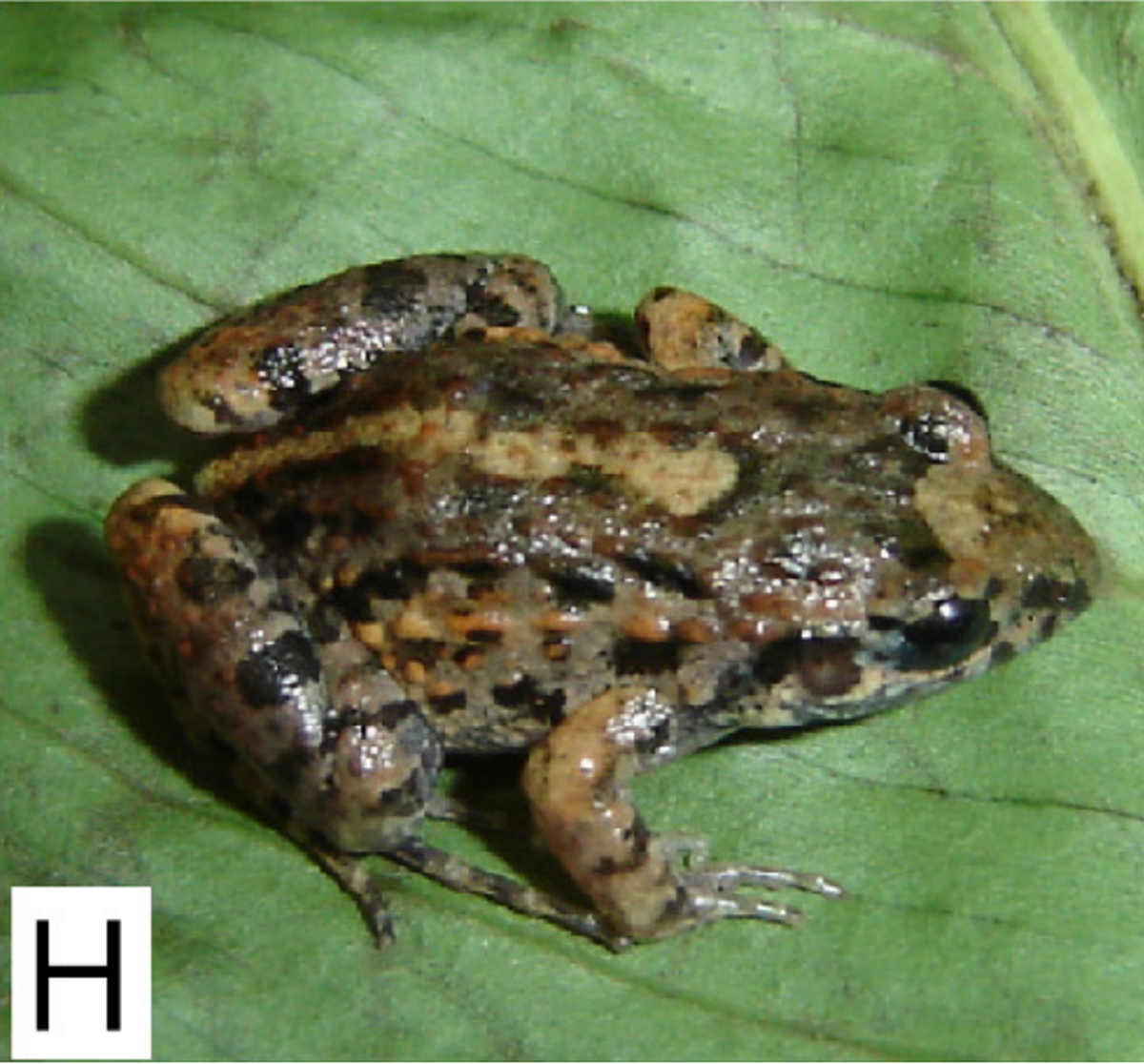
Guaraní leaf-litter frogs are a “cryptic species,” varying in color and pattern, researchers said. Photos show the frog’s coloring ranging from darker brownish to almost green to lighter orange-tan.
Researchers found Guaraní leaf-litter frogs in “open areas that can easily be flooded by rainwater during the wet season” such as roadsides, gardens, grassy areas, ponds and under the leaves of a banana plantation, the study said.
The frogs “can easily be detected by their vocalizations, but due to their small size and secretive habits, are very difficult to observe,” researchers said.
Guaraní leaf-litter frogs were “associated mainly with the Paraguay and Paraná river basins, and the Pantanal wetlands” but were also found in Argentina and Brazil, researchers said.
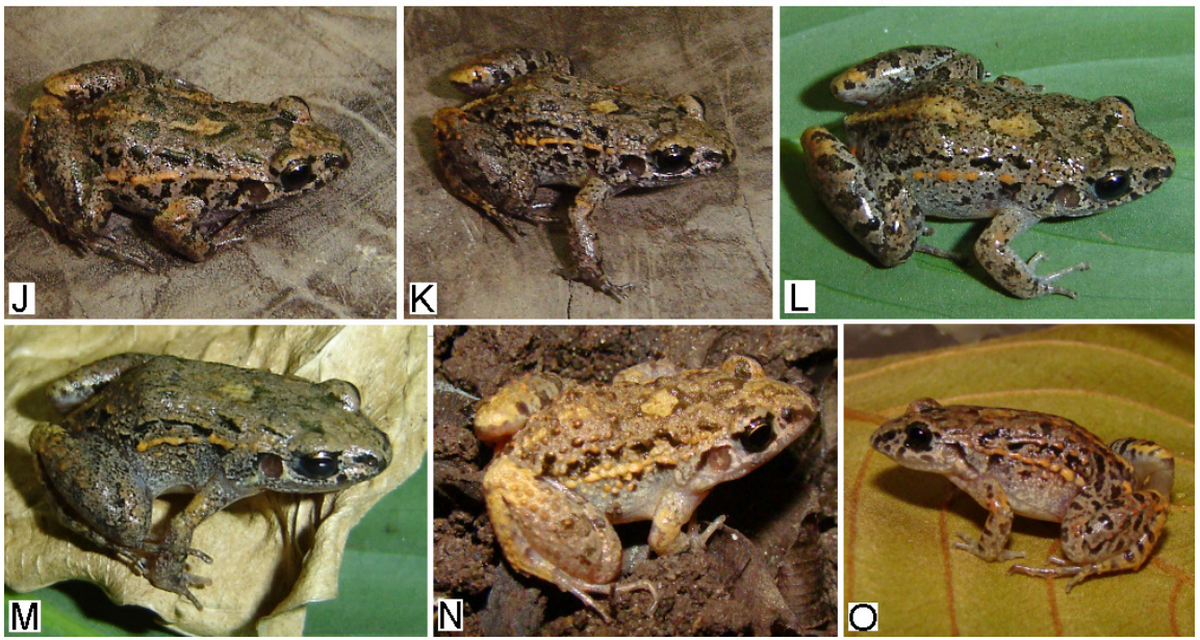
The new frog species has been documented previously but was “historically confused” with another species of Adenomera frog, according to the study.
The new species was identified as distinct based on its body shape, pulsating single-note call and DNA, the study said. DNA analysis found the new species had between about 6% to 8% genetic divergence from other Adenomera frogs.
Researchers named the new species after the Guaraní people, “a native indigenous group that inhabited in the past a vast region in South America, including areas where the new species occurs.”
The research team included Víctor Zaracho, Esteban Lavilla, Thiago Carvalho, Martha Motte and Néstor Basso.
As part of their survey of Adenomera, researchers provided more information about another known Adenomera species and identified one, or possibly two, frog populations that might eventually be identified as new species.
This story was originally published August 7, 2023 at 5:08 PM with the headline "‘Secretive’ creature — with ‘mask-like’ pattern — found in gardens. It’s a new species."