Rare cannibalistic creature found hiding in muddy bamboo forest. It’s a new species

Tucked amid the underbrush of a bamboo forest in China, a mud-colored creature went unnoticed for years. Intrigued by a decades-old sighting, scientists sought out the creature — and “unexpectedly” discovered a new species.
The creature was spotted in Fujian in 1978 then seemingly vanished, according to a study published May 17 in the peer-reviewed journal Animals. Scientists began to assume it had gone extinct from the area.
Over 40 years later, researchers exploring a bamboo forest near Quxi village “unexpectedly” rediscovered the salamander, the study said.
The “incredibly rare” new species was named Hynobius bambusicolus or the Fujian bamboo salamander after the habitat and area where it was discovered.
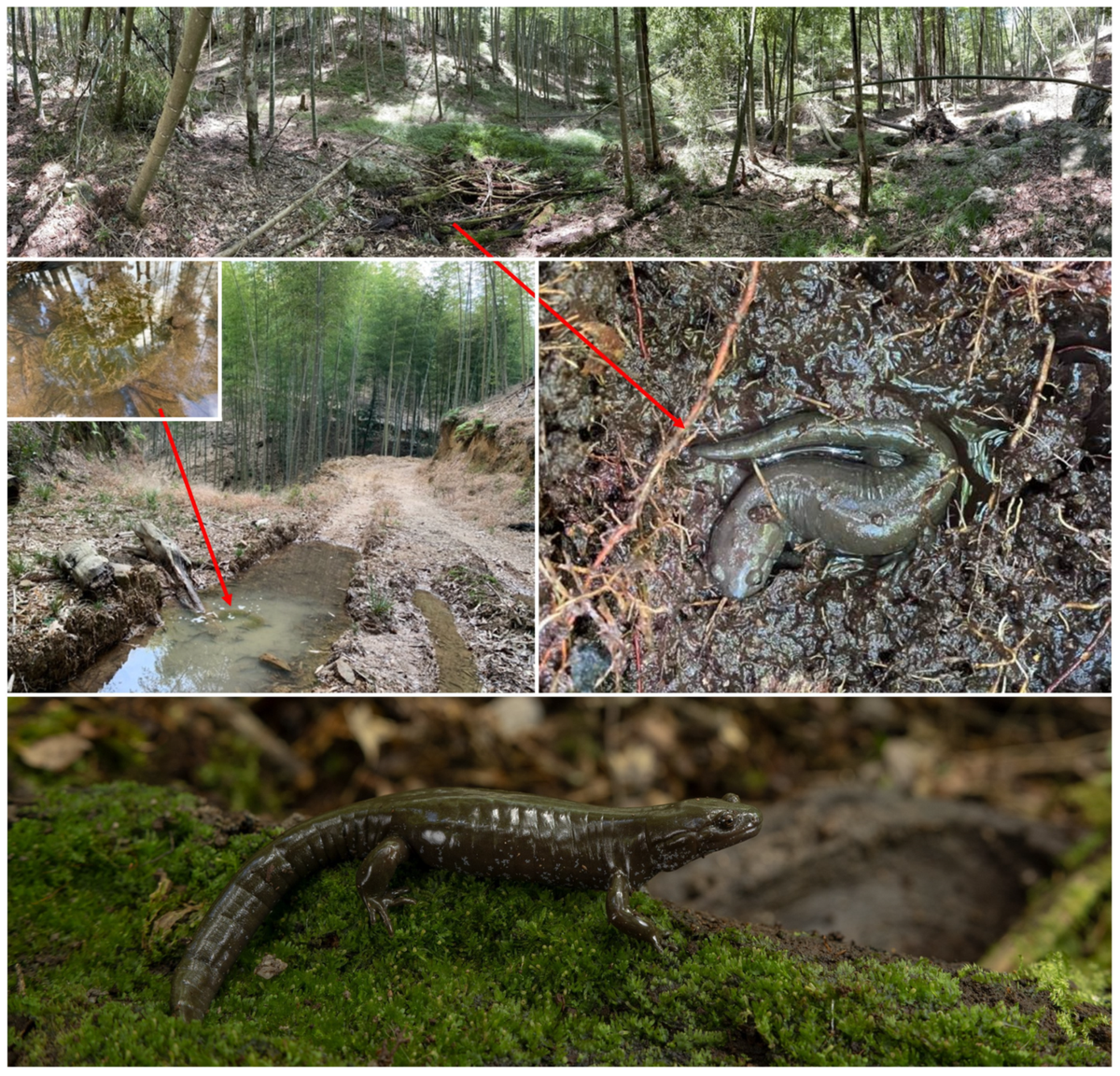
The Fujian bamboo salamander is “large,” reaching over 7.5 inches in length, the study said. It has a “dark chocolate” coloring with gray-blue speckles on its underside. Photos show how well the creature blends in with the muddy ground.
Researchers found the salamander hiding “under logs, stones and dead leaves” — never on the forest surface. Several egg sacs were found in “shallow pools” or “puddles” formed by tire tracks, the study said.
The new species is cannibalistic, with some salamanders observed eating their kin, researchers said.
When probed, a salamander emitted a “very short” call, likely an “alarm call” or “squeak,” researchers said. Vocalization is “highly unusual” for salamanders.
The new species was identified as distinct based on its body shape, location and DNA, the study said. The number of “grooves” along its body and its overall size made it morphologically unique from other known species.
DNA analysis confirmed the new species was genetically distinct, having an average or above average rate of genetic divergence than other salamander species, the study said. This indicates that the Fujian bamboo salamander “may have diverged earlier” than other related species.
Researchers estimated that the new species is critically endangered with a total population “likely lower than 200 individuals.” For this reason, they recommended establishing an off-site population and urged people not to collect, harvest or disturb the animal.
By describing the new salamander species, researchers hoped to protect the animal, the study said.
“What does not have a name is difficult to understand and protect,” the researchers said. “For conservation to be achieved, practitioners need to know what to protect, and thus species need to be described.”
Quxi village is in the southwestern part of Fujian, a province along the southeastern coast of China, and about 580 miles southwest of Shanghai.
This story was originally published May 31, 2023 at 1:45 PM with the headline "Rare cannibalistic creature found hiding in muddy bamboo forest. It’s a new species."