1,800-year-old wooden phallus found in UK may have been a Roman ‘sex toy,’ study says
Digging through fragments of history, archaeologists often recognize the items they uncover.
Centuries-old pots look similar to their modern-day counterparts. The basic forms of jewelry remain quite recognizable across time.
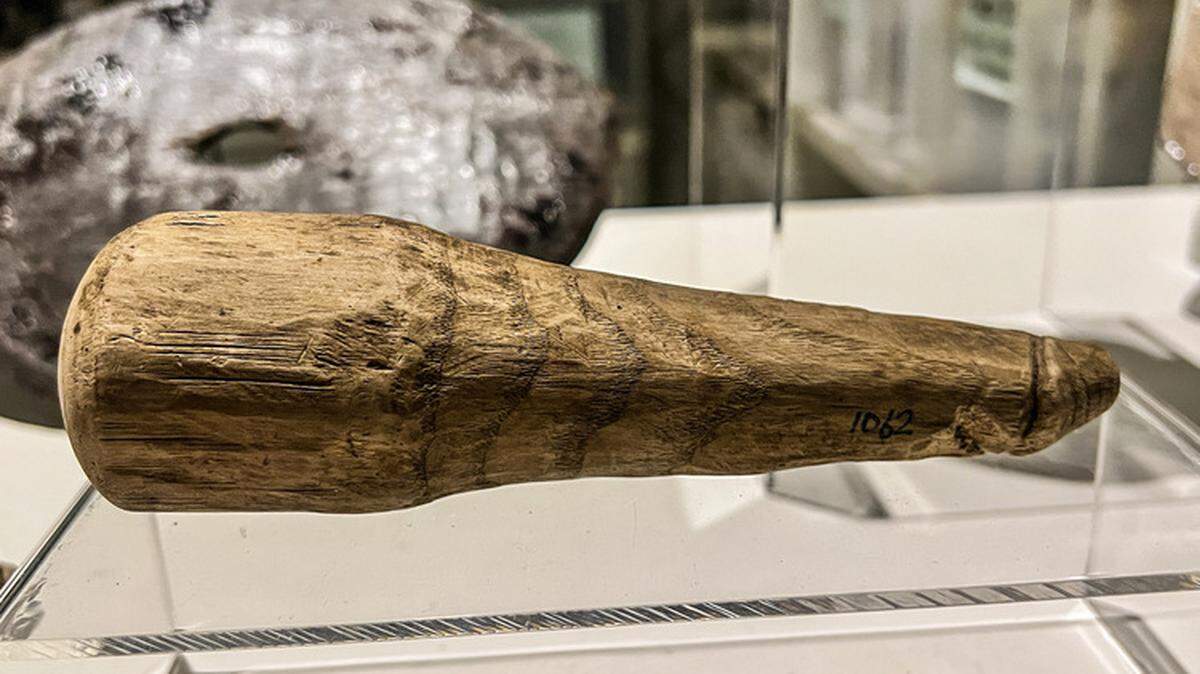
But sometimes a discovery can puzzle experts. That was the case when researchers saw a 1,800-year-old wooden phallus underneath a Roman fort and, well, had some ideas about what the item’s purpose might have been.
The wooden phallus was unearthed from a ditch at the Roman fort of Vindolanda in Northumberland, U.K., located about 300 miles northwest of London, in 1992, according to a Cambridge University study published Monday, Feb. 20.
“The wooden object in the shape of a penis was initially recorded as being a darning tool,” or knitting tool, according to a news release from University College Dublin.
The one-of-a-kind nature of the object prompted archaeologists to reconsider this initial assessment, the study said. About 6.5 inches long, the object is estimated to be at least 18 centuries old. Currently, it is “the only known example of a non-miniaturised, disembodied carved wooden phallus from the Roman world,” the authors wrote.
But what is this wooden phallus? And what was its purpose?
Archaeologists offered three possible explanations.
The wooden phallus could be “a projecting component” from a Roman statue, the study said. These types of components were sometimes inserted into stone carvings to serve as a type of good luck charm. Passersby would touch the carving and projecting phallus for protection and to ward off evil.
“In fact, one of these projecting phalluses from a building is already known from Vindolanda, carved in stone and about 1 foot in length,” co-author Rob Collins wrote in a Twitter thread about the study.
The wooden phallus, however, has a different socket from the stone projecting phallus.
Additionally, both ends of the wooden phallus are worn smooth, possibly from repeated contact, and the lack of surface weathering suggests the item was kept indoors, the study said. This wearing makes it “unlikely” the item was part of a larger outdoor statue.
Second, researchers theorized the wooden phallus could be a pestle used to mix or grind food, cosmetics or medicines. Its phallus-like shape might have been carved as a symbolic way to add protection to whatever was being mixed, the study said.
Alternatively, the 1,800-year-old wooden phallus may have been a “dildo” or “sex toy” used by the Romans for “sexual stimulation,” the researchers wrote.
“There are no confirmed examples of a dildo from the Greco-Roman era,” Collins wrote, “though we know from Greek and Roman literature and artwork that they were used.”
“For various reasons, interpreting the Vindolanda phallus as a sexual implement is more difficult, and perhaps uncomfortable, for a modern audience,” researchers wrote. “Nonetheless, we should be prepared to accept the presence of dildos and the manifestation of sexual practices in the material culture of the past.”
Based on the lack of similar objects, archaeologists could not provide a “definitive” explanation of the wooden phallus, the study said. Still, researchers said they “hope to have prompted the search for similar objects elsewhere.”
“The wooden phallus may well be currently unique,” Barbara Birley, curator of the Vindolanda Trust, said in the university release. “But it is unlikely to have been the only one of its kind used at the site, along the frontier, or indeed in Roman Britain.”
This story was originally published February 20, 2023 at 4:27 PM with the headline "1,800-year-old wooden phallus found in UK may have been a Roman ‘sex toy,’ study says."