110,000 hidden craters just discovered on the moon. Here’s how — and why it matters
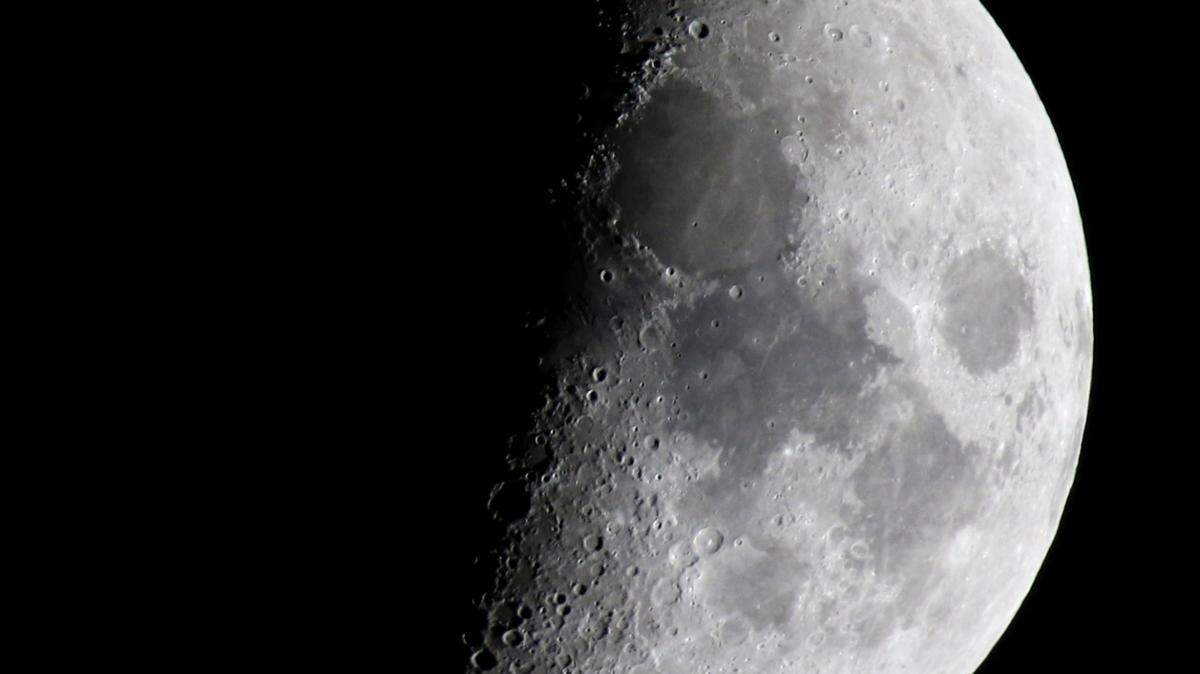
Replacing a meticulous process typically done by hand, a group of international researchers trained artificial intelligence to count and locate nearly 110,000 new craters billions of years old embedded on the moon’s surface.
The new number far surpasses the longstanding amount of 9,137, which has been recognized by The International Astronomical Union since 1919.
The scientists from China, Italy and Iceland also placed each new crater in a geological time period based on how much it has eroded, which can help aid research on the history of the solar system, as well as the interior of the moon and other celestial bodies.
A study was published Dec. 22 in the journal Nature Communications.
“Impact craters (are) the most diagnostic features of the lunar surface. That is in great contrast to the surface of the Earth. It is very difficult to trace the Earth’s history of being impacted by asteroids and comets over the past 4 billion years,” study author Chen Yang, who works at the Key Laboratory of Lunar and Deep Space Exploration at the Chinese Academy of Sciences, told CNN.
That’s because Earth has water, an atmosphere and tectonic activity that erode its surface, erasing any craters over time, according to the Lunar and Planetary Institute.
“Earth and the moon have been struck by the same impactor population over time, but large lunar craters have experienced limited degradation over billions of years. Therefore, lunar impact craters can trace the evolution of the Earth,” Yang said.
Scientists typically study photographs of moon craters for countless hours and transfer those observations to maps by hand. The process is often shrouded by subjectivity and limitations, resulting in disagreements over how many moon craters actually exist.
Using data collected from China’s Chang’e-1, Chang’e-2 and Chang’e-5 lunar orbiters — the latter of which returned to Earth in mid-December carrying the country’s first moon samples — the team trained artificial intelligence to identify and count craters.
A total of 109,956 new craters were discovered in the low- and mid-latitude regions of the moon, “which is more than a dozen times greater than the initial number of recognized craters,” according to the study.
What’s more, the scientists estimated that nearly 19,000 stretch more than 5 miles across.
The artificial intelligence was also able to accurately identify most of the craters that have already been documented in moon databases.
What can moon craters teach us?
About 80% of Earth’s surface is less than 200 million years old, while over 99% of the Moon’s surface is more than 3 billion years old, the Lunar and Planetary Institute says. “Essentially, the Moon’s surface has not been modified since early in its history, so most of its craters are still visible.”
That’s why identifying, counting and mapping them can give scientists a glimpse into the past, present and future of collisions within our solar system.
The moon holds the first evidence of a series of giant asteroid impacts on planetary bodies, including Earth, about 4.4 billions years ago, according to the American Museum of Natural History.
Impact craters on the moon are key to understanding why and how these grand events came to be — and if such a scene could happen again.
Craters can also give scientists samples of what the moon, or any planet, is like on the inside.
“During an impact, buried material is ejected while outward pressure pushes the rock at the crater’s edge upward, forming a rim,” the museum said. “These processes expose old, long-buried materials, making them accessible to probes and rovers sent to investigate these craters.”
This story was originally published December 23, 2020 at 4:38 PM with the headline "110,000 hidden craters just discovered on the moon. Here’s how — and why it matters."