
Nesting sea creature strays from beach, falls in swimming pool, FL rescuers say

An endangered loggerhead sea turtle got lost while nesting on a beach and ended up stuck in someone’s swimming pool, according to the Florida Fish and Wildlife Research Institute.
The odd sight was discovered early June 23, as staff with Island Home & Estate Management was doing a property check on Jupiter Island, about a 95-mile drive north from Miami.
“It is definitely a first for us,” General Manager Brian Goodale told McClatchy News in a July 1 phone interview. “My Property Manager Frank Basile was at the home first thing in the morning and called and said, ‘Boss, we have a problem. There’s a turtle in the pool.’ Once I got there, I realized there’s no way two people could lift that turtle out.”
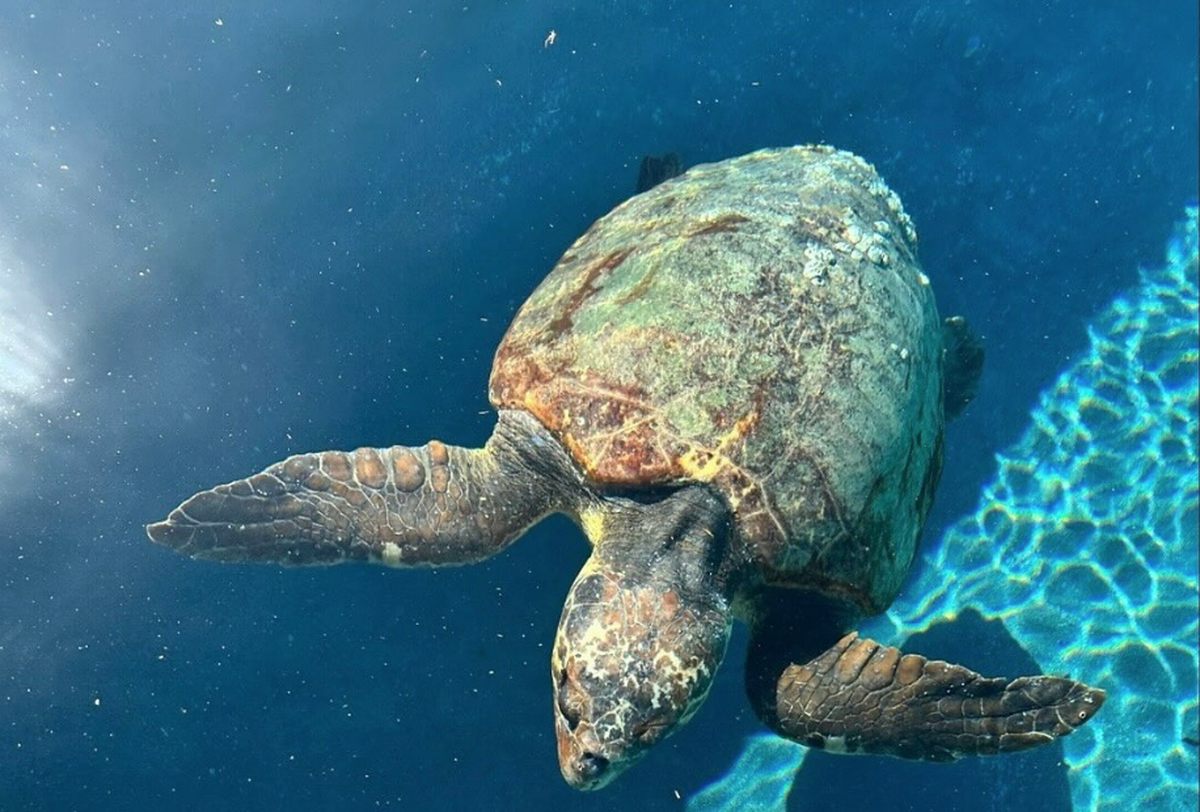
FWC sea turtle biologist Allison Ragle was among the experts who responded to the scene, and she estimates the turtle was about 3.5 feet long and weighed as much as 200 pounds.
“She wandered too far while attempting to nest and walked right through the dune plants and into the pool,” Ragle told McClatchy News in an email July 1.
“It was a deep pool with only one step in and out. She had no way to get out on her own. ... Luckily, it was a saltwater pool so she was not affected very much by physically being in the pool.”
Sea turtles tend to “go into a trance-like state” when they nest at night, and instincts guide their movements, Ragle said. As a result, they can lose their way or get disoriented when encountering people or lights on the beach, she said.
It took as many as seven people to safely get the turtle out of the pool, photos show.
“We released her right away because of how healthy she was even after her pool night,” Ragle said. “Sea turtles can lay eggs as soon as two weeks after their last clutch so we wanted her back in the water ASAP to continue mating.”
Loggerhead turtles are native to the Florida coast and can reach 350 pounds and 3.5 feet in length, the National Oceanic and Atmospheric Administration says.
The species, which can live more than 70 years, faces threats from fishing gear and changing environmental conditions, including loss of nesting habitat, NOAA Fisheries reports.
“Females lay eggs between late April and early September,” NOAA Fisheries says. “Adult females lay three to five nests, sometimes more, two weeks apart during a single nesting season. Each nest contains about 100 eggs.”
This story was originally published July 1, 2025 at 2:22 PM with the headline "Nesting sea creature strays from beach, falls in swimming pool, FL rescuers say."