Eggs of ‘exquisite’ cannibal insect confiscated by wildlife officials, raised at OH zoo
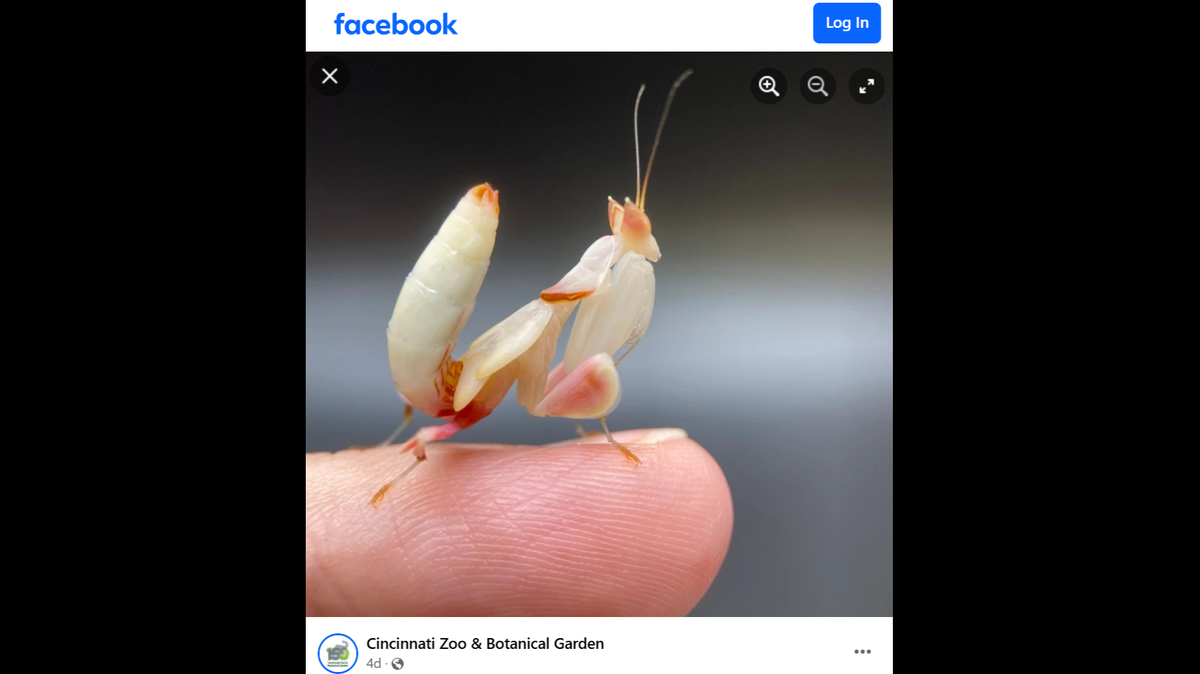
Experts at an Ohio zoo said they spent months meticulously caring for 250 “fascinating” insects that hatched from five egg sacs confiscated by wildlife officials.
The Cincinnati Zoo and Botanical Garden announced Feb. 26 that they were given nine orchid mantis oothecas, or egg casings, confiscated by the U.S. Fish and Wildlife Service.
These insects, native to the tropical rainforests of southeast Asia, are “known for their exquisite beauty and striking resemblance to orchid flowers” and require highly specialized care, experts said.
April Pitman, a senior keeper on the World of the Insect team at the Cincinnati Zoo, was given the “incredibly unique challenge” of rearing the exotic species known to cannibalize each other, zoo staff said.
Experts said it wasn’t long before eggs in five of the nine sacs hatched into 250 nymphs that needed “specialized diets and individualized housing.”
Since orchid mantises only eat insects that fly, the team raised “fruit flies, house flies, flesh flies, wax moths and soldier flies” to have a range of different-sized prey for each life stage of the mantises, experts said.
After the confiscation case was closed and “months of meticulous care,” the Cincinnati Zoo shipped 110 of the orchid mantises, each outfitted with their own customized containers, to five other zoos to be a part of conservation programs, experts said.
According to zoo staff, orchid mantises are threatened by “overcollection for the pet trade.”
“This species has seen a significant decline in the wild due to illegal trapping and export, making conservation efforts even more critical,” experts said.
The Cincinnati Zoo, in partnership with the five zoos that received the orchid mantises, formed the Safety Web for Arthropod Reproduction and Management to ensure “the orchid mantis population across multiple zoos is genetically healthy, sustainable, and protected from overexploitation,” experts said.
“By maintaining populations in zoo settings, they aim to bolster conservation efforts and educate the public about the importance of these fascinating insects,” zoo staff said.
Importing and possessing exotic mantis species, including the orchid mantis, requires a permit from the U.S. Department of Agriculture.
This story was originally published March 3, 2025 at 5:15 PM with the headline "Eggs of ‘exquisite’ cannibal insect confiscated by wildlife officials, raised at OH zoo."