‘Little ugly’ rock picked up on Texas coast. Then researchers see tooth poking through

A “strange” rock picked up over 60 years ago on a Texas beach gave researchers a glimpse into the animals that roamed the region tens of thousands of years ago.
“It’s ugly on the outside, and the treasure is all inside,” University of Texas Austin doctoral student John Moretti said in a May 29 news release.
Lamar University Professor Russel Long picked up the “little ugly” rock on McFaddin Beach near Beaumont and gave it to his former student, U.S. Representative Brian Babin. Babin later donated it for research after he suspected there was more to the “rock.”
Eventually, researchers at the University of Texas Austin noticed the “nondescript mass of bone and teeth” and were able to identify the fossil.
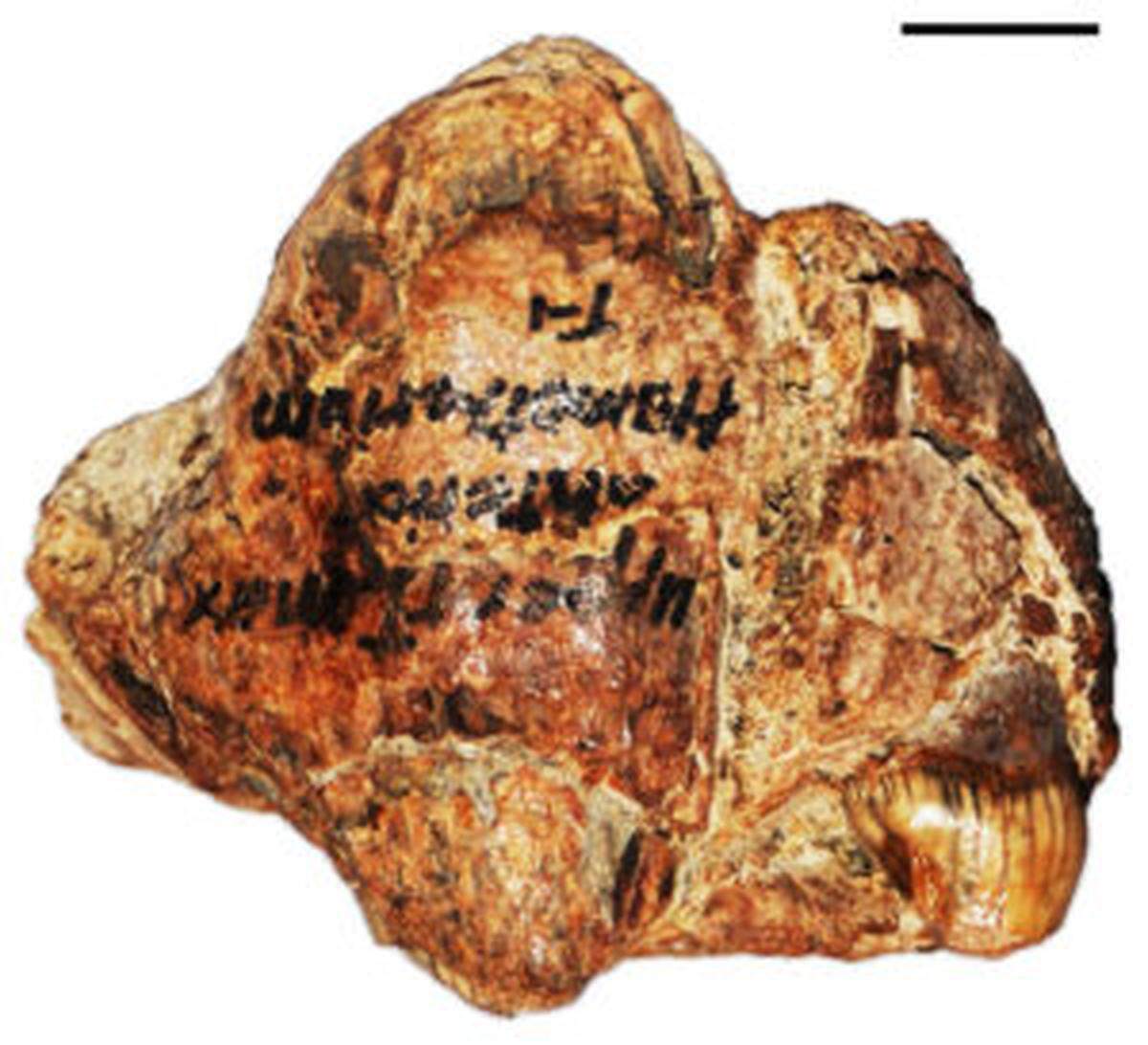
Though the teeth peeking out of the fossil were a “little worse for wear,” researchers came to an amazing discovery when they X-rayed the 6-centimeter-wide fossil.
Moretti found a “saber-like” canine tooth nestled inside the jaw that helped them determine that the ‘strange’ rock belonged to an extinct “saber-toothed” cat that roamed the earth for millions of years.
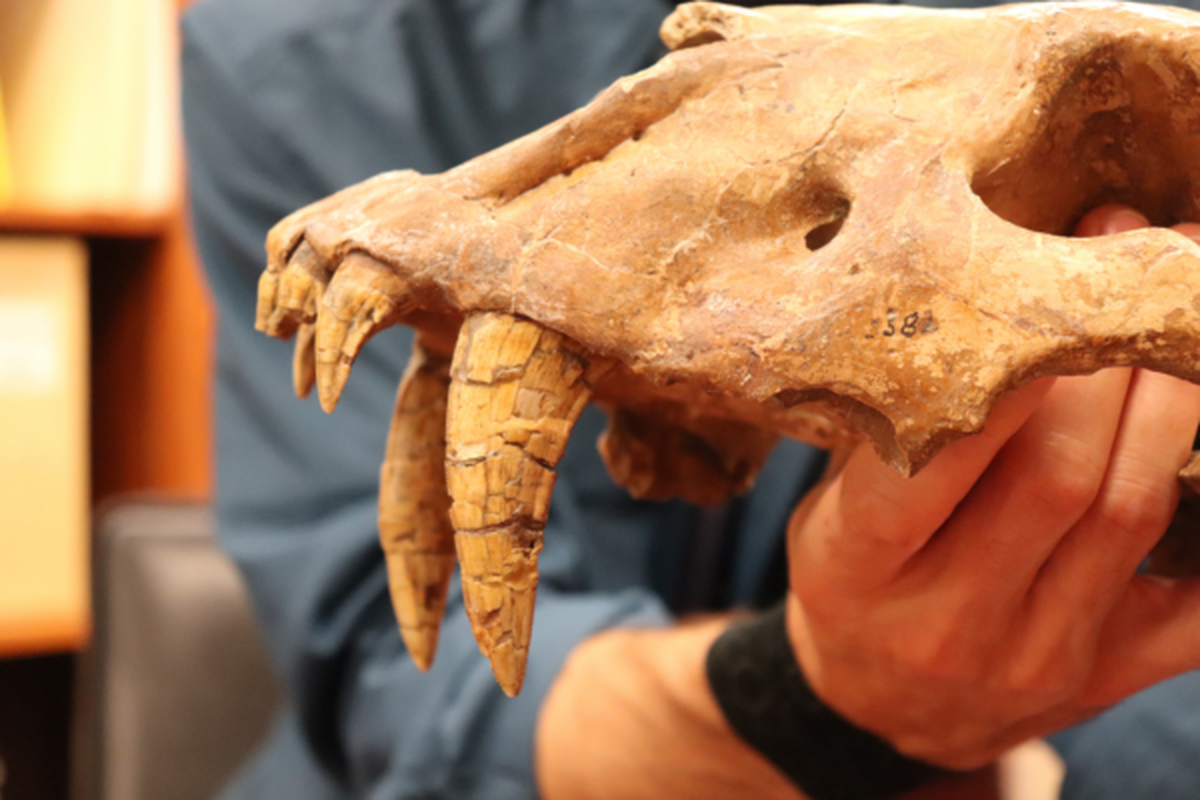
The cat — scientifically known as a Homotherium — was about the size of a jaguar and had “serrated canine teeth” similar to domestic dogs today, researchers said. The animal, with its “elongated face, lanky front legs, and a sloping back that ended in a bobtail,” roamed the earth tens of thousands of years ago across Africa, Eurasia and the Americas, according to the news release.
Researchers determined that the fossil found was from a young cat that wasn’t fully grown when it died, which allowed the unique tooth to be preserved for years.
“Had that saber tooth been all the way erupted and fully in its adult form, and not some awkward teenage in-between stage, it would have just snapped right off,” Moretti said in the news release. “It wouldn’t have been there, and we wouldn’t have that to use as evidence.”
Homotherium fossils have been found across Texas, but researchers say this discovery gave them a glimpse at a another area the cat roamed. They hypothesize that the cat likely roamed the Neotropical corridor that is part of a now-submerged continental shelf covering Texas, Florida and Mexico, according to the news release.
This story was originally published May 31, 2024 at 1:13 PM with the headline "‘Little ugly’ rock picked up on Texas coast. Then researchers see tooth poking through."