
Mysterious steel sheets found in Pacific Ocean played role in World War II, study says
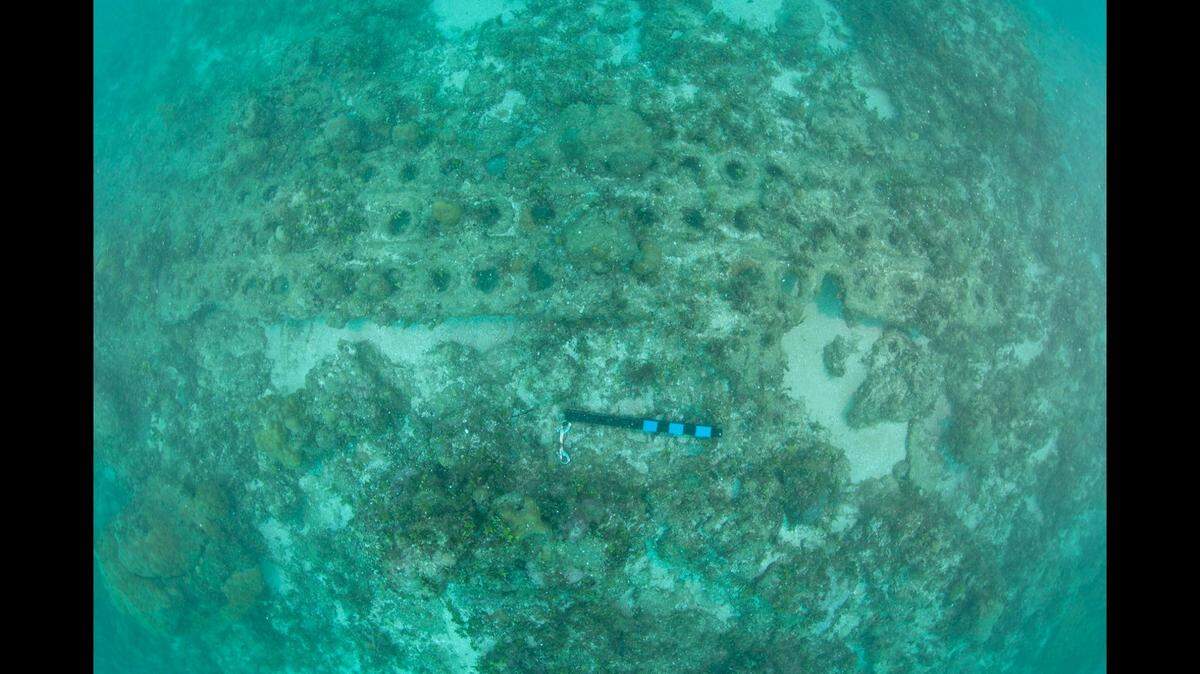
Divers investigating mysterious sheets of steel on the seafloor off Guam have discovered what amounts to a sunken trail in the Pacific Ocean.
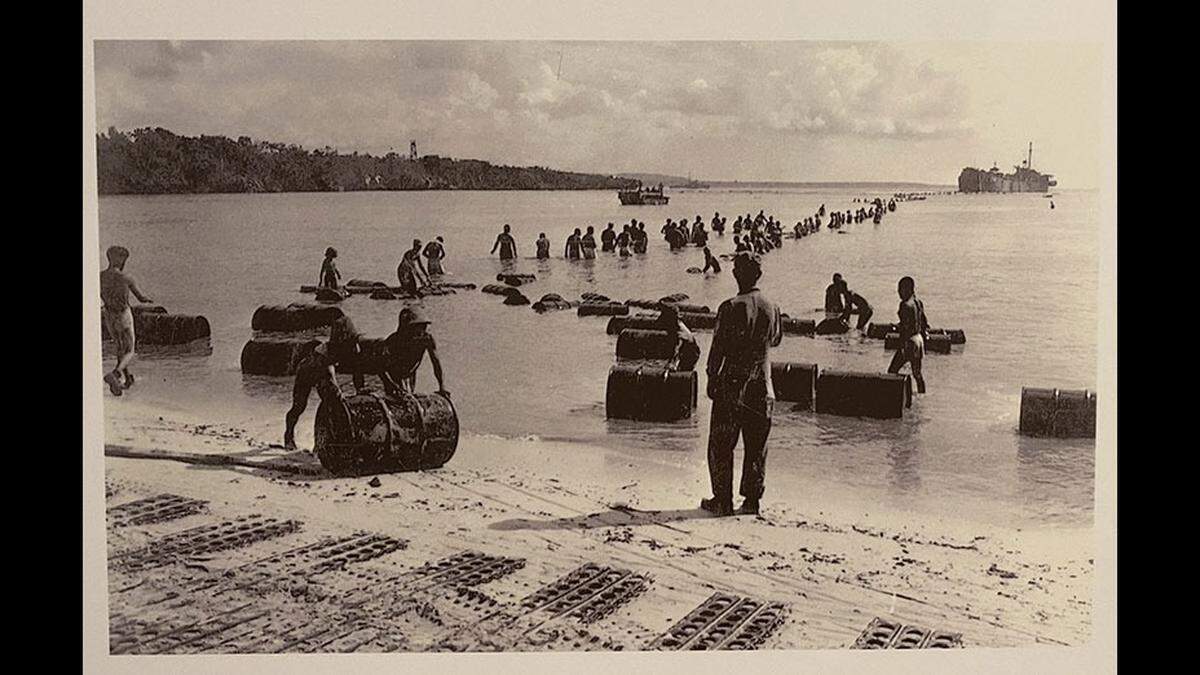
The pierced steel planking (PSP) has been identified as “Marston mats,” which were used by Navy Seabees during World War II to build stable roads atop shifting sand.
Five of the 10-foot-long mats were discovered by sonar, sitting along a World War II battlefield that is now governed by the National Park Service. The mats get their name from Marston, North Carolina, where they originally were tested for military use, NPS officials said in a news release.
“A handful remain offshore of Guam’s Agat Beach and serve as reminders of this relatively simple ... yet important invention that allowed U.S. forces to move mountains of equipment, countless tons of vehicles, and thousands of troops with minimum effort,” according to underwater archaeologist Matthew Hanks with the National Park Service.
The planks were discovered during an expedition investigating seafloor objects hidden on Guam’s WWII underwater battlefield.
Many of the objects were instantly recognizable, such as unexploded ordnance and amphibious vehicles. However, some proved to be more mysterious. Such was the case when the magnetometry data identified a target that was revealed to be steel planking.
“The PSP was certainly among the more exciting discoveries. ... The usefulness of PSP on the sandy, rain-soaked Pacific Islands, more so than anywhere else, cannot be overstated,” Hanks said in the release. “When deployed, the interlocking planks (each plank was 10 feet long and 15 inches wide) created a hard, corrosion-resistant surface, allowing them to stabilize sandy beaches.”
The planks were among 250 seafloor objects identified for further investigation during the expedition, officials said.
Other discoveries included unexploded WWII mortars and artillery rounds, and “a clear line of blast craters inside the barrier reef off Asan,” NPS officials said.
It’s believed the craters mark spots where underwater “Japanese obstacles” were blown up by U.S. underwater demolition teams, officials said.
This story was originally published September 1, 2023 at 12:57 PM with the headline "Mysterious steel sheets found in Pacific Ocean played role in World War II, study says."