Biologist shocked to find sleeping bear curled up in eagle’s nest, Alaska photo shows
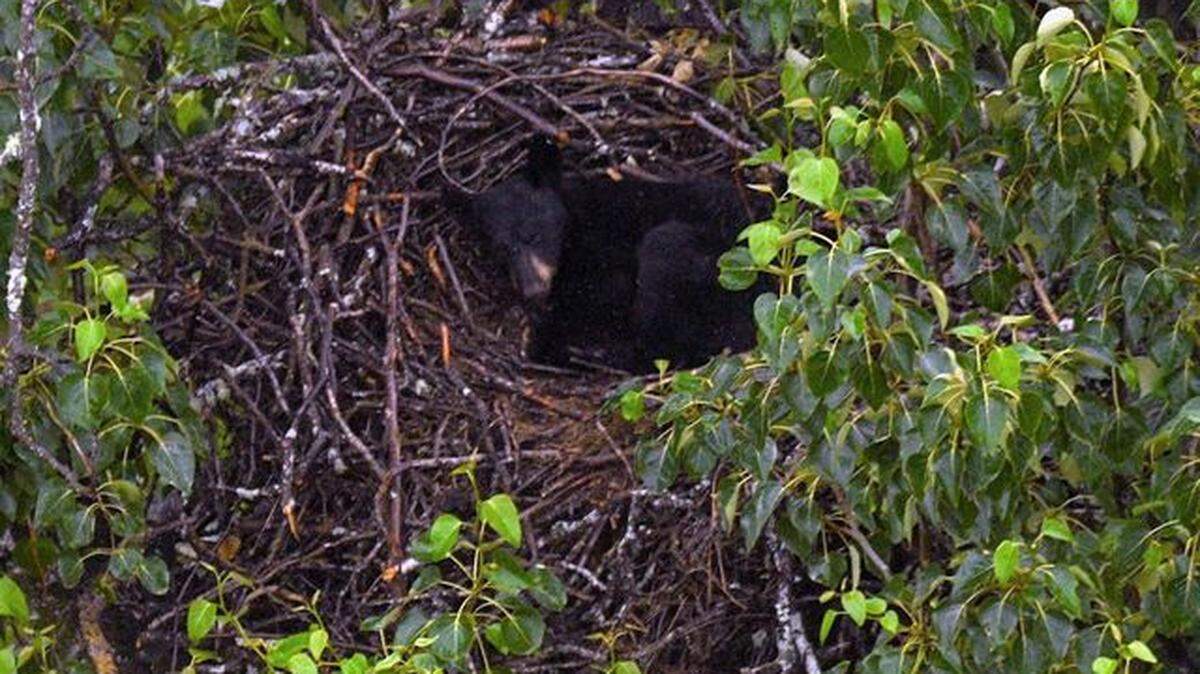
A biologist wasn’t expecting to see a small black bear curled up in a bald eagle nest during a survey at an Alaska military base
“At first, my mind was trying to make it into a baby eagle ... perhaps with its wings spread or something. Then I realized it was a small bear sleeping there,” wildlife biologist Steve Lewis told McClatchy News by email on July 27.
Lewis was in a helicopter conducting an eagle nest productivity survey for U.S. Fish and Wildlife Service at the Joint Base Elmendorf-Richardson on July 17 when he spotted the animal in a nest that measured about 6 feet wide.
There were no bald eagles — just the napping bear.
Lewis said there are many reasons the bear could’ve ended up in the nest.
How did the bear end up in the nest?
First, the animal could have been attracted to a “smelly” nest, he said. Bald eagles bring eaglets food including salmon or other fish as they raise them.
As the eaglets get older, the parents will leave the food in the nest for them, Lewis said.
“Often that food isn’t entirely consumed and ends up getting stomped into the nest or laying on the side and rotting,” he said.
The smell of food might have lured the bear to it.
However, Lewis said he suspects the nest failed in the spring.
A bald eagle was seen incubating an egg in the spring. But when they surveyed the nest a week later, the egg was left alone, and both the male and female eagles were nearby.
“Usually when she takes a break, the male will incubate (especially in a relatively cool place like AK). So I suspected it had failed in the spring,” he wrote.
Bear finds cozy bed that’s just right
If it wasn’t attracted to the smells, the bear also could have made a bed high up in the tree to stay safe from other animals, like bigger brown bears known to be nearby, Lewis said.
It’s also not uncommon for black bears to climb to the tops of cottonwood trees where they snack on the “sticky and sweet buds” during the spring, he said.
“This leads me to think that these bears are used to being up in the trees at other times,” Lewis said.
Regardless, this cozy bear ended up making a bed that was just right.
In the past, bears have caused eagle nests to fail in the area, Lewis said, but it’s not clear how often it happens.
Joint Base Elmendorf-Richardson is in northeastern Anchorage.
What to do if you see a bear
Alaska is home to all three bear species: black, brown and polar bears. Because of this, bear sightings aren’t uncommon.
But bear attacks in the U.S. are rare, according to the National Park Service. In most attacks, bears are trying to defend their food, cubs or space.
There are steps people can take to help prevent a bear encounter from becoming a bear attack.
Identify yourself: Talk calmly and slowly wave your arms. This can help the bear realize you’re a human and nonthreatening.
Stay calm: Bears usually don’t want to attack; they want to be left alone. Talk slowly and with a low voice to the bear.
Don’t scream: Screaming could trigger an attack.
Pick up small children: Don’t let kids run away from the bear. It could think they’re small prey.
Hike in groups: A group is noisier and smellier, the National Park Service said. Bears like to keep their distance from groups of people.
Make yourself look big: Move to higher ground and stand tall. Don’t make any sudden movements.
Don’t drop your bag: A bag on your back can keep a bear from accessing food, and it can provide protection.
Walk away slowly: Move sideways so you appear less threatening to the bear. This also lets you keep an eye out.
Again, don’t run: Bears will chase you, just like a dog would.
Don’t climb trees: Grizzlies and black bears can also climb.
This story was originally published July 27, 2023 at 3:53 PM with the headline "Biologist shocked to find sleeping bear curled up in eagle’s nest, Alaska photo shows."