What would the periodic table sound like? Listen to the ‘do re mi’ of Ca, He, Fe
Earth’s natural soundtrack is made of the rushing water of a creek behind your house, the patter of rain against your window and leaves crunching under your feet after the weather starts to get cold.
It’s the silence when snow falls, the crackling of a fire and every sound in between.
But what if nature’s elements themselves could make noise?
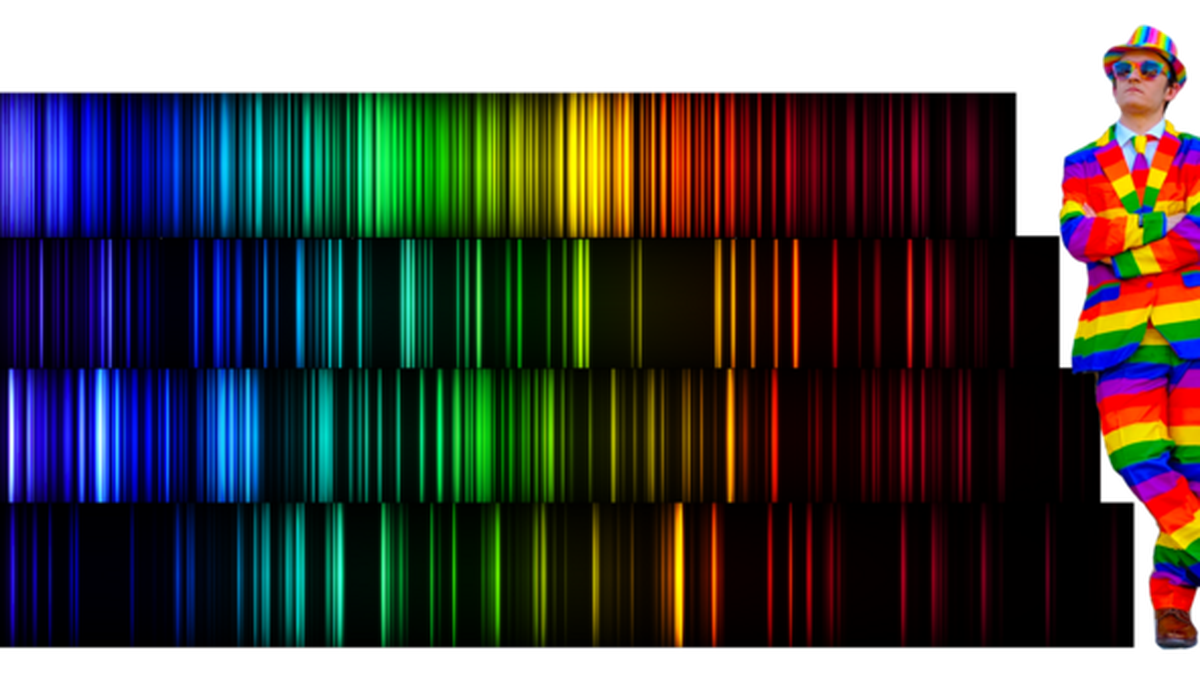
W. Walker Smith, a researcher at Indiana University, used a process called data sonification to give the periodic table of elements its own musical notes by writing a code that could read the vibrations of light wavelengths, according to a March 26 news release from the American Chemical Society.
Every element in the periodic table gives off a certain amount of visible light. It’s this light that makes it easy to tell gold (Au) and silver (Ag) apart.
All 118 known elements give off a different combination of light waves, making their visible signature unique, according to the news release.
Combining his passion for chemistry and music, Smith wrote a code that could read the vibrations of the wavelengths of light given off by elements in the periodic table and translate them into musical notation.
Some elements had just a few wavelengths to translate, and others had hundreds or even thousands of vibrations, creating harmonies, chords and musical patterns.
“The result is that the simpler elements, such as hydrogen and helium, sound vaguely like musical chords, but the rest have a more complex collection of sounds,” Smith said in the release.
Calcium, for example, sounded like bells chiming together, while other elements sounded more likely spooky, horror movie music because of the dissonance of notes.
Smith said he was surprised by the sound of zinc, because it has many light wavelengths but still sounded like “an angelic choir singing a major chord with vibrato.”
Smith presents his musical periodic table as an audio show, including clips from some of the smaller elements and what he calls “compositions” of larger molecules.
Smith presented his project at the American Chemical Society Spring 2023 Meeting on March 26 and will perform his show “The Sound of Molecules” on March 28.
This story was originally published March 27, 2023 at 6:53 PM with the headline "What would the periodic table sound like? Listen to the ‘do re mi’ of Ca, He, Fe."