
The magic of ‘Toy Story’ began 30 years ago — but it almost didn’t happen
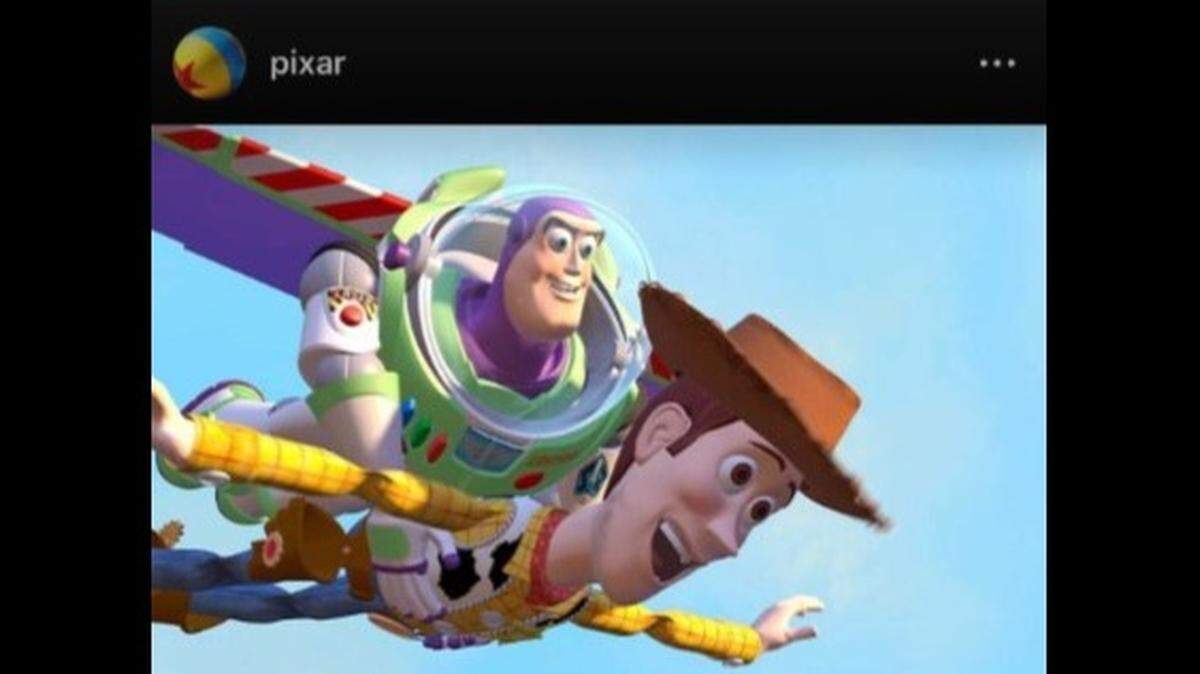
Now a beloved family film with an entire catalog of sequels and successors, “Toy Story” was far from a sure thing when production work began on the film on Jan. 19, 1993.
Envisioned as the first full-length computer animated feature film, the story of Woody, Buzz Lightyear and their toy friends almost never happened at all.
Pixar Animation Studios, which began as part of Industrial Light and Magic before it was bought by Steve Jobs, initially produced short films like the Academy Award-winning “Luxo Jr” in 1986, The History Channel reported.
Then the company, based in Emeryville, California, signed a deal in 1991 to assist animation giant Walt Disney Studios with its films, and Pixar began to aim a bit higher.
“I kept saying, ‘Let me make a film for you up here,” founder John Lasseter told Entertainment Weekly in 2011. “They always said, ‘No, a Disney animated film will always be made at Disney.’”
What changed the studio’s mind?
Lasseter credited Tim Burton’s “The Nightmare Before Christmas.” While it had no connection to Pixar, the success of the stop-motion animation film opened Disney’s eyes to the possibilities of non-standard animated films.
“They said, ‘Okay, we’re willing to talk with you. We’ve got puppet animation going and now we’ll be willing to develop the computer animation,’” Lasseter told Entertainment Weekly.
Woody and Buzz weren’t exactly the first
But for all its groundbreaking glory, “Toy Story” wasn’t the first film to use computer animation. In fact, the technology — although more crude initially — goes back decades.
“Vertigo,” the classic suspense film by Alfred Hitchcock, used computer animation to create the spiral stairways seen in the opening credits in 1958, Computer Animation History reported.
Hitchcock hired John Whitney to produce the Saul Bass-designed sequence using a World War II mechanical computer that weighed 850 pounds, according to the publication.
“Catalogue” in 1961 became the first computer animated short film, while “Computer Ballet” in 1965 was the first with human figures, Adobe reported.
“The Stick Man” followed in 1967 as the first computer animated film to use motion-capture technology, according to the site.
And that marriage of film and computer technology was just getting started.
In 1971, the science fiction classic “Westworld” — later rebooted as an HBO series — became the first full-length feature film to utilize digital animation, Adobe said.
And in 1982, “Tron” and “Star Trek II: The Wrath of Khan” showcased digital animation sequences, like the animation for the Genesis Device in the latter.
In 1985, Pixar — still part of Industrial Light and Magic — produced the first 3D computer animated images for the studio’s “Young Sherlock Holmes,” featuring a stained-glass knight that menaces the boy detective, The History Channel reported.
Now the studio was ready to make its own feature film. Or was it?
‘None of us knew what we were doing’
Now that Disney had given Pixar the green light to produce a computer animated feature film in-house, what movie would the studio make?
“At that point, none of us knew what we were doing,” Ed Catmull, now Pixar’s president, told Time in 2015. “We didn’t have any production expertise except for short films and commercials. So we were all complete novices.”
But Andrew Stanton, who co-wrote “Toy Story,” was adamant the project needed to do more than just show off Pixar’s animation software, Time said.
“It’s not a widget you’re making. It’s not a product,” Stanton said. It had to be a full-fledged movie with feeling and a great story that would outlast the novelty of the technology used to create it.
Pixar also had to deal with the limits of that technology, which worked best with geometric objects and left more organic shapes looking “plastic,” Time reported.
Like toys.
Stanton and other writers ended up crafting the now-beloved story of children’s toys secretly coming to life when nobody’s looking.
They framed it as a buddy film around two rivals, the cowboy Woody and spaceman Buzz Lightyear, vying for the attention of a boy named Andy.
It didn’t exactly work out as expected.
CGI hatches dinosaurs and terminators
Even as Pixar wrestled with creating “Toy Story,” computer animation technology was becoming part of live-action movie and television production, too.
James Cameron, who had experimented with computer-generated imagery in 1989’s “The Abyss,” went full-bore with the technology in “Terminator 2: Judgment Day” in 1991, Computer Animation History reported.
The film featured a “liquid alloy” terminator facing off against Arnold Schwarzenegger’s older model. The new killer robot could shapeshift and impersonate people — all thanks to CGI.
And in 1993, Steven Spielberg’s “Jurassic Park” starred CGI dinosaurs that still hold up in viewings today, ScreenRant said.
But even as the technology broke new ground, Pixar faced a crisis as old as Hollywood.
Creating a ‘Toy Story’
One year into production on the film, Pixar screened a test cut for Disney executives, Pixar said in its history of the film. Nobody liked what they saw.
“I sat there and I was pretty much embarrassed with what was on the screen,” Lasseter recalled in a video posted by Pixar.
The biggest problem? Woody. In trying to give the toy cowboy, voiced by Tom Hanks, an edge, Pixar had turned him into a jerk.
Clips included in the video show Woody endlessly haranguing, bullying and insulting the other toys.
“If it wasn’t for me, Andy wouldn’t pay any attention to you at all,” a raging Woody browbeats the cowering Slinky Dog at one point. “So shut your mouth!”
Disney then basically shut down production on “Toy Story” as a brain trust of Pixar executives and creators met to try to iron out the problems with the story.
Stanton told Time he remembers telling other executives that Woody and Buzz had to be so interesting you’d watch a film about them being stuck in an elevator together. They realized viewers would have to like Woody before they could empathize with his later jealousy toward Buzz.
And those decisions cracked the code for Pixar, which would go on to use the lessons learned on “Toy Story” to guide the creation of more than 25 other computer animated feature films.
“It’s the ugliest picture we will ever make, but you don’t care because you get wrapped up in the story to this day,” Stanton told Time..
Twenty-seven animators assembled more than 400 computer models to produce the final product, Adobe said.
To infinity — and beyond!
The completed “Toy Story” opened in November 1995 to critical and audience acclaim, earning $358 million worldwide and a special Academy Award, The History Channel said.
Other classic Pixar films followed, including “Monsters Inc.,” “Finding Nemo,” “Cars,” and three “Toy Story” sequels and a spin-off, including “Toy Story 3,” which won an Oscar for Best Animated Feature in 2011.
Other film studios soon joined in with their own groundbreaking feats. DreamWorks released “Shrek” in 2001, featuring a then-record 36 different in-film locations, Adobe reported. Blue Sky Studios released the first “Ice Age” in 2002, featuring mammoths, saber-tooth tigers and other animals never previously animated in films.
Disney went on to buy Pixar in 2006 and Lasseter became chief creative officer of both studios, until his resignation in 2018 over sexual misconduct allegations.
But the movie that began it all endures.
“The simple story of a roomful of toys and their owner, a young boy named Andy, has become a touchstone for generations of families over the past two decades, and its revolutionary use of computer animation has now become a standard approach for animated feature films,” the Academy of Motion Picture Arts and Sciences says on its site.
This story was originally published January 19, 2023 at 7:00 AM with the headline "The magic of ‘Toy Story’ began 30 years ago — but it almost didn’t happen."