Earth is losing its shine, study finds. Here’s what it means and why it’s concerning
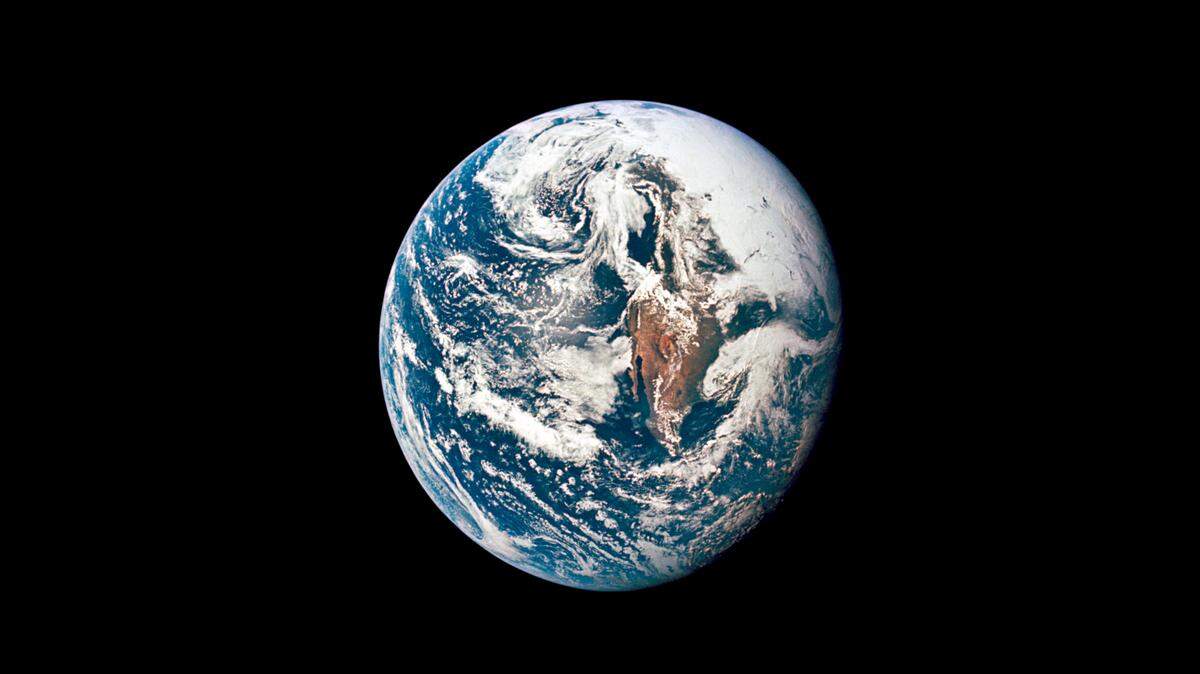
Earth is losing its shine, new research shows, and oceans are to blame.
Compared to two decades ago, the planet now reflects about half a watt less sunlight from its surface per square meter back into space. That’s about a 0.5% decrease in Earth’s brilliance, formally known as albedo.
It may not seem like much, but most of this drop occurred in just the last three years of available data, a rapid shift that shocked researchers studying 20 years’ worth of cosmic measurements. Earth has been known to reflect about 30% of the sunlight that shines on it.
“The albedo drop was such a surprise to us when we analyzed the last three years of data after 17 years of nearly flat albedo,” Philip Goode, lead author of the new study and a researcher at the New Jersey Institute of Technology, said in a news release posted Sept. 30. The study was published in the journal Geophysical Research Letters in August.
So, what does it mean that Earth is slowly dimming?
The less sunlight the Earth bounces off its surface and sends back into space, the more of it gets trapped in its atmosphere. Researchers speculate the extra dose of the sun’s heat could warm global temperatures, adding to what human activities have been doing for years. The team says this change in captured light “is of the same magnitude” as the total impact people have had on climate over the last two decades.
“It’s actually quite concerning,” Edward Schwieterman, a planetary scientist at the University of California at Riverside who was not involved in the new study, said in the release.
But the dimming is not totally natural. Humans carry some of the blame, but how much remains unclear.
Why is Earth losing its shine?
While analyzing data gathered by the Big Bear Solar Observatory in Southern California collected between 1998 and 2017, researchers determined the drop in Earth’s albedo did not correlate with regular shifts in the sun’s brightness, meaning something on Earth was triggering the change.
NASA satellite measurements revealed low-lying clouds hovering above the eastern Pacific Ocean, off the west coasts of North and South America, have been disappearing in recent years.
Thick low-lying clouds like these that hover about a mile or so from the Earth’s surface cool more than they warm because they reflect the sun’s heat. Clouds higher up are thinner and tend to trap heat, instead, warming the planet’s surface.
So, fewer low-lying clouds means a dimmer Earth with warmer temperatures.
Researchers say there’s been a reduction in these cooling clouds because the eastern Pacific Ocean has been warming thanks to a climate phenomenon called the Pacific Decadal Oscillation, which typically fluctuates every 20 to 30 years between “warm” and “cool” phases.
This phenomenon shifted to its “warm mode” in 1977 and has remained there since, according to the Climate Institute. Researchers say global climate change, strongly driven by the burning of fossil fuels, influences this fluctuation to some degree.
Why is a dimming Earth concerning?
It’s long been thought that the warmer the air is, the more ocean water evaporates; the more water vapor in the air, the more water droplets there are to fuse together into clouds, which reflect light back into space. Put simply, more clouds equals higher albedo.
Scientists had hoped this process would balance the warming effect humans are causing on Earth, “but this [study] shows the opposite is true,” Schwieterman said.
However, why warmer temperatures are stripping low-lying, cooling clouds from the atmosphere is unclear.
Clouds are notoriously difficult to study. Part of the problem is that scientists don’t have historical data on how they used to behave during the preindustrial era, unlike they do for greenhouse gasses, which were preserved in ice core bubbles, trees and fossils. Another hurdle lies in how complex it is to simulate clouds in scientific models that help us better understand their composition and activity.
A 2016 study proposed one of many theories: a warmer Earth pushes low clouds upwards. The higher the clouds, the more heat they trap from the sun and the warmer Earth feels.
This story was originally published October 4, 2021 at 4:48 PM with the headline "Earth is losing its shine, study finds. Here’s what it means and why it’s concerning."