
3D map finds mud-spewing volcanoes, 200-mile deepwater river on Gulf of Mexico floor
A 200-mile-long “ultra-deepwater” river off Florida is among the surprises researchers have discovered while creating a high-resolution 3D map of the northern Gulf of Mexico.
The Bureau of Ocean Energy Management released details of the project earlier this month, noting “1.4 billion 40-by-40 ft cells” were used in building the basin map.
It took years to finish, but the painstaking approach has given scientists a chance to examine seafloor features that were vague, if not mysterious, in previous mapping attempts. The map covers 90,000 square miles.
“NOAA’s old map showed the gross features, but the detail of the seafloor that we discovered with the 3D seismic data was much greater,” BOEM officials told McClatchy News.
“We fully detailed a meandering ‘river’ in ultra-deepwater that extends for over 200 miles in front of the Florida Platform. (It’s) very close to the size of the Mississippi River, but has been underwater since its formation approximately 200,000 years ago.”
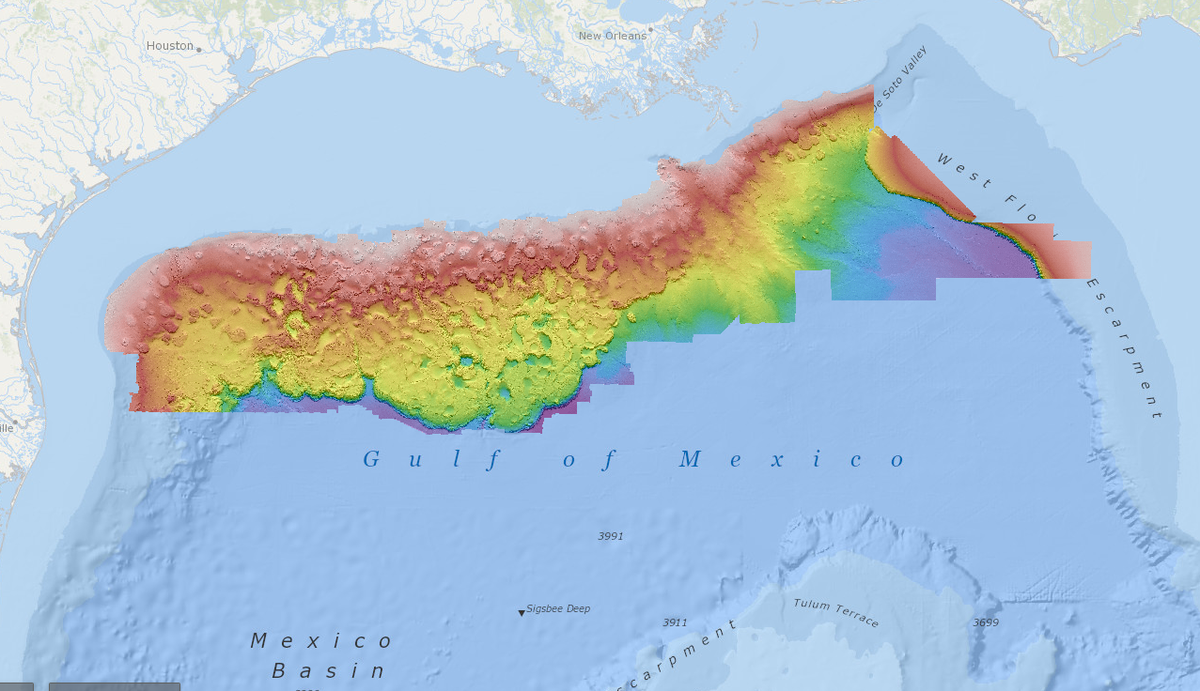
It marks the first time a 3D map has been created for the northern gulf, and BOEM says the river is just one of several unexpected geologic features found up to 10,000 feet down.
Among the others:
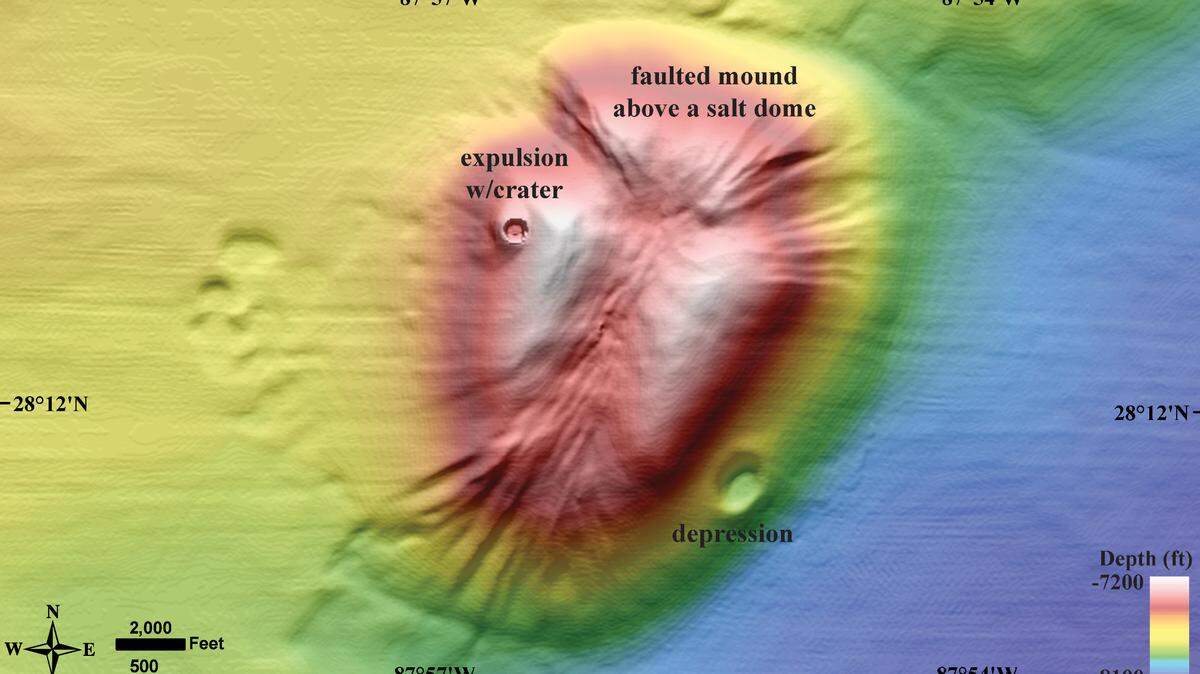
- Mud volcanoes. “Instead of lava, mud comes from the subsurface along with the gas, oil and salty brine.”
- “A brine lake” that covers approximately 150 square miles.
Massive landslide sites, along with “mega-dunes” that stand 30-plus-feet high and extended for miles.
- More than 4,000 pockmarks (depressions on the seafloor) caused by the explosive release of shallow gas from the seafloor. It’s believed many of the explosions occurred when sea levels dropped by 330 feet during the last Ice Age.
Among the things they didn’t find: Evidence of impact craters linked to asteroids or comets.
“No, not that we could confirm,” BOEM officials said in an email. “One possible explanation of the pockmarks we mapped was small impact craters, but the more likely explanation for the pockmarks is explosive (release) of natural gas.“
Historic shipwrecks are also not included among the discoveries, because wooden-hulled ships are too small to show up on 3D seismic data, officials said.
BOEM says the bathymetry map will aid countless research efforts, including studies of seafloor currents and “deepwater biological communities” (corals, mussels, tube worms).
This story was originally published April 23, 2021 at 3:36 PM with the headline "3D map finds mud-spewing volcanoes, 200-mile deepwater river on Gulf of Mexico floor."