
Powerful mako shark evades capture by biting its way out of trouble, photo shows
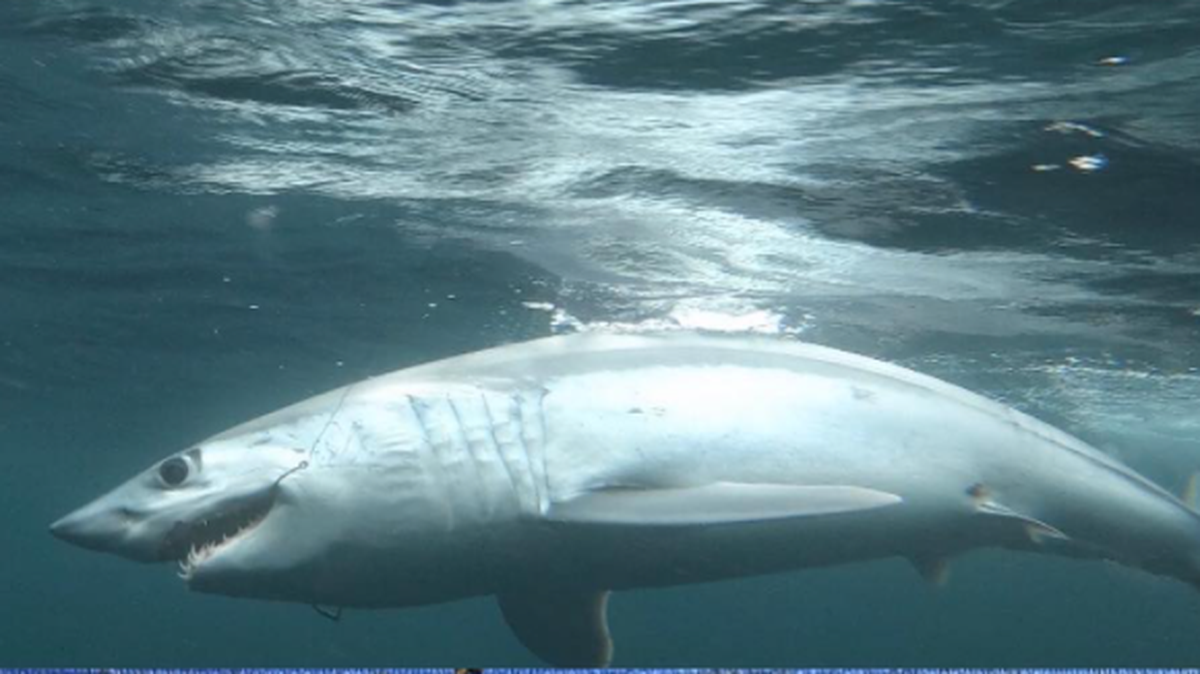
Mako sharks are aggressive predators that fear only bigger sharks — and a group of researchers recently learned a hard lesson about the tenacity of the species.
The Sulikowski Shark and Fish Conservation Lab reports it hooked a large mako for research purposes, but the sharp-toothed swimmer refused to surrender.
“We are always amazed at the power of sharks!” James Sulikowski wrote Dec. 24 on Facebook.
“On our last expedition we encountered a mako that straightened the circle hook we were using to capture, tag and release sharks,” he wrote. ”The mako ... swam off like a rocket after he straightened the hook!”
Photos shared by the lab show the hook was caught in the corner of the shark’s mouth when the wily creature used a combination of teeth and sheer jaw strength to bend it.
The hook was an Eagle Claw 2045 circle hook, used for “big game” and “scientifically proven to reduce fish mortality.”
Mako sharks grow to about 13 feet and can be found along the East Coast, where the Sulikowski lab does much of its research. The lab (based at Arizona State University) captures sharks long enough to collect physical data (including an ultrasound for females) and tag them for release. The process takes only minutes and the sharks are released unharmed.
Among Sulikowski’s past discoveries: The embryos of great white, mako and porbeagle sharks grow teeth early in the womb and use them to chomp their mother’s unfertilized eggs.
Makos are considered “the fastest” of the world’s sharks, with an ability to swim in excess of 45 mph, the lab says.
They are known to hunt larger prey than themselves, including other sharks and dolphins, Shark Keeper reports.
“With this speed, the shortfin mako can jump up to 30 feet ... out of the water,” the site says. “There are reports of shortfin mako jumping into boats even after being hooked.”
This story was originally published January 4, 2021 at 3:29 PM with the headline "Powerful mako shark evades capture by biting its way out of trouble, photo shows."