He spoke out after UNC secretly recorded his classroom. Now, he’s lost in court.
AI-generated summary reviewed by our newsroom.
- Judge Catherine Eagles dismissed Larry Chavis’s retaliation and discrimination claims.
- In 2024 UNC secretly recorded some of Chavis’s classes after student complaints.
- Evaluators cited Chavis’s in-class focus on personal grievances and syllabus deviations.
A federal judge has ruled that UNC-Chapel Hill was within its rights to decline to renew a professor’s contract — even after administrators secretly recorded his classes, a practice the university abandoned this year under faculty pressure.
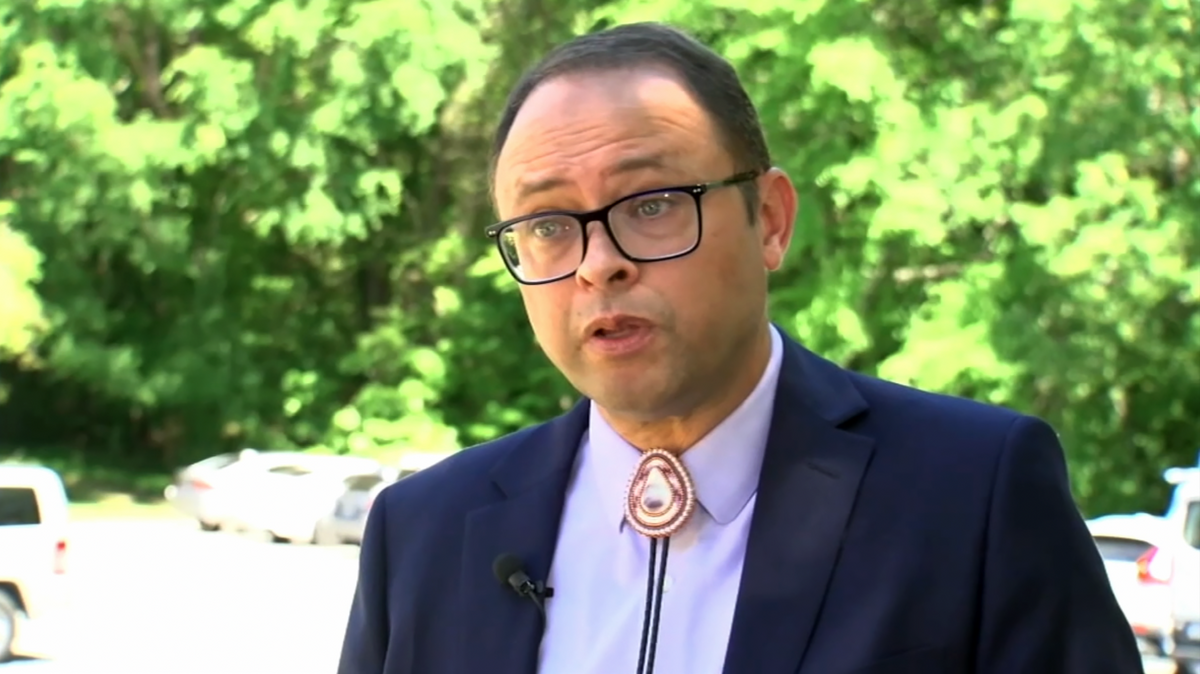
Business professor Larry Chavis sued the school in 2024, claiming he was retaliated against for publicly criticizing the university’s secret recordings of his classroom. Judge Catherine Eagles of the Middle District of North Carolina ruled against him on June 30, saying that he lost his job because of a poor teaching evaluation, not his outspokenness. Carolina Journal first reported the judgment.
Conversations around secret classroom recordings consumed UNC-Chapel Hill this winter. First, the university reserved the right to secretly record classrooms without professors’ knowledge. Then, when faculty outrage reached an untenable pitch, Chancellor Lee Roberts scrapped the new policy, saying no such surreptitious recordings would take place.
But clearly, some recordings already had.
In 2024, the university notified Chavis that administrators had secretly recorded his classroom following “reports concerning class content and conduct.” After UNC left his contract unrenewed in the wake of the recordings and subsequent evaluation, Chavis filed a lawsuit against UNC-Chapel Hill.
He contended the school retaliated against him after he made his feelings about the secret classroom recordings public, posting about it on social media and speaking with local media outlets about the issue. He also connected his loss of employment to his frequent comments in favor of diversity, and to racial discrimination.
Despite Eagles’ ruling, the case may not be over. Chavis’s lawyer, Artur Davis, told The News & Observer that he plans to appeal the court’s dismissal, and pursue “cocounselling with some of the top level appellate attorneys in the country.” Davis said he believes that “this case has the potential to be groundbreaking” because of its implications for workplace discrimination law.
Chavis, a member of the Lumbee tribe of North Carolina who taught at UNC’s business school for 18 years without tenure, had a “longstanding history of challenging UNC’s lack of faculty diversity and its prior discriminatory conduct toward him, including pay disparities between Chavis and faculty members of other races,” according to Chavis’ original complaint. Eagles describes him as a champion of diversity, equity and inclusion, or DEI, and as sharply critical of UNC’s approach.
But the impetus for the secret recordings — and his eventual departure from UNC, according to Eagles — came from student complaints about his courses: that they diverged from their given descriptions and lacked clear organization.
The business school’s official teaching evaluation of Chavis found that he had changed the course to focus on Indigenous issues without revising the syllabus or description of the course, and spent class time discussing his personal and professional life and his dissatisfaction with UNC, Eagles wrote. In the end, at Chavis’s request, the evaluation didn’t include the secretly recorded classes, but rather in-person observations.
These findings, Eagles says in her June 30 opinion, were the reason Chavis’s contract was not renewed — not his vocal criticisms of secret classroom recordings and other university practices.
“Specifically, the evaluators found that Dr. Chavis used class time to talk about how he was ‘wronged by the business school’ and to ‘read from his manuscript on his life;’ that he ‘stated that he was going to ‘burn this b*tch down’’ if a UNC hiring process went a certain way; [and] that he asked students ‘to comment on his life and personal circumstances’ in a way that felt pressuring to students,” Eagles’ opinion reads. Students reported that they feared retaliation from Chavis, especially after he "humiliated certain students because of, for example, their race and fraternity affiliation,” Eagles wrote. She also mentions, however, that Chavis received many positive evaluations from other students.
Chavis now works as a visiting professor at Kalamazoo College in Michigan.
The N&O reached out to UNC-Chapel Hill, but the school declined to comment.
This story was originally published July 7, 2026 at 11:20 AM with the headline "He spoke out after UNC secretly recorded his classroom. Now, he’s lost in court.."