Hungry Wake students benefiting from new school program reducing food waste
AI-generated summary reviewed by our newsroom.
- Wake County expands SHARE program to recover unopened school food for students.
- Average of 41 donated items per school per day was reported.
- Program growth hinges on funding and nonprofit capacity to scale.
Wake County plans to expand a program that encourages students to save uneaten food so that it can be donated to hungry classmates.
Since March, thousands of unopened packages of food from Wake County school breakfasts and lunches have been given to students instead of being thrown away. The Wake County school board approved Feb. 17 an agreement with Toward Zero Waste to continue the SHARE (Stop Hunger and Restore Earth) program for two more years as more schools join the effort.
“From what we’re hearing from the staff at the schools, students are taking the foods,” Megan Holler, Toward Zero Waste’s director of food recovery and compost, told the school board’s facilities committee on Feb 10.
Wide range of foods can be saved
Toward Zero Waste is a Cary-based nonprofit group that says its goal is to reduce unnecessary waste. The group says it was motivated by audits that found that 20% to 35% of lunch waste at schools was recoverable food.
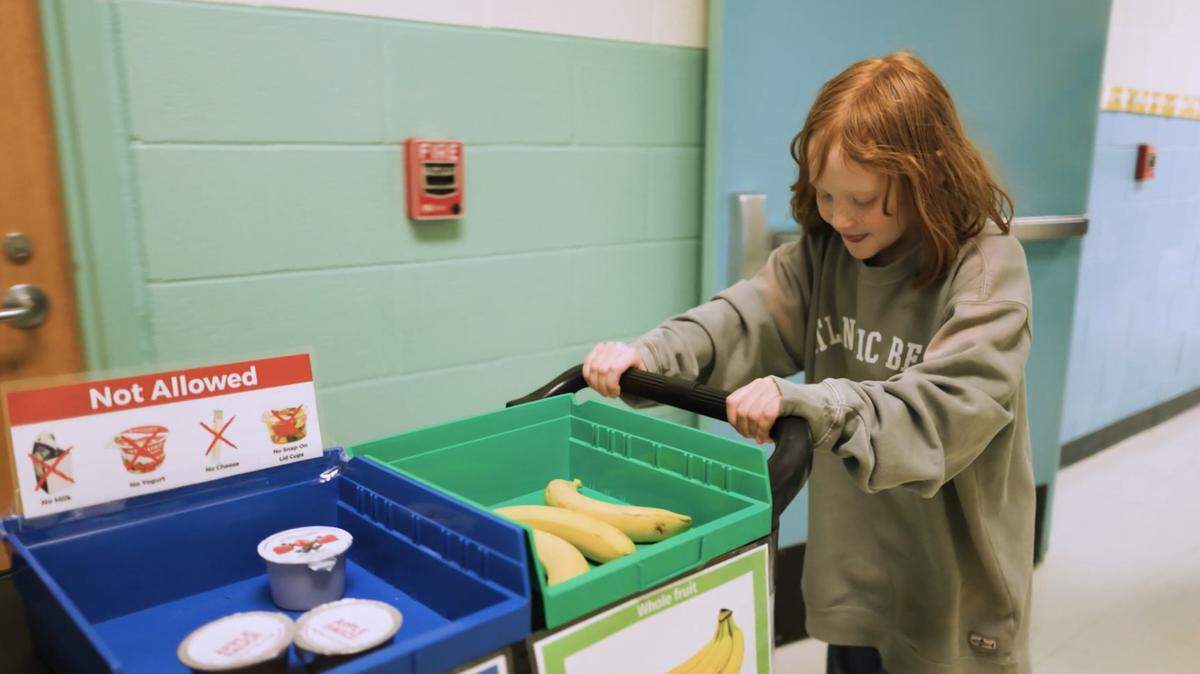
Toward Zero Waste began the SHARE program in March 2025 with eight Wake County schools. Students are encouraged to donate uneaten food instead of throwing it in the garbage.
North Carolina food and health regulations prevent time- and temperature-controlled foods such as milk and yogurt from being saved. But items that can be recovered include:
- Packaged snacks such as graham crackers, cookies, pastries, muffins, cereal, granola bars and chips.
- Condiments and utensils such as packages of forks and spoons and packets of ketchup and hot sauce.
- Fresh fruit with non-edible peels such as bananas and uncut oranges.
- Cold foods such as cartons of fruit juice, sealed fruit cups such as diced peaches, and apple sauce, hummus cups, Uncrustables and bags of fresh fruits or vegetables.
Holler said they’ll meet with state officials about expanding the foods that can be saved.
Food making its way to hungry students
An average of 41 food items per day were donated per school. That’s potentially as many at 7,380 items per school each year.
Students can take the donated food during breakfast and lunch.
Students can also get the leftover food when it’s placed in a pantry and refrigerator. This means students who are running late and missed breakfast, or who forgot to pack a snack or are hungry can get something to eat.
“Students are coming up in between classes and certainly during the end of the day asking for snacks, grabbing things,” Holler said. “Certain students are making patterns of getting foods on the way home from school.”
Holler said schools have made provisions to donate uneaten food at the end of the week to community food pantries. But she said there’s very little left by the end of the week.
“These foods are going back out to our students,” Holler said.
Program expansion eyed
After the initial eight schools joined last school year, 10 more schools joined between July and September in phase two.
In phase three, nine more schools joined between November and January.
Ten more schools are scheduled to join in phase four in March and April. That will bring the total to 37 Wake schools by the end of this school year.
At least 35 more schools are interested in joining. Wake says expansion is dependent on funding and Toward Zero Waste’s capacity to work with more schools. The organization has relied on financial donations to help run the program.
School board vice chair Sam Hershey, who chairs the facilities committee, said the school district could fund the program if it was allowed to do so.
This story was originally published February 11, 2026 at 5:45 AM with the headline "Hungry Wake students benefiting from new school program reducing food waste."