
Which UNC System majors got waivers to keep DEI courses after Trump ban?
One day after President Donald Trump took office in January, he issued an executive order targeting diversity, equity and inclusion in the federal government, including contracting.
Roughly two weeks after Trump signed that order, the UNC System’s top attorney issued guidance on how the action would impact North Carolina’s public universities — many of which hold contracts with the federal government for research or other campus operations.
Andrew Tripp’s Feb. 5 memo was clear: UNC System schools could no longer require students to take courses related to DEI as part of their mandatory general-education curricula.
But the memo also left open the possibility that some courses might remain as part of individual majors or graduate programs, provided the courses were “substantially related” to the program and campus chancellors approved a waiver allowing the requirements to continue.
For months, it has been unclear what courses — if any — would be permitted to remain as requirements across the system.
Now, we have some answers.
The UNC System Board of Governors will meet this week and receive an update on the topic in a Wednesday committee meeting. Thanks to materials made available online for the meeting, we have a preview of which DEI courses were granted waivers.
Welcome to Dean’s List, a higher education newsletter from The News & Observer and me, Korie Dean.
This week’s edition includes an early look at the UNC System programs granted DEI waivers; local connections to this year’s Pulitzer Prizes; a dispatch from Campbell University’s law school graduation; and more.
Here we go.
BOG to get report on DEI waivers
Tripp’s memo required all campuses to report to the Board of Governors’ educational planning committee any waivers that their chancellors granted. At this week’s meeting, the committee will receive a report on those waivers.
According to meeting materials, in all, 14 UNC System chancellors granted waivers for DEI coursework in at least one major or graduate program on their campuses. Only the UNC School of the Arts and UNC Wilmington reported that they did not have any program-specific courses that would run afoul of the guidance in Tripp’s memo.
At the remaining schools, chancellors approved waivers for as few as one or two programs at some schools, to several more at other campuses.
- NC State University, for instance, approved waivers only for the university’s undergraduate and graduate social work programs.
- NC A&T State University, an historically Black university, on the other hand, approved waivers for agricultural education, child development and family studies, gerontology, social work, special education and more.
In general, programs in social work, education and nursing — and related fields — were the most common programs to receive waivers. As explained in the chancellors’ letters to the board, that’s because accreditation and professional competencies for those disciplines generally require students to be proficient in areas related to DEI.
At Appalachian State University, for example, Chancellor Heather Norris approved a waiver for the Counseling, Family Therapy, and Higher Education Program because the “DEI competencies” included in the program’s course of study “are directly tied to the CTH Program’s accreditation requirements and the licensure requirements established by the North Carolina Board of Licensed Clinical Mental Health Counselors and Appalachian’s accreditors.”
Elizabeth City State University offered similar reasoning for interim Chancellor Catherine Edmonds granting waivers for courses required for programs in social work and education.
“The courses for which we are requesting a waiver are substantially related to the relevant academic majors and are directly aligned with discipline-specific accreditation standards and/or licensure requirements,” Edmonds wrote. “These courses are essential to ensuring our students meet the professional competencies and regulatory expectations required in their fields.”
Some chancellors’ reports also detail the processes campus officials used to determine whether courses were out of compliance with Tripp’s guidance.
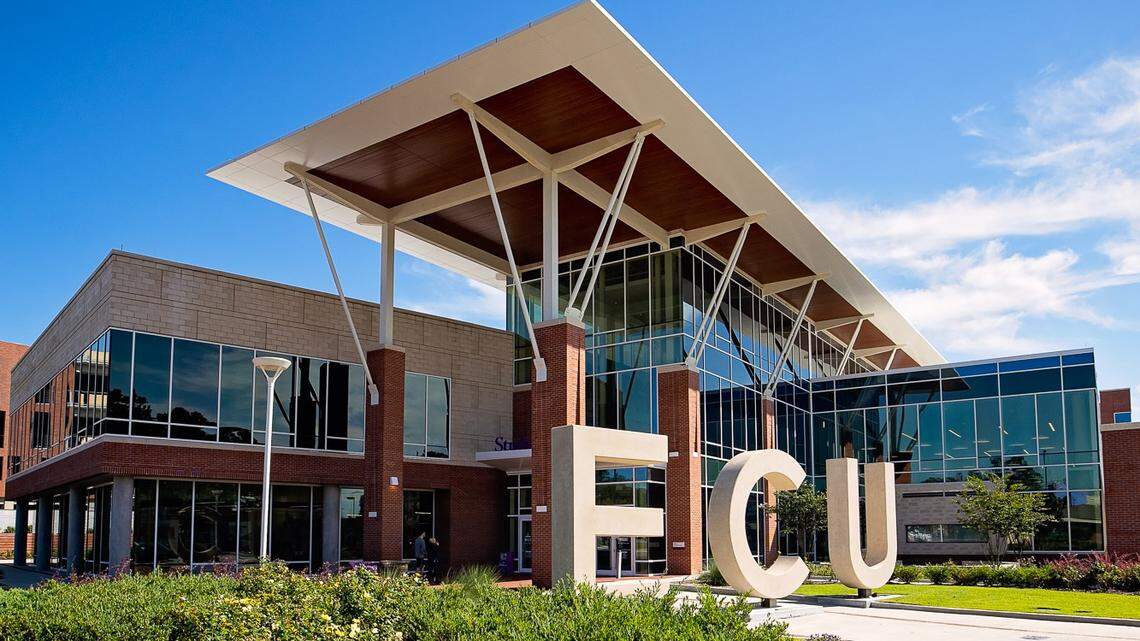
I took particular interest in East Carolina University’s process, given that I reported in March on the keywords university leaders there were using in a campus-wide “screening” of courses for DEI content.
“ECU ... engaged in immediate review of all programmatic requirements for degree programs, as well as review of any certificate or other programs. This included review of 279 degrees and certificates, 87 minors, 63 college and departmental pages in the undergraduate catalogue, and 75 college and departmental pages in the graduate catalogue,” Chancellor Philip Rogers wrote in his report to the Board of Governors.
At the time of my report, I only knew a handful of words, based on those that faculty had publicly shared in a campus meeting: culture, justice and women’s rights.
Now, I know the full list. ECU fulfilled my records request for the keywords and directions for the screening, more than two months after I filed it.
Per the documents ECU provided to me, those keywords used to screen courses were:
- DEI
- Diversity
- Equity
- Inclusion
- Minority
- Underrepresented
- Justice
- Social Environment
- Social Justice
- Racial
- Gay rights
- LGBTQ
- Transgender
- Reproductive Rights
- Women’s Rights
- Gun Rights
- Hamas
- Israel - Hamas
- Antisemitism
- Culture
- Cultural
- Intercultural
After all was said and done, ECU identified three programs that needed a waiver for DEI content: social work, teacher licensure programs and special education. The university also “took action to revise courses or include additional course options so that students are not required to take courses with DEI content,” per Rogers’ report.
Also of note: UNC-Chapel Hill informed the board that it has revised the name of one of its general-education requirements, which it previously said was in compliance with Tripp’s guidance. Instead of “power, difference and equality,” students will now fulfill a course requirement in “power and society.”
The reason? The former name “had language that could be construed as requiring content in violation of the memo,” per Chancellor Lee Roberts’ memo to the board.
The Board of Governors’ educational planning committee will receive an update on the waivers at this Wednesday’s meeting. I’ll bring you any notable discussion in next week’s Dean’s List.
ICYMI: Catch up on these headlines
Remember what I wrote last week about the crossover between the higher education and sports beats? I have a feeling this is going to be a recurring theme.
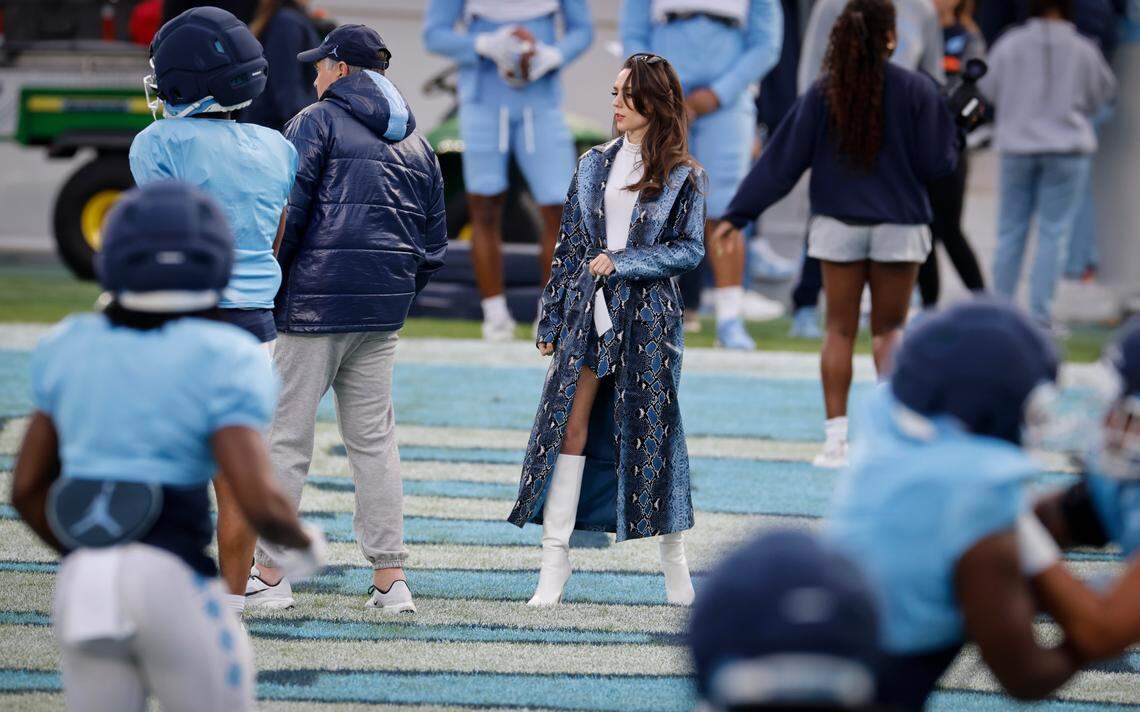
This time, UNC athletic officials are responding to a journalist’s report that Jordon Hudson, the 24-year-old girlfriend of head football coach Bill Belichick, had been banned from the football team’s facilities. The university denies that assertion, but the journalist stands by his reporting.
(As a reminder, we’re still more than three months away from the Tar Heels’ first game under Belichick.)
Catch up on the latest Hudson-Belichick story here: Jordon Hudson isn’t banned from football facilities, UNC says, despite report
UNC professors get Pulitzer nods (+ The N&O, too!)
There were several local ties among the winners and finalists of this year’s Pulitzer Prizes, announced last Monday.
▪ UNC-Chapel Hill professor and historian Kathleen DuVal was named a winner in the history category, recognizing her book “Native Nations: A Millennium in North America.”
The committee’s award citation called DuVal’s work “a panoramic portrait of Native American nations and communities over a thousand years, a vivid and accessible account of their endurance, ingenuity and achievement in the face of conflict and dispossession.”
The university noted the book was the “culmination” of a 25-year project for DuVal, a historian of early America and American Indian history. Per the UNC College of Arts & Sciences, DuVal’s winning work shows “how, long before colonization, Indigenous peoples adapted to climate change and instability with innovation, forming smaller communities and egalitarian government structures with complex economies which spread across North America.”
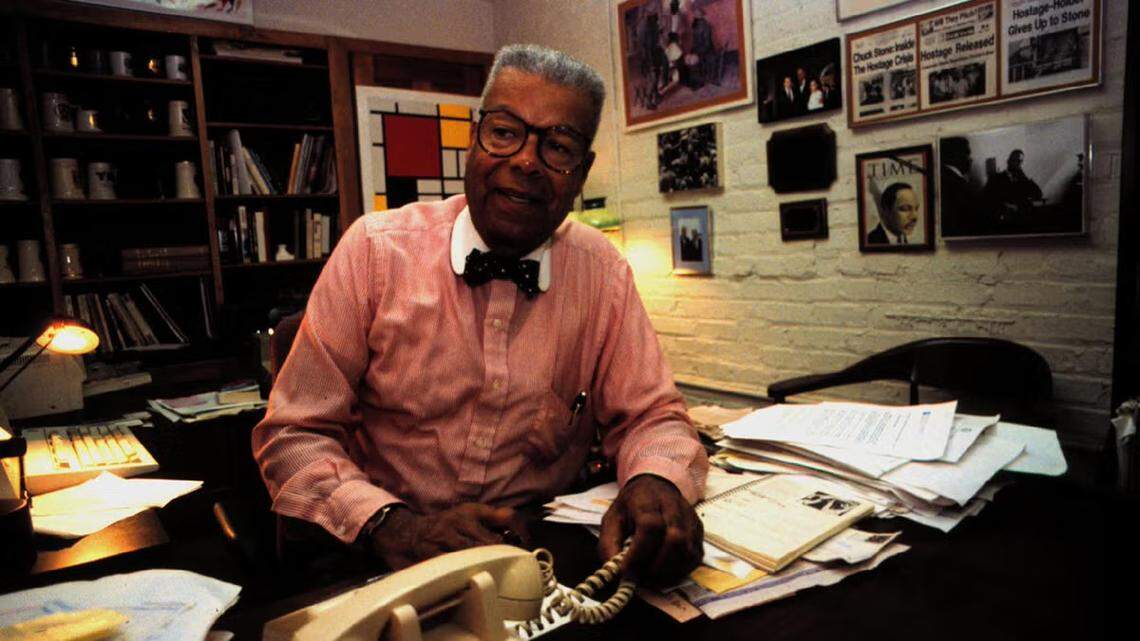
▪ Chuck Stone, a prominent Black journalist who covered the Civil Rights Movement, became a syndicated columnist and co-founded the National Association of Black Journalists, was awarded a special citation.
“The integrity that Stone brought to his reporting caused him to transcend beyond his role as a journalist into the position of a liaison between the troubled parts of the African-American community and the society which they were at odds,” Stone’s award citation reads. “His articles sparked conversation about race, and he gained credibility in the media and with the people.”
Stone was also a professor at the UNC journalism school from 1991 until his retirement in 2005. He taught courses in magazine writing and censorship, winning numerous teaching awards for his work.
In 2007, the school established the Chuck Stone Program for Diversity and Education in Media, which brings high school students to campus for experiences in the classroom and real-world reporting.
▪ And finally, The N&O and the Charlotte Observer were named finalists in the breaking news category for the papers’ joint coverage of Hurricane Helene and the devastation it brought to our state. The Washington Post won the award for its coverage of the July assassination attempt on Donald Trump, and the Associated Press was also a finalist for its coverage of that event.
The N&O and Observer published hundreds of stories about Helene in the weeks following the storm. That included the Oct. 7 edition of Dean’s List, which featured information on how to help the Western North Carolina universities impacted by Helene.
You can read more about The N&O’s work and the other local winners here: N&O, Charlotte Observer named Pulitzer Prize finalists for Helene coverage
AG Jackson speaks to Campbell law grads
Now, a dispatch from my colleague, state politics reporter Avi Bajpai:
North Carolina Attorney General Jeff Jackson offered graduates of Campbell University’s School of Law advice on Friday about dealing with stress about their upcoming bar examinations, entering the job market, and finding the right legal career for “the kind of attorney you want to be.”
Jackson was the commencement speaker at Campbell Law’s 47th annual hooding and graduation ceremony, held at Memorial Auditorium at the Martin Marietta Center for the Performing Arts in downtown Raleigh. The Democratic attorney general told graduates they shouldn’t worry too much about the bar exam, saying that Campbell does the best job of any law school in the state preparing its students for the two-day exam that is administered twice a year.
Jackson also sought to assuage concerns about beginning a legal career and finding jobs during a time of economic uncertainty.
Jackson recalled that after he graduated from the UNC School of Law, he wanted to be a prosecutor, but in the midst of the 2008 financial crisis, there weren’t any jobs available. He took a job at a big law firm instead. After a while, a job opened up at the Gaston County District Attorney’s office. He knew he wanted to work there, and said he would take a pay cut to get the job.
Jackson said the good news for graduates figuring that out is that “there are so many different ways to be an attorney.”
“The kind of attorney you want to be, there’s a job for that,” Jackson told the graduates. “It’s got your name on it, and when you find it, your excitement is going to shine through, and that’s going to matter to the people who are in a position to help you get that job.”
Jackson also said the young lawyers just starting their careers shouldn’t worry too much about the future of the profession.
”That’s the thing about this profession, it’s always in the news, it always feels uncertain, it’s always on the brink of major change, and yet, here it is, still standing, still vital,” Jackson said. “Because it’s about people, and people will always need help solving problems.”

Higher ed news I’m reading
- Duke University is taking a new approach to DEI, forming a committee that will ensure university programming fits “within the bounds of the law” and is “open to all,” the Duke Chronicle reports.
- RIP to Alpine Bagel, one of my favorite spots to grab a bite at UNC. Chapelboro first reported last week that the grab-and-go restaurant would close Friday, with UNC planning to open a university-run dining operation in its place.
See you next time
Thanks for reading Dean’s List. I’ll see you right back here next week.
Not a subscriber? Sign up on our website to receive Dean’s List in your inbox each week.
This story was originally published May 13, 2025 at 5:15 AM with the headline "Which UNC System majors got waivers to keep DEI courses after Trump ban?."
