UNC System board approves new policy on campus protests, hoping to mitigate ‘chaos’
Students and other groups seeking to protest on UNC System campuses will have new rules to follow, following a vote by the board that oversees the state’s public universities to approve a new policy on the matter.
The UNC System Board of Governors on Thursday approved the policy, which will govern “campus gatherings and related student conduct matters,” doing so through the group’s consent agenda and without discussion. A board committee had previously discussed the possibility of creating a policy at a meeting in November, and voted on a draft of the policy in January.
In discussions about the need for the policy, which will mark the first time the university system has regulated protests in a single directive across its 17 campuses, board Chair Wendy Murphy cited “chaos” that has unfurled on some campuses during protests over the war in Gaza.
“We’ve got to come up with guardrails and common sense practices that take out all that chaos that we have had, and the expectations need to be clear across the system,” Murphy said at the board’s November meeting.
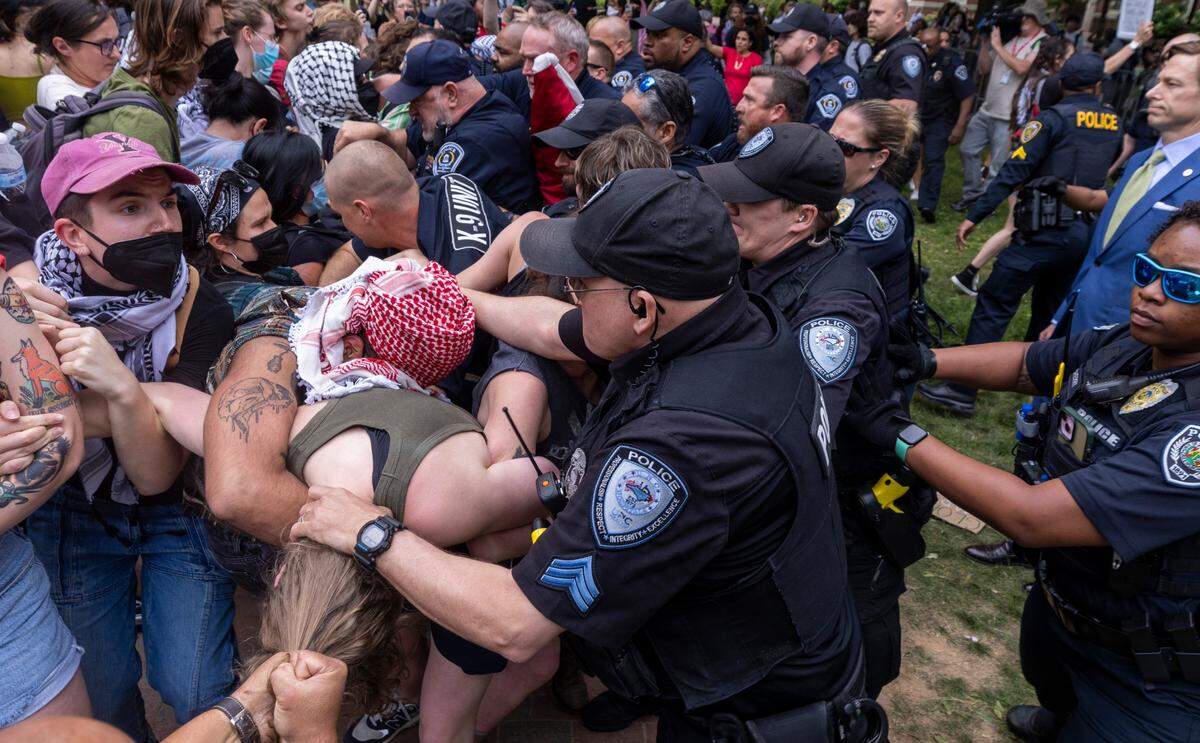
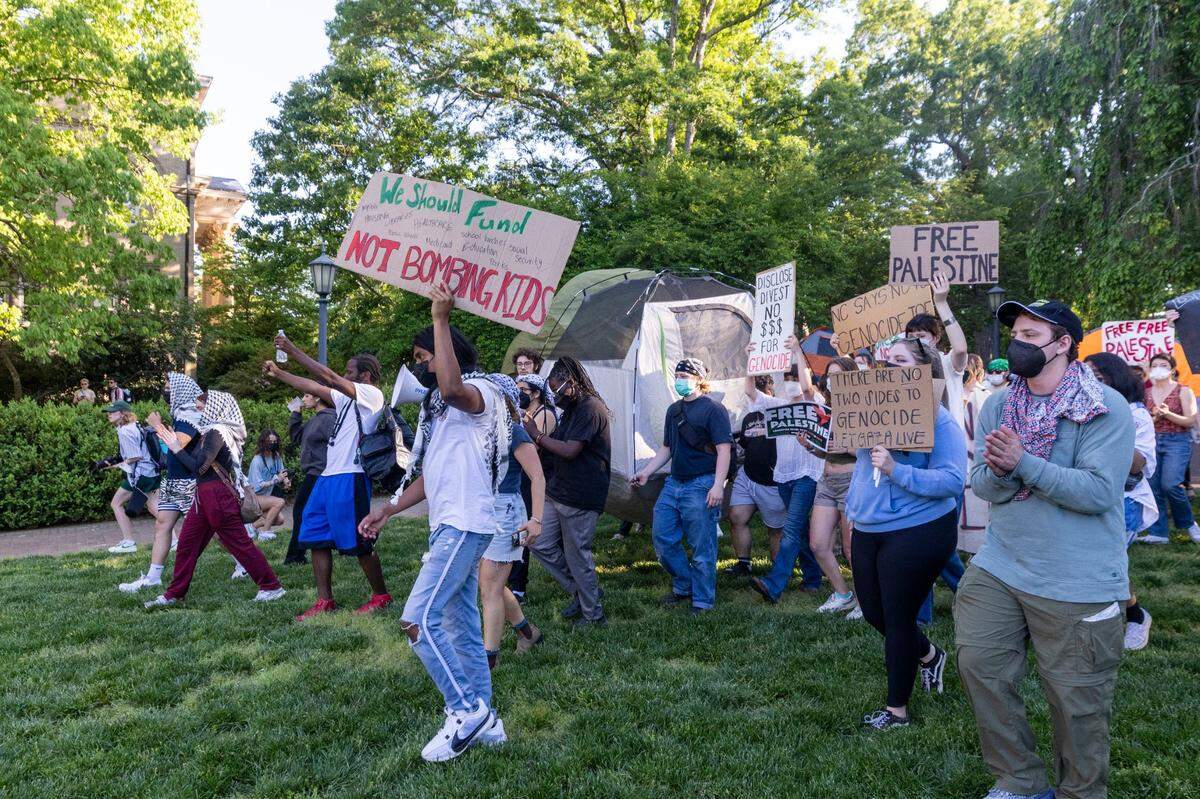
Last spring, students at UNC-Chapel Hill, UNC Asheville and UNC Charlotte staged multi-day, pro-Palestinian protests that involved pitching tents and camping on the campuses for at least part of their respective protests. The protest at UNC-Chapel Hill and its aftermath, which involved police charging three dozen protesters and protesters replacing the American flag on a campus flagpole with a Palestinian one, garnered national attention.
Protests continued at UNC in the fall, with demonstrators on one occasion marching through the hallways of campus buildings and spray-painting the walls inside with pro-Palestinian messages, The Daily Tar Heel reported.
Generally, universities in the UNC System currently have individualized policies to govern campus gatherings and demonstrations, as well as any student-conduct violations that occur during such events. That will remain the case following the Board of Governors’ vote Thursday, but all campuses will now be required to update their university-specific policies to implement the minimum requirements outlined in the new system-wide policy.
Chancellors, who are the top administrators at the system’s universities, will retain the right to add additional requirements or restrictions on gatherings at their campuses beyond what is required in the system policy.
“This policy strikes the balance between continuing to affirm the role of chancellors to operate their campuses, while signaling the board’s priorities and emphasis,” UNC System general counsel Andrew Tripp said during a committee meeting last month.
New requirements outlined in policy
Under the new policy, university leaders must set limits on the size of crowds that can gather in indoor spaces on campus, as well as some outdoor spaces, without reserving the space or obtaining permission. Crowds that are larger than the limit, as determined by campus leadership, must provide a minimum of 24 hours’ notice or submit a reservation to gather in such spaces.
To foster “spontaneous expressive activity,” campuses must allow any outdoor spaces on campus that do not require a reservation or advance notice in order to use them to “remain freely accessible so long as they are not utilized in a manner that substantially interferes with or materially and substantially disrupts the institution’s missions.”
At any gathering, there must be “clear rules” that maintain safe entry and exit points from campus buildings during the events and that set limits on the use of amplified sound near buildings.
“Such clear rules should be crafted in a way that ensures that students, staff, and faculty residing, working, learning, and teaching are not disrupted while free expression continues,” the policy states.
Camping will be prohibited on all campuses, save for two exceptions. The policy defines camping in a number of ways, including establishing temporary or permanent living quarters anywhere on university property except for residence halls and other university-managed housing; sleeping outdoors anywhere on university property overnight; and sleeping inside, on top of or underneath a vehicle on university property.
Camping will be allowed on campus if it is “expressly authorized by the constituent institution in connection with a ticketed event,” or if it is approved by chancellors or a designee during “extraordinary circumstances” such as natural disasters.
How violations will be handled
The policy also outlines processes that will be used if a student violates university conduct requirements or the law during a gathering, whether that happens at the student’s own school or when they are visiting another campus in the system.
If a student is arrested or cited by police or another university in the UNC System “for engaging in misconduct, disruption, trespass, or other conduct creating a public safety threat to the student or others,” the student will be subject to disciplinary proceedings at the school where they are enrolled — with that campus retaining discretion over the disciplinary process and the “appropriate remedy” for the student’s conduct.
At all campuses, the adjudication of disciplinary matters should be handled by professional staff or a committee, per the new policy, with universities encouraged to “draw from multiple campus stakeholder groups, including students, to ensure that fact-finding and processes are informed by the various perspectives of campus communities and the student body.” (UNC-Chapel Hill was the only campus in the UNC System and one of the last universities in the country to use a student-led disciplinary process before it transitioned to a staff-led model this summer.)
The final two requirements outlined in the policy pertain to how information is shared among campuses and with law enforcement. Campus police will be allowed to confidentially share information about public safety and discipline between their schools, and a senior-ranking public safety official at each university must be “included, informed, and consulted” during planning for campus gatherings.
“We want to make sure that law enforcement officials have input and have early access to information on matters that might rise into public safety issues on campus,” Tripp said last month.
Campuses are required to align their policies with the new system-wide requirements by Aug. 1, giving leaders time over the summer to implement any necessary changes.
This story was originally published February 27, 2025 at 10:33 AM with the headline "UNC System board approves new policy on campus protests, hoping to mitigate ‘chaos’."