
Legal fight puts a Wake tutoring program for elementary students on hold. Here’s why
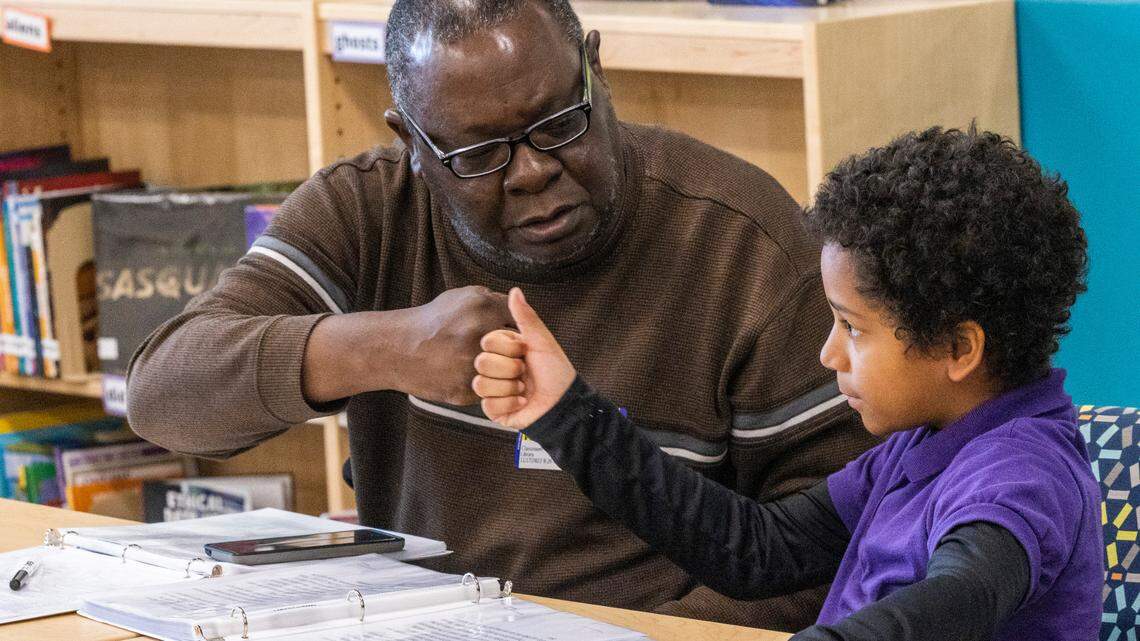
A tutoring program that’s been helping Wake County students learn to read is on hold due to the collapse of one of the program’s partners.
Since 2022, the WakeTogether tutoring program has used the Helping Early Literacy Practice Strategies (HELPS) curriculum provided by the Raleigh non-profit group Helping Education. But on Thursday, tutors were told that Helping Education has dissolved amid a lawsuit questioning whether it had permission to offer the HELPS curriculum.
“Given these circumstances, it is necessary to immediately stop using the HELPS curriculum,” Keith Poston, president of the WakeEd Partnership, said in an email Thursday to the program’s volunteers. “While we determine an alternative curriculum, we’ll need to pause the tutoring program and related fluency interventions for at least the next few weeks until we have an opportunity to determine our best path forward.
“We anticipate that we will restart the program using a different curriculum as soon as we work through this process.”
This school year, the Wake County school system is paying $219,500 to Helping Education and $120,000 to the WakeEd Partnership to recruit volunteers and coordinate the program.
A school district spokesperson said Friday it was not known when the tutoring program would resume. It also was not immediately known how much has been paid so far this school year to Helping Education.
Tutoring program was helping students
Students in grades two through five who need reading help have been receiving one to two hours a week of what’s called “high-dosage tutoring.” Students have been getting one-on-one tutoring from volunteers or tutoring in small groups from teachers in this phonics-based approach.
Data from the first year of the program in the 2022-23 school year showed students made large gains in the number of words read correctly.
By last school year, 81 tutors were working with students at 48 elementary schools. Wake said early data showed continued gains last school year for the program’s students.
The goal this school year was to add 150 more volunteers to have 231 tutors provide intensive one-on-one reading help for students in 64 elementary schools.
Group dissolves amid lawsuit
But behind the scenes, the program’s future was in doubt when the school year started.
In May, John Begeny filed a federal lawsuit against Helping Education, the group he had founded.
According to the lawsuit, Begeny created the HELPS curriculum and owns the copyright. Begeny accused Helping Education of continuing to use HELPS even after its license with him had expired.
Poston told WakeTogether’s volunteers that Helping Education’s operations have been significantly impacted by the litigation.
“This lawsuit raises questions over the copyright ownership of the HELPS curriculum and has ultimately led to the dissolution of Helping Education,” Poston said. “Consequently, Helping Education has ended its partnership with school districts, and as such our partnership with them has concluded.”
This story was originally published November 1, 2024 at 12:43 PM with the headline "Legal fight puts a Wake tutoring program for elementary students on hold. Here’s why."
