NC schools want delay in enacting ‘Parents’ Bill of Rights.’ Will they get more time?
North Carolina public schools are hoping to get more time before they’re required to comply with the state’s new Parents’ Bill of Rights law.
On Aug. 16, Republican lawmakers passed into law — over the veto of Democratic Gov. Roy Cooper — limits about discussion of LGBTQ issues in elementary schools and a requirement that schools notify parents if their child changes their name or pronoun.
Schools are supposed to enact the law’s numerous requirements by Sept. 15, at the same time they are dealing with the start of a new school year. State Superintendent Catherine Truitt said she has asked state lawmakers to give schools an extension until Jan. 1.
Truitt said schools can’t carry out some of the law’s provisions until the state Department of Public Instruction brings those items to the State Board of Education for its approval.
“I feel very good about the conversations we’ve had with legislators,” Truitt, a Republican and supporter of the law, said at Thursday’s state board meeting. “They are listening to us and recognize there’s not enough time for districts to get these things in place.”
Truitt said that if the extension is granted it would likely be in the state budget that Republican lawmakers plan to release next week.
Delay opposed
But Tami Fitzgerald, executive director of the N.C. Values Coalition, said delaying implementation only deprives parents of their legal rights.
“Every school district in North Carolina has an attorney who can read and interpret the Parents’ Bill of Rights in order to implement the law,” Fitzgerald said in a statement. “Much of the law is common sense, for instance not offering sexually graphic and gender confusing materials to children in kindergarten through fourth grade.
“A delay in implementing the law only gives activists room to create policies and advise school districts how to skirt the law. We encourage the General Assembly to stand strong on the effective date of the Parents’ Bill of Rights, which is desperately needed to protect parents and school children from indoctrination.”
Youth Risk Behavior Survey
Senate Bill 49 has a variety of changes, including requiring parental permission for some student surveys and creation of a process to review school materials and to file grievances against schools.
Under the new law, parental permission is needed for students to participate in “protected information surveys.” These surveys ask students questions on issues such as their sexual behavior and their mental or psychological problems.
The law requires those surveys to be opt-in instead of opt-out, meaning students couldn’t participate unless permission was given to participate. Before the law, schools usually gave the surveys unless parents opted out.
But the provision could impact the ability of the state to conduct the Youth Risk Behavior Survey, which is conducted every two years in high schools. The Centers for Disease Control and Prevention partners with states to select random groups of students to take the anonymous survey.
The 2021 survey found increases in North Carolina students reporting suicidal behaviors and feeling depressed.
Truitt said requiring parents to opt their children into the Youth Risk Behavior Survey will reduce how many participate. She’s asked lawmakers to make an exception in the law so that students would take the survey unless their parents opt out.
“We don’t want to make this harder than it needs to be,” Truitt said. “I feel very confident about the conversations that I’m having with the legislature about the need for this particular carve-out.”
Schools begin implementing law
Charlotte-Mecklenburg became one of the first districts in the state to change its policies to follow the law, The Charlotte Observer reported.
Other school districts, such as Wake County, say they’re still reviewing what policies need to be changed.
Truitt sent a memo to district superintendents on Aug. 18 saying DPI will help answer their questions about the law.
“We recognize and sympathize that the turnaround time for this legislation is less than ideal,” Truitt said in the memo. “However, I believe it is in the best interest for all of us, our students, their parents, and for lawmakers, that we spend the necessary time setting up these policies and procedures in a methodical manner.”
Legal counsel for the N.C. Association for Public Charter Schools sent out an email last week advising charter schools to begin making changes such as:
▪ “Make sure teachers inform their classes that no name or pronouns changes will be permitted at this time. Except for nicknames that shorten a students name or use their middle name. So Maxwell can be Max or Robert can be Bob.”
▪ ”If a student wants to go by another name or pronoun, they should have the attached notice and permission form signed and returned. Make sure you check the signature upon return and if you question the authenticity have the student talk with the counselor. Teachers need to stay out of this as much as possible because there is no confidentiality with teachers.”
Follow the law?
Multiple speakers on both sides of the law spoke out at this week’s Wake County school board meeting.
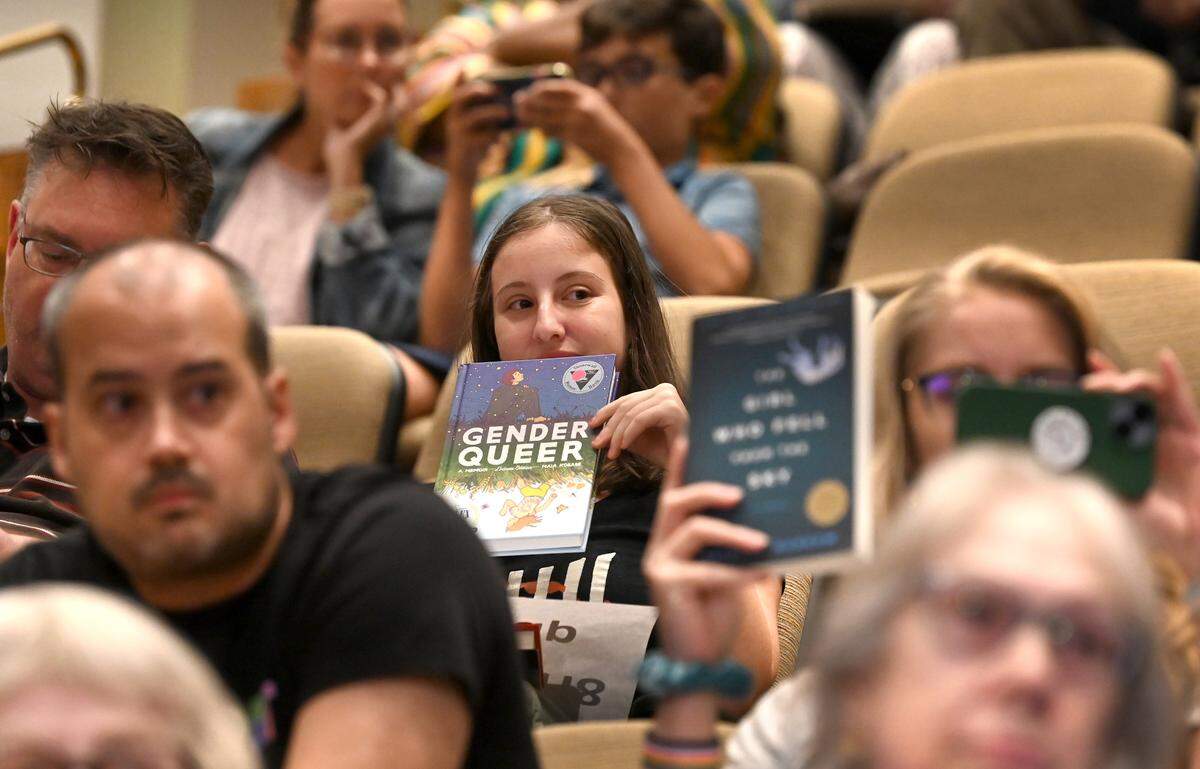
Supporters called on Wake to remove books from elementary school libraries that they say run afoul of the law’s ban on the instruction on gender identity, sexual activity or sexuality in kindergarten through fourth-grade classes.
Speakers said books such as “10,000 Dresses,” which follows the story of a trans girl, should be removed because K-4 students could read them in the school library.
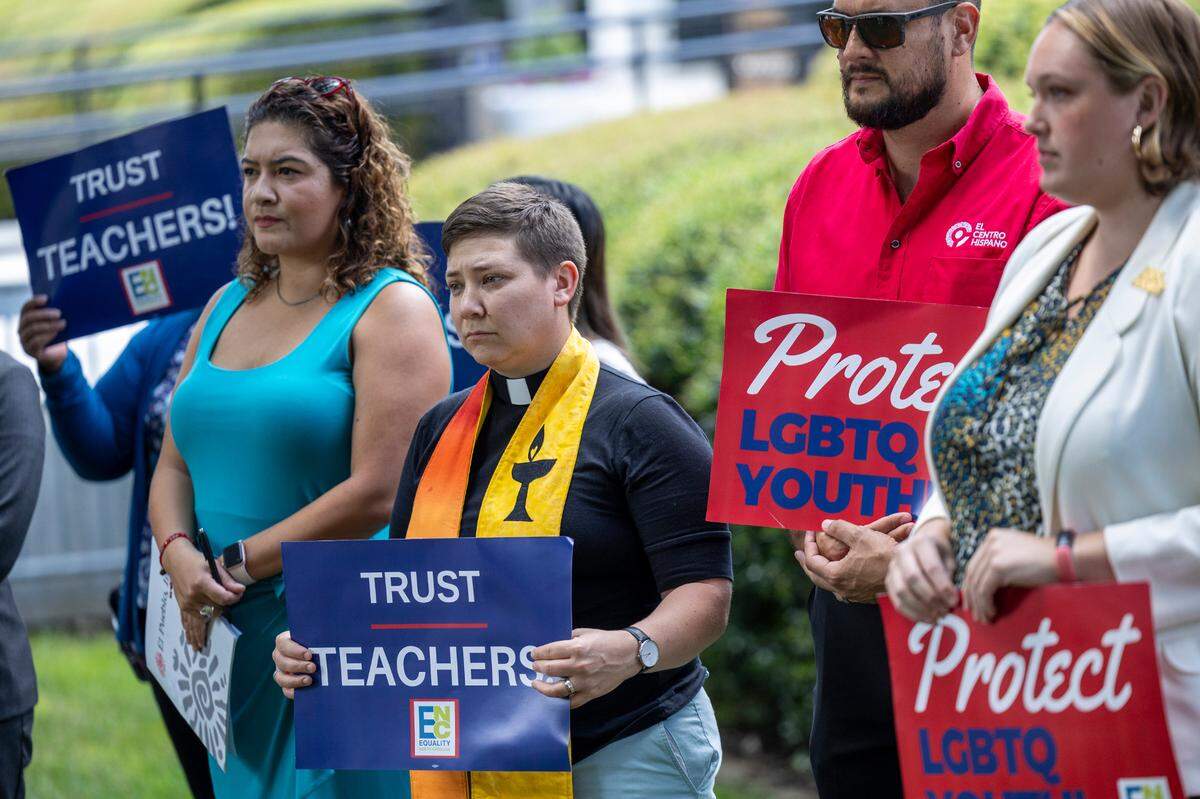
Opponents of the law said it doesn’t cover school libraries. Some speakers urged Wake to not follow the law, saying it violates Title IX, a federal law that bans discrimination based on sex.
The law split Wake school board members as well.
“I have heard from a lot of people expressing their concern about the harms of Senate Bill 49, not just potential harm to our LGBTQIA+ students but to our teacher pipeline and recruitment and retention efforts,” said board member Lynn Edmonds. “I share those concerns.”
But board member Wing Ng said he doesn’t “fault parents for questioning everything.”
“We’re asked to trust the experts, but we are now faced with wondering whether the experts have our best interests in mind,” Ng said. “It is your right as parents to keep all of us accountable, and I respect that a law was passed that enshrines those rights.”
This story was originally published September 7, 2023 at 11:45 AM with the headline "NC schools want delay in enacting ‘Parents’ Bill of Rights.’ Will they get more time?."