
Chapel Hill schools superintendent’s dissertation draws plagiarism concerns
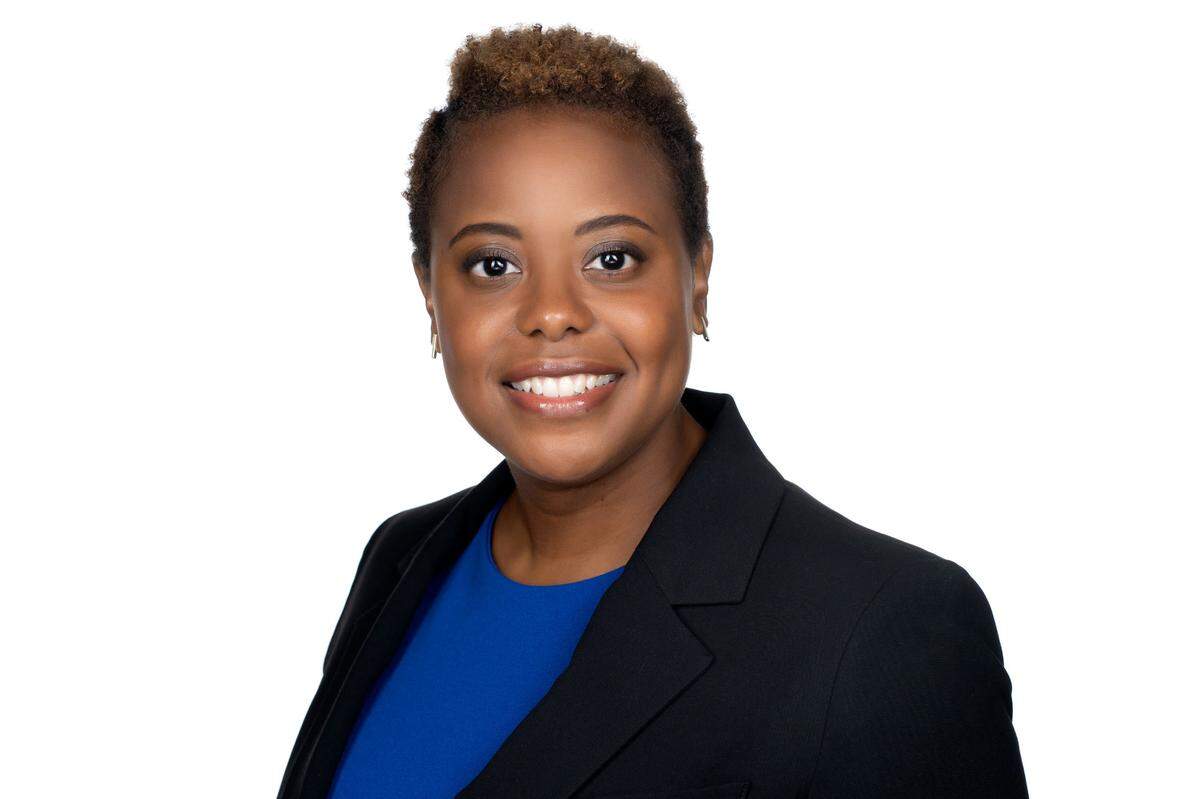
Nyah Hamlett leads one of North Carolina’s top public school districts, serving the home of the state’s flagship university, UNC-Chapel Hill. It’s a district with one of the highest percentages of people with PhDs in the state.
Hamlett herself has a doctorate from one of the oldest and most prestigious public campuses in the country — the College of William & Mary in Williamsburg, Va. She received it in 2019, two years before taking over the CHCCS district.
The dissertation Hamlett wrote to earn that degree contains roughly 35 examples of nearly word-for-word paragraphs and sentences taken from sources that are sometimes misidentified or, in some cases, not identified at all.
The superintendent is publicly defending her 164-page dissertation in response to questions from The News & Observer about its content. She said she will have the manuscript — focused on teacher readiness to respond to student mental health needs — reviewed, but did not say by whom.
Hamlett said in a post published on the district’s website that the dissertation’s sourcing and citations give required credit and accurately reflect her research. She also said Chapel Hill school board members and officials at William & Mary have expressed support for that work.
But she acknowledged that “the placement of some citations and some word choices to summarize or synthesize information could’ve been done differently.”
What’s the issue?
Hamlett’s dissertation is titled “An Evaluation of Teacher Perceptions of the Effectiveness of the Professional Development Provided through a School-Based Mental Health Program.”
The News & Observer reviewed it after receiving a tip that the manuscript contained questionable credits and attributions.
Completing a dissertation is one of the most challenging tasks for graduate students pursuing a doctorate, the highest academic degree. These lengthy manuscripts must be in depth and describe and analyze original research about a topic of importance in an academic field.
Hamlett’s dissertation includes results from a survey of teachers she conducted to investigate their “perceptions of the relationship between their self-efficacy and use of strategies learned through professional development and coaching” provided by a Virginia school district’s “Social Emotional Support Services” program.
A review of Hamlett’s dissertation showed:
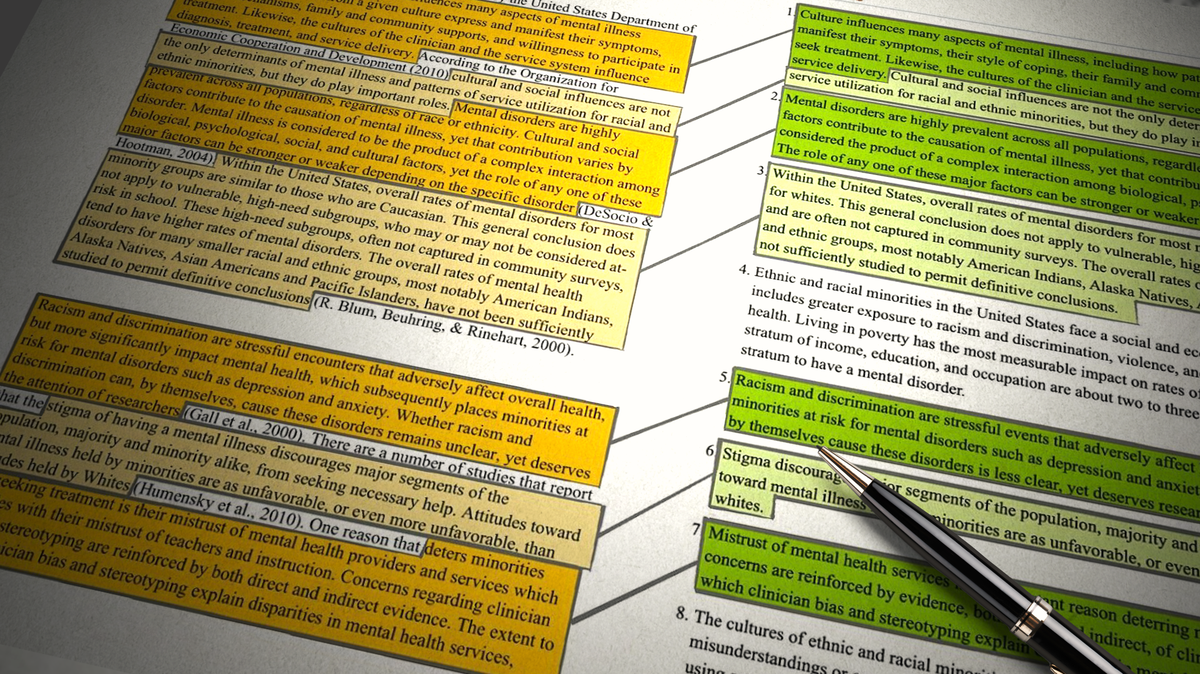
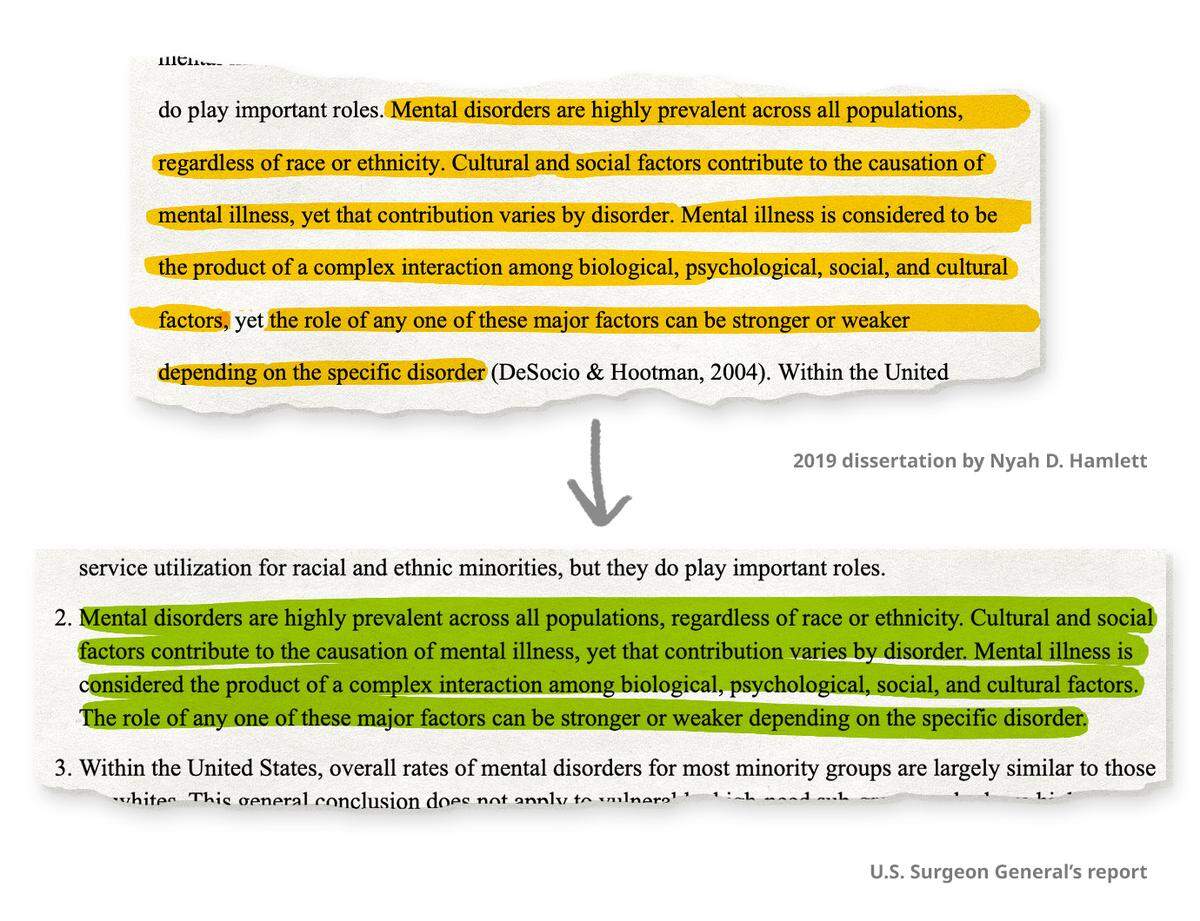
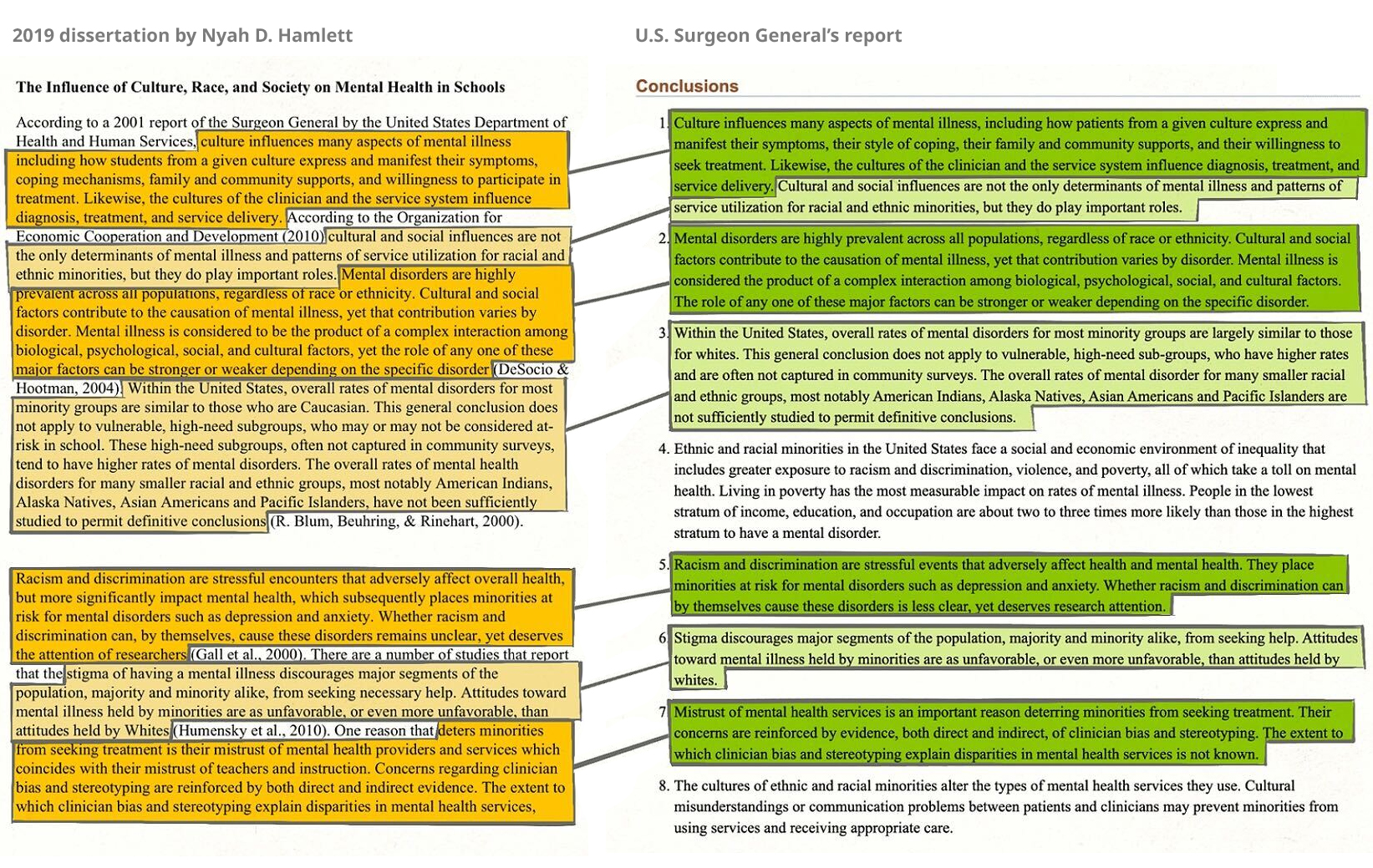
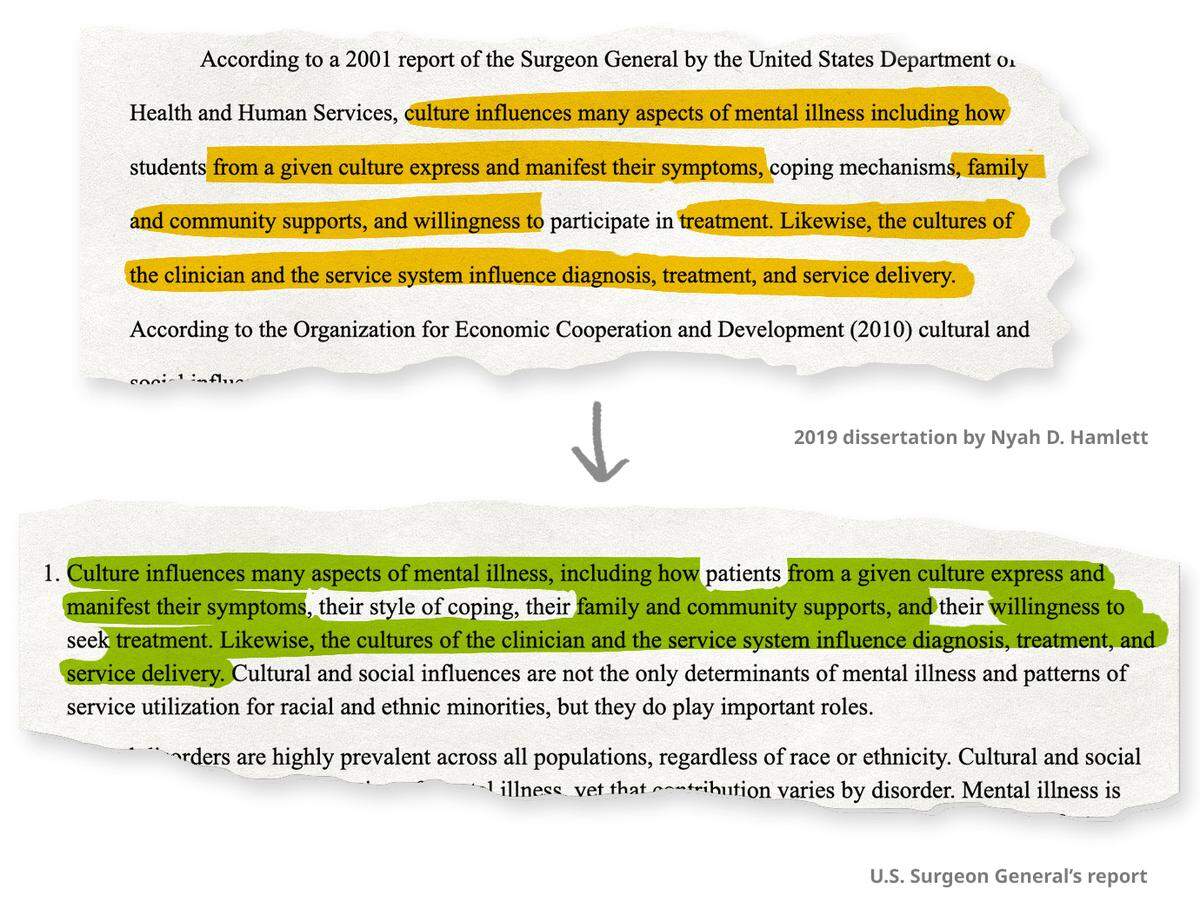
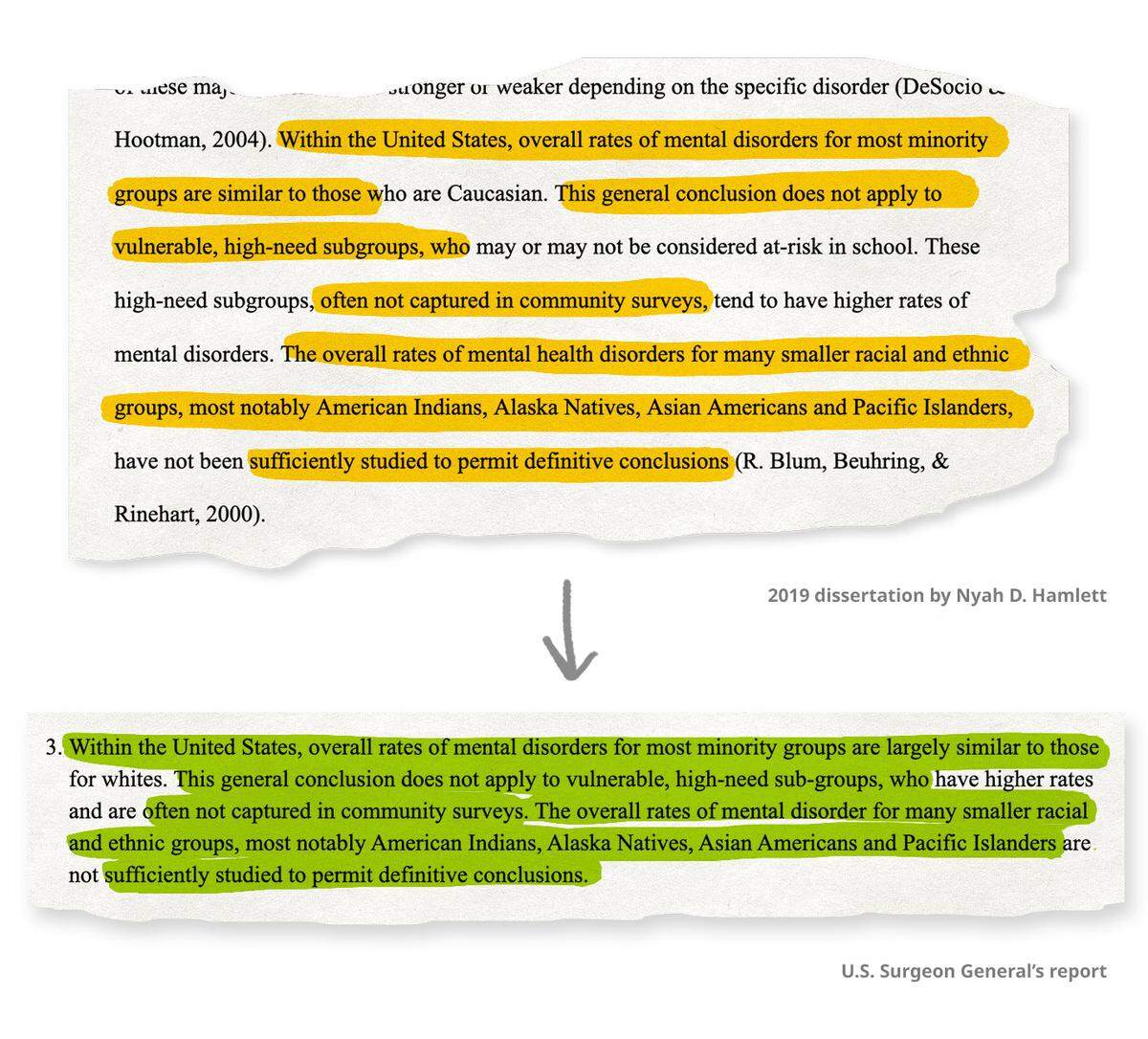
Hamlett early in the document lists seven sources to argue that “culture, race & society” influence mental health in schools. But all the information in the text comes from one page of conclusions from a 2001 Surgeon General’s report, which is cited twice. Much of it is verbatim with no quotation marks.
Text comparison
This section of Nyah Hamlett's dissertation cites multiple sources for information that is largely word-for-word from only one source: a U.S. Surgeon General's report.
She cites a Real Clear Politics news column for information about social issues Black males face, but her writing appears to borrow from a sentence in the 2014 book “Black Male(d) - Peril and Promise in the Education of African American Males,” by Tyrone C. Howard.
The dissertation also includes a glossary of terms that in several cases are nearly identical to sources that are not cited. Hamlett’s definition of “social emotional learning,” for instance, mirrors one on an old version of the Collaborative for Academic, Social, and Emotional Learning’s website.
Experts weigh in
The multiple examples of duplicate wording and incorrectly cited sources suggest intentional plagiarism, two experts told The N&O, although a third expert viewed it more as a case of sloppy work.
“It’s intending to make something that’s not yours look like it’s yours,” said Debora Weber-Wulff, a media and computing professor at Hochschule fur Technik und Wirtschraft in Berlin. She is the author of a book in English on plagiarism, and leads a German group fighting the problem in academic research. “It makes you look like you are a better researcher than you really are.”
Harold “Skip” Garner, a biomedicine professor who created a website roughly 15 years ago to catch plagiarism in scientific research articles, said the plagiarism in Hamlett’s dissertation was troubling enough that it should be reviewed by William & Mary officials.
“My review confirms that there were many significant areas in the dissertation that would be considered unethical and inappropriate, a violation of publication integrity standards, especially for an academic work,” said Garner, a professor at the Edward Via College of Osteopathic Medicine in Blacksburg, Va.
Dr. Nancy Chesheir, a medical school professor at UNC-Chapel Hill and past editor of the Obstetrics and Gynecology journal, didn’t see the improper sourcing as plagiarism. She said Hamlett often cited sources, even if they were the wrong ones.
“They need to be corrected if possible if it’s in the published literature, but they are not a reason to believe that this person’s trying to somehow cheat the system,” said Chescheir, who is also vice chair of the Committee on Publication Ethics, an international group based in England.
Hamlett declined to be interviewed after numerous requests. In an email on Dec. 2 she acknowledged that she wrongly attributed passages from the surgeon general’s report. She left unanswered why she did not put them in quotes.
“In reviewing my 2018 dissertation, the sourcing and citations accurately reflect and provide credit to the scholarly research that contributed to my final product, but I now see instances where certain citations should be placed elsewhere in the work,” Hamlett wrote.
Website locked up
When the N&O cited other attribution problems in the dissertation via a later email exchange and again sought to interview her, Andy Jenks, the district’s spokesman responded. Hamlett would not meet with a reporter, he said.
“In my discussion with Dr. Hamlett on this topic, she remains proud to stand by her work,” he said.
Shortly after the N&O first contacted Hamlett, she curtailed access to her website nyahhamlett.com. It had been public and linked to her dissertation and to a blog that reflects a mantra of hers: “Authenticity is a CHOICE.” The website is now password protected.
William & Mary officials confirmed Hamlett’s doctorate in educational policy, planning and leadership, but faculty and others there said they wouldn’t discuss her dissertation.
Jenks, the district’s spokesman, told CHCCS board members that he had communicated with William & Mary officials who reviewed the dissertation and did not see “significant issues with the document,” Rani Dasi, the board’s chairwoman said.
Jenks did not respond to a reporter’s queries about his communications with William & Mary officials. Jenks joined the district nine months after Hamlett was hired. He’d previously worked with her at Henrico County Public Schools in suburban Richmond, Va.
Dasi, the school board chair, said she knew nothing more about those communications. But she cited them as one reason not to look further into the issues with the dissertation. She has not done an extensive analysis of the dissertation and could not say whether other board members have, she said.
Dasi also had strong praise for Hamlett, who has “very capably led” during her two years as superintendent – nearly all of it through the COVID-19 pandemic.
“She built relationships with local leadership,” Dasi said. “She’s established trust in places where we’ve struggled with that as a district. She’s really turned around some of the departments where we’ve chronically had issues, really starting to build a foundation in our strategic plan around improving outcomes for students.”
What are the rules?
Plagiarism is cheating, according to William & Mary’s Honor Code, and depending on the severity graduates could lose their degrees.
The university defines plagiarism as the “presentation, with intent to deceive, or with disregard for proper scholarly procedures of a significant scope, of any information, ideas or phrasing of another as if they were one’s own without giving appropriate credit to the original source.”
The university’s honor code also says intent may be inferred “based on the extent and context of the improperly cited material and whether the student has provided false citation or has manipulated the original text such that a reasonable person would conclude the student did so in order to avoid detection.”
Margaret Constantino, the director of William & Mary’s executive education doctoral programs, led the three-person committee reviewing Hamlett’s dissertation.
Constantino declined to be interviewed but said in an email statement that student privacy standards prevent her and other William & Mary officials from talking about Hamlett’s dissertation. Other William & Mary officials cited the federal Family Educational Rights and Privacy Act, which keeps many student education records private.
Constantino did say that dissertations undergo a “very intense and complex” process in her academic department that include review and guidance by “multiple full-time faculty” as they are developed and multiple draft reviews by a committee who meet with the student regularly.
She said the committee reads the final dissertation and the student defends in an open-to-the public forum. It’s not published until after an “external” editor’s review, she said.
The CHCCS district’s code of character guide considers plagiarism to be “representing others’ words or ideas as one’s own.” It is a “behavior violation” that could lead to a student receiving “no credit, partial credit, or alternative assignment,” the guide says.
Critical of inquiry
In a “Superintendent’s Update” post on the district website on Friday, Hamlett said William & Mary’s dean of education “supports my work and the multi-layered review process that it went through,” as does Constantino.
William & Mary officials on Monday declined to comment on that statement.
Hamlett also criticized The N&O’s inquiry into her dissertation, saying it served as a reminder that “being in public leadership requires perfection (and undue scrutiny and judgment), sometimes at the expense of the progress and grace that I often encourage our community to extend to self and others.”
Weber-Wulff said William & Mary officials should publicly explain how the misattribution and lack of quoting got past professors there. Dissertations represent advances in what is known for a particular subject, and other researchers then seek to build on those findings.
“Anyone who has access to the dissertation can read for themselves and they can find the sources that are available online and say, ‘Wait a minute? Why is this being accepted? Why is this acceptable for William & Mary?” she said.
Plagiarism is a common problem in academic work, though how often it happens isn’t known because much of it goes undetected, Weber-Wulff said. She leads a group that deploys a search engine to find plagiarism in German research papers. They are unable to keep up with all the suspect works they’ve been alerted to, she said.
The internet makes it much easier to cut and paste from a multitude of sources, but the web also makes plagiarism easier to catch via search engines. There are companies that offer web-based services to help universities catch plagiarism.
CHCCS hired Hamlett at a salary of $226,000 and has since increased her annual pay to $251,891. Her contract also includes $250 per month, or $3,000 per year for business-related expenses traveling within the school district.
Hamlett succeeded Pam Baldwin, who resigned in 2020 as CHCCS superintendent after a controversial consulting contract with Education Elements was made public. Payment to the company appeared to have been structured to avoid a district requirement that all contracts valued at $90,000 or more receive school board approval, The N&O reported.
In seeking her replacement, the district advertised that it preferred applicants who had a doctorate or were working toward one.
Editor’s note: The headline of an earlier version of this story incorrectly stated Hamlett has a PhD. Her doctorate is an EdD.
This story was originally published January 11, 2023 at 5:55 AM with the headline "Chapel Hill schools superintendent’s dissertation draws plagiarism concerns."