‘Future of the children’ is up to NC Supreme Court as it considers school funding case
Lawyers for North Carolina’s public schools and Republican legislative leaders clashed Wednesday over whether the courts should step in to require additional funding for education.
The North Carolina Supreme Court heard oral arguments over whether it should order state officials to transfer $785 million from the treasury to fund the Leandro education plan. The decision could shape the future of public education for years to come.
Attorneys for the State Board of Education and school districts argued that the courts must step in now because state lawmakers have failed to provide the resources to give students the opportunity to receive a sound basic education.
“The future of the children of North Carolina is now in this court’s hands and we submit that the remedy for those children is not 400,000 individual lawsuits to vindicate their individual constitutional rights,” said Melanie Dubis, the attorney for the school districts. “The remedy is upholding Judge (David) Lee’s November 10th order.”
But Matthew Tilley, the attorney for Senate leader Phil Berger and House Speaker Tim Moore, said the court would violate the State Constitution’s separation of powers by requiring the funding.
“The drafters of the Constitution intended the General Assembly to have the exclusive power of the purse and to do so in order to ensure that the people, through their elected representatives, had full and exclusive control of the state’s expenditures,” Tilley told the judges.
The decision now rests in the hands of the court, which has a 4-3 Democratic majority.
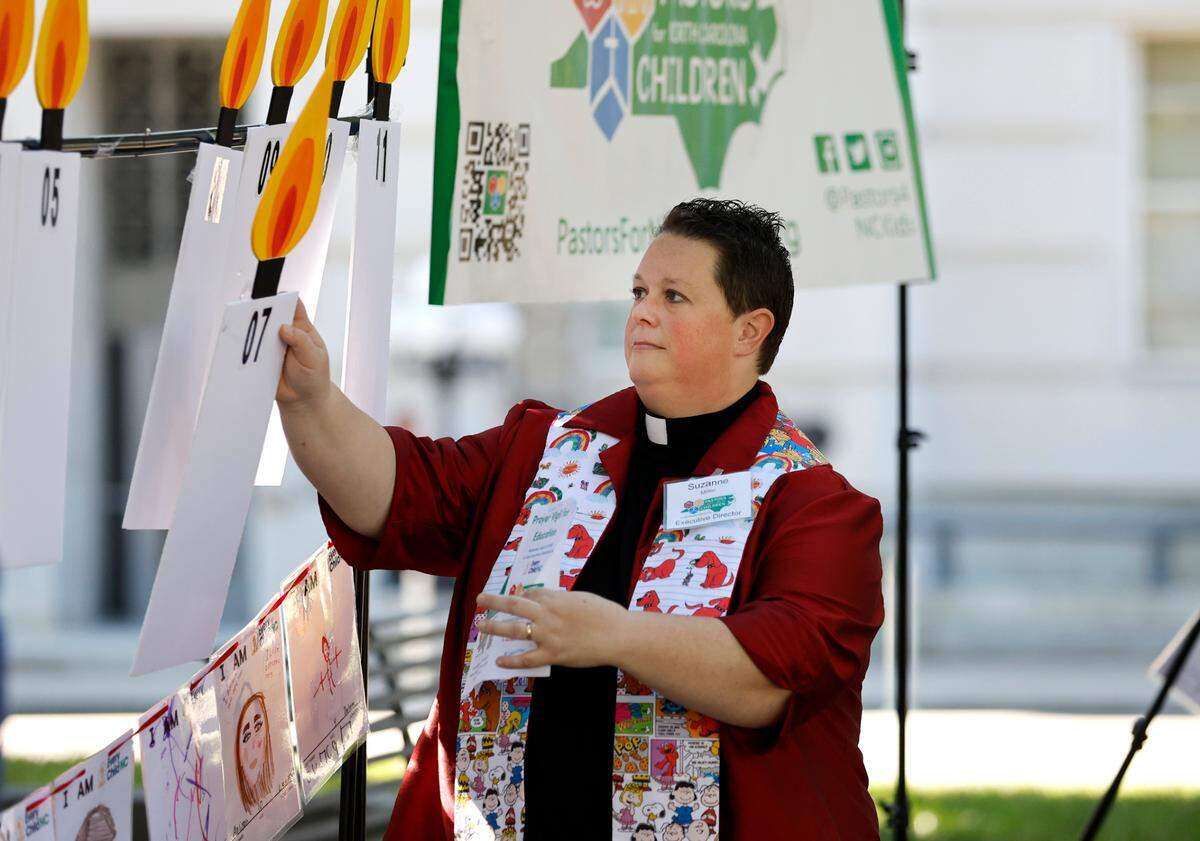
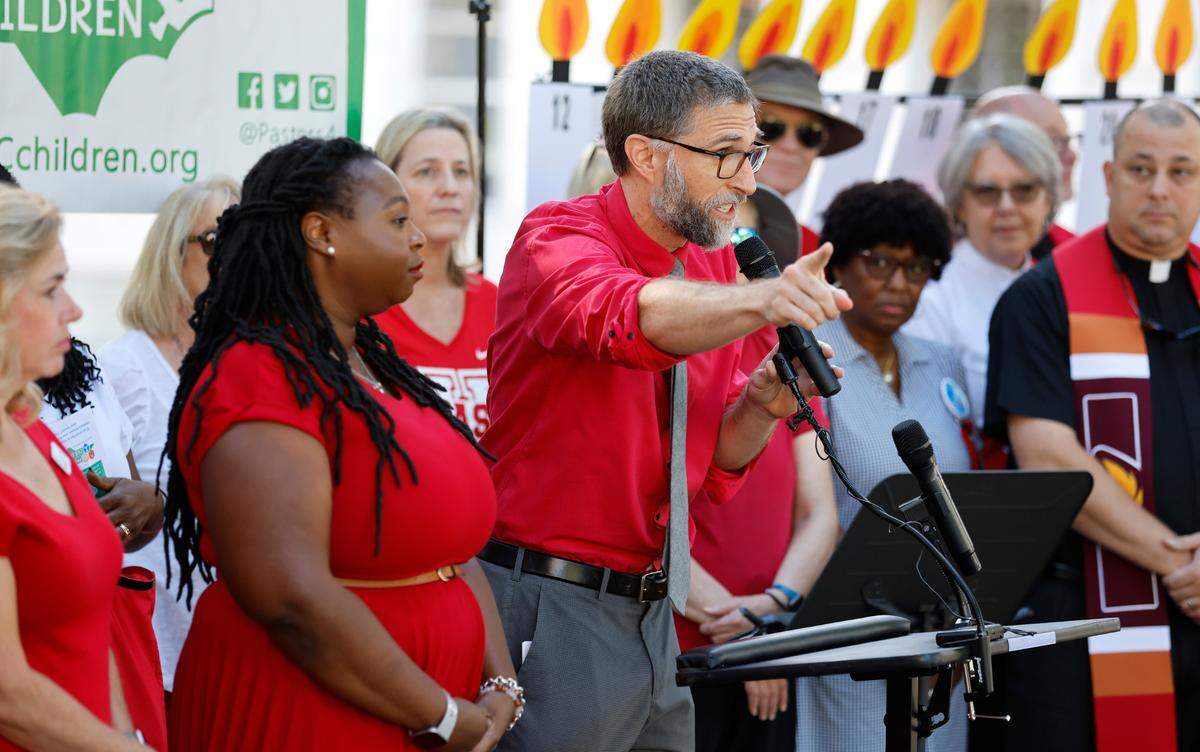
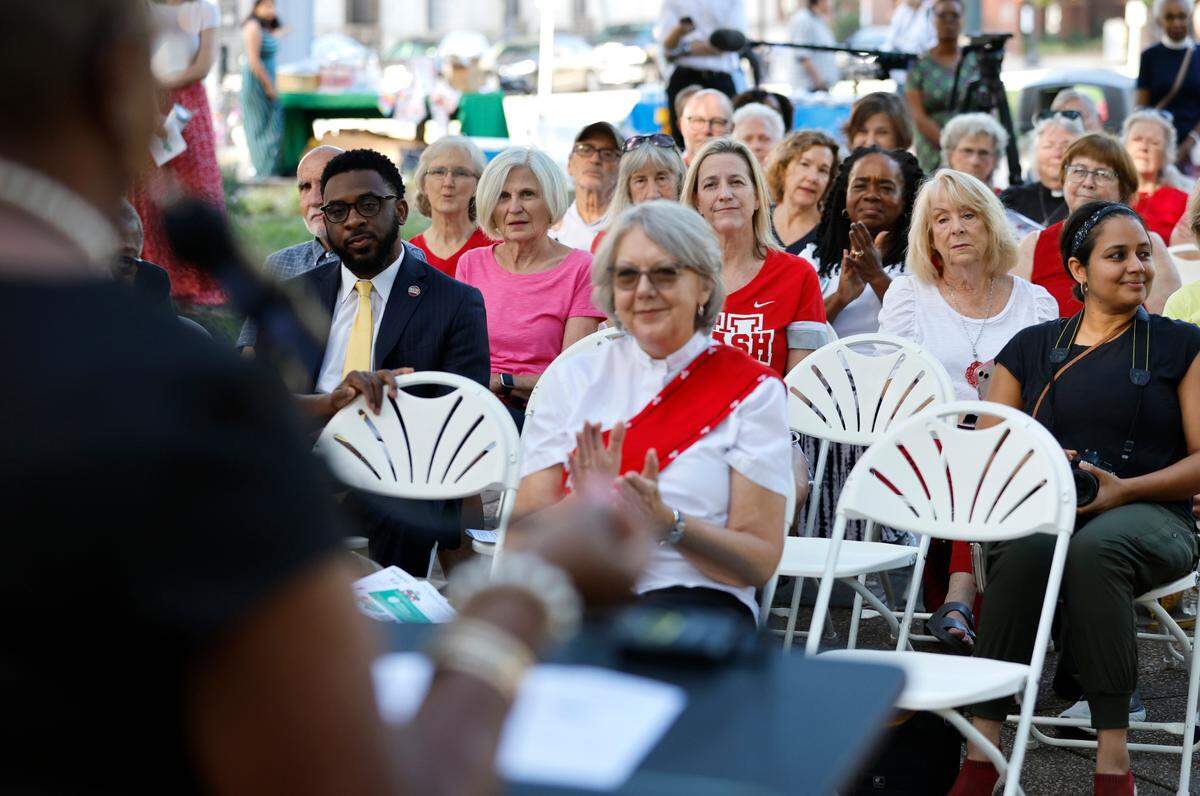
Outside the court room, public school supporters held a prayer vigil urging full funding for the Leandro plan.
Long-running legal fight
The long-running Leandro school funding lawsuit was initially filed in 1994 by low-wealth school districts to get more state funding.
Over the years, the state Supreme Court has ruled that the state Constitution guarantees every child “an opportunity to receive a sound basic education” and that the state was failing to meet that obligation.
In November, Superior Court Judge David Lee ordered the state to transfer $1.75 billion to fund the next two years of a plan developed by a consultant that’s designed to provide every student with a high-quality principal and teachers. A state Court of Appeals panel blocked the order from being enforced.
Superior Court Judge Michael Robinson replaced Lee as the trial judge and ruled in April that last year’s state budget left the Leandro plan $785 million short of being fully funded. But Robinson removed Lee’s wording requiring the state treasurer, controller and budget director to transfer funds.
Hoke County only?
Much of the arguments on Wednesday revolved around whether any remedy should be limited to Hoke County only.
Hoke County had been used as the representative school district for whether the state was providing a sound basic education.
Tilley said there’s no dispute that all North Carolina students are entitled to the opportunity to receive a sound basic education. But he said the courts have not found a statewide violation — only in Hoke County.
Tilley’s arguments were echoed by the court’s GOP justices, who repeatedly asked attorneys for the state board and school districts to produce a court order saying a statewide violation had been found.
“How did we get from Hoke County specifics with that type of a trial to a statewide situation?” said Chief Justice Paul Newby. “Where, when, how was all this evidence presented? Where’s the order?”
Dubis and N.C. Senior Deputy Attorney General Amar Majmundar pointed to memos and orders written over the years, including those written by Howard Manning, who was the trial judge before Lee. They said Manning had a “cavalier” and “unconventional” style presiding over the case.
“It puzzles me a little bit the idea that 27 years of litigation, this fourth appeal has all been about Hoke County,” Majmundar said. “Even if it were just about Hoke County, the reality is that we didn’t go through this effort to fund Hoke County. We did it because we’re obligated by virtue of the Constitution and the commands of this court to ensure that every child is afforded that right.”
Majmundar said the court is the “last line of defense” for the state’s children in this case.
State test scores
The hearing took place a day before test scores for the 2021-22 school year will be presented at Thursday’s State Board of Education meeting.
Look back to the 2020-21 school year scores, Dubis said more than 400,000 students weren’t being provided a sound basic education. When Newby brought up the impact of the COVID-19 pandemic, Dubis pointed back to how more than 300,000 students couldn’t read at grade level in the 2018-19 school year.
When coupled with how there are thousands of teacher vacancies statewide, Dubis said the state is falling short.
“The state therefore is not providing the opportunity to a sound basic education,” Dubis said.
But Tilley, the attorney for lawmakers, said only looking at standardized test data doesn’t provide a holistic review of how the state is doing. He added that there are other non-financial remedies that could be used, such as removing ineffective superintendents, principals and teachers.
“To say that statewide test data indicates or even suggests too many kids are falling behind statewide is an inconclusive statement,” Tilley said.
This story was originally published August 31, 2022 at 12:05 PM with the headline "‘Future of the children’ is up to NC Supreme Court as it considers school funding case."