NC schools have more than 4,400 teaching vacancies. How will that affect students?
North Carolina public schools will start a new school year on Monday with thousands of unfilled teaching positions and thousands of other classrooms taught by people who aren’t fully licensed.
The state’s school districts are short more than 4,400 teachers heading into the first day of classes, according to the North Carolina School Superintendents’ Association. The group says the shortage would be even worse if not for schools filling classrooms with teachers who haven’t completed their licensure requirements.
”It is highly likely that when the school year starts for traditional students that many will be going into a classroom where there’s a substitute educator,” Tamika Walker Kelly, president of the North Carolina Association of Educators, said in an interview.
“Or they will see larger class sizes because schools are making the decisions to combine classes because they don’t have enough certified staff.”
More resignations
The vacancies for teachers, bus drivers, cafeteria workers and other school positions will force the remaining staff to do more. This increases the risk of burnout and further turnover from what’s been called the “Great Resignation.”
The latest statewide resignation numbers won’t be released until later this year or early next year. But school districts say they’ve seen an increase in resignations and turnover.
”Our school staff are fantastic,” AJ Muttillo, Wake County’s assistant superintendent for human resources, said in an interview. “They will fill in where they are needed. All of that has an impact. And while we’re appreciative of our staff’s efforts, we know that takes a toll on them.”
Time is running out for the state to turn the situation around, according to Kylee Maarschalk, an English teacher at New Hanover High School in Wilmington.
“Teachers have an opportunity to leave such a long-lasting impact on students to where you’ll remember their names, perhaps for the rest of your life,” Maarschalk said in an interview.
“But in the state that we’re currently in, if you ask a student in a couple of years to name their seventh-grade teacher, they may not be able to because they might have had six different teachers in that one year because we’re not taking good care of the teachers.”

Vacancies up this year
Last school year saw schools across North Carolina and the nation grapple with staffing challenges. The numbers are worse this year, with a survey by the N.C. School Superintendents’ Association showing a 27% increase in reported vacancies compared to this same time period last year.
Altogether, the superintendents estimated their school districts had 11,297 vacant positions, including:
▪ Classified staff: 4,364
▪ K-12 teachers: 3,619
▪ Bus drivers: 1,342
▪ Exceptional children’s teachers: 850
Those 4,469 teaching vacancies are out of more than 90,000 teaching positions statewide.
“For every classroom teaching position that goes unfilled, that’s a child that’s missing a chance to grow educationally, mentally and socially,” said Walker Kelly, president of NCAE.
Schools hired 3,618 additional “residency license” teachers this year, an 86% increase from last year. Previously called lateral entry, this option is for people who weren’t education majors in college but who now want to complete the requirements to become a licensed teacher.
Lateral-entry teachers have much higher turnover rates than teachers who go through traditional preparation programs.
“The number of vacancies is certainly trending up based on the data for 2021 and 2022,” Jack Hoke, executive director of the N.C. School Superintendents’ Association, said in an email. “School districts need to fill teaching positions and residency license teachers is one avenue to fill these positions.
“The teacher pipeline is shrinking yearly, and as a state we need to figure out how to increase the number of students entering the teacher education programs at our colleges and universities.”
Shrinking teacher pipeline
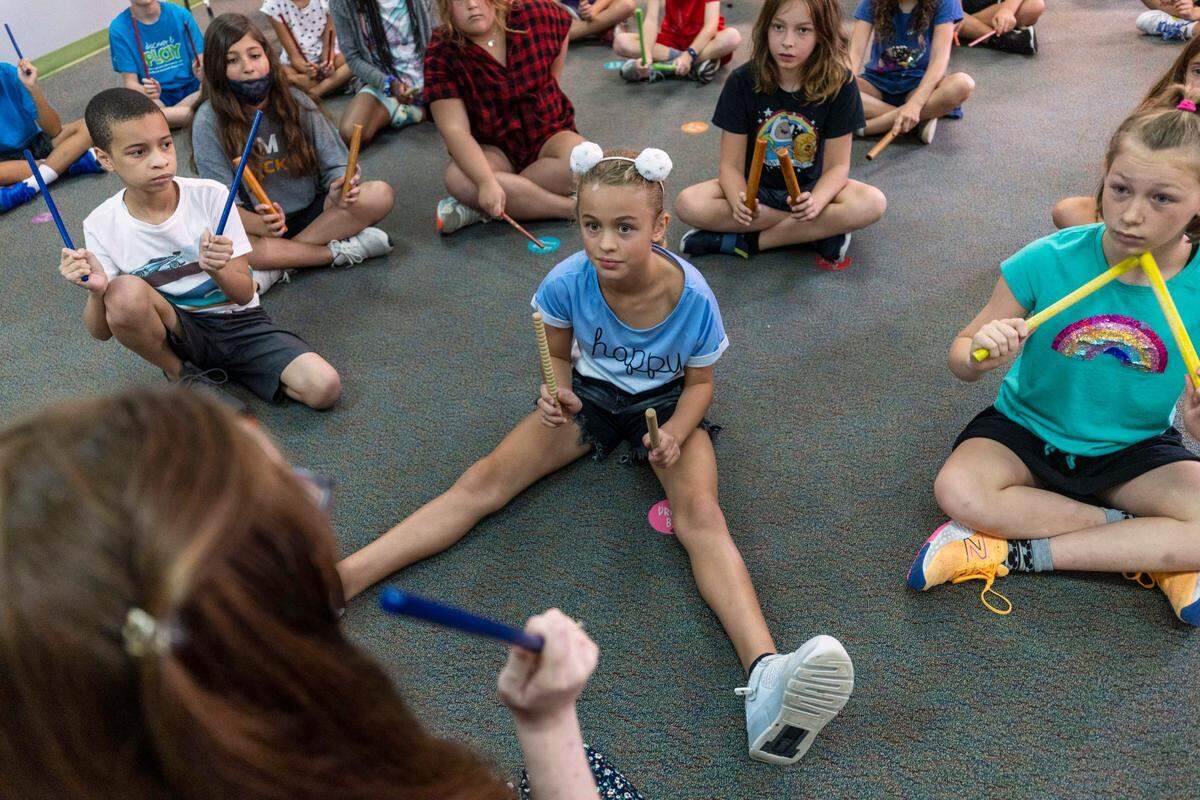
Historically, school districts have relied on the state’s colleges and universities to provide them with many of their teachers.
But the UNC System has seen a 43% drop since the spring 2010 semester in the number of undergraduate education majors.
Robert Smith, a professor at UNC-Wilmington’s Watson College of Education, said things hit “rock bottom” this year when the program didn’t produce a single science teacher. Smith blames the problem on issues such as low pay and political attacks accusing teachers of trying to indoctrinate students.
“It has become increasingly difficult for myself and for other teacher education colleagues to become cheerleaders because if we are honest, it’s a very difficult time to be a teacher in North Carolina,” Smith said in an interview. “We need to be honest with our candidates about the realities of being a teacher in public education.”
Maarschalk, the English teacher, has only one aspiring teacher in her classes this year. She’s trying, and failing so far, to persuade one of her other students to become a teacher.
“She sees the strife that teachers face each day and she says I don’t want that,” Maarschalk said.
Fewer applicants
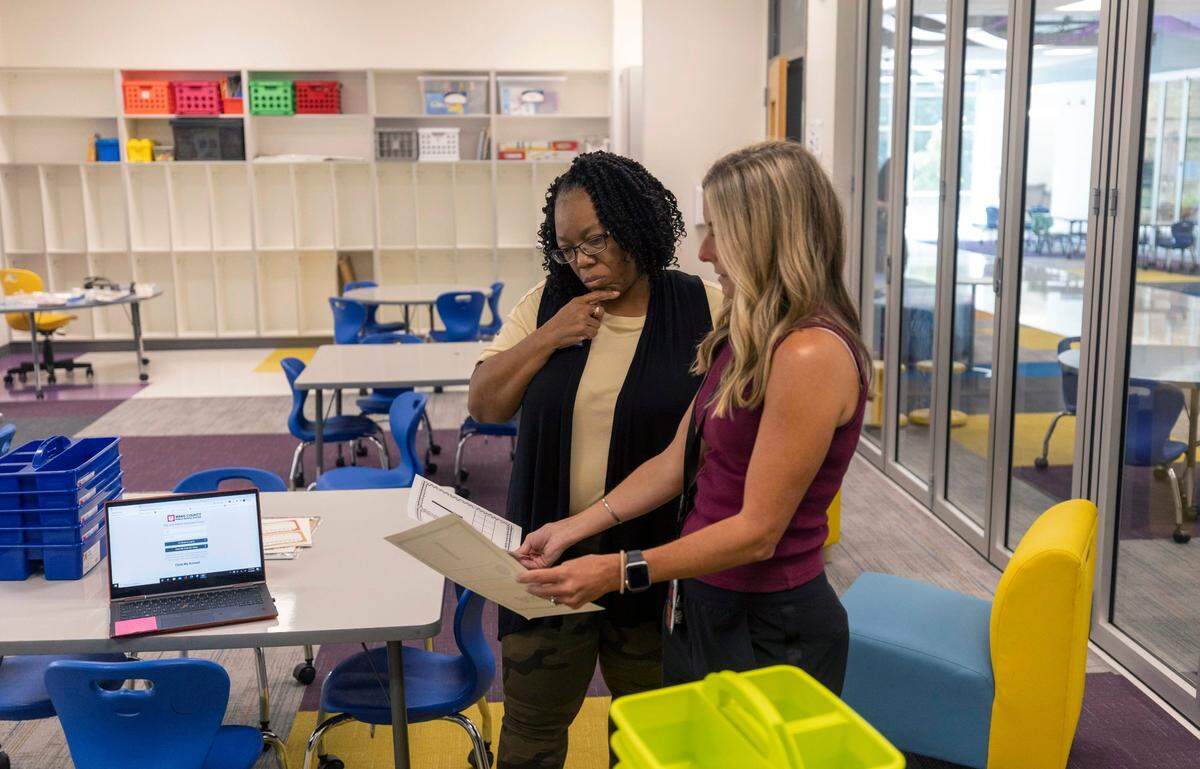
The pipeline issue is impacting the number of applicants that school districts are seeing when they try to fill vacancies.
Schools in North Carolina are competing with other states for teachers. A billboard along Interstate 440 in Raleigh advertises how Richmond Public Schools is offering $10,000 in hiring incentives to teachers who relocate to Virginia.

“We don’t have the deep pools that we used to have,” said Muttillo, Wake’s head of human resources. “It is fewer folks.”
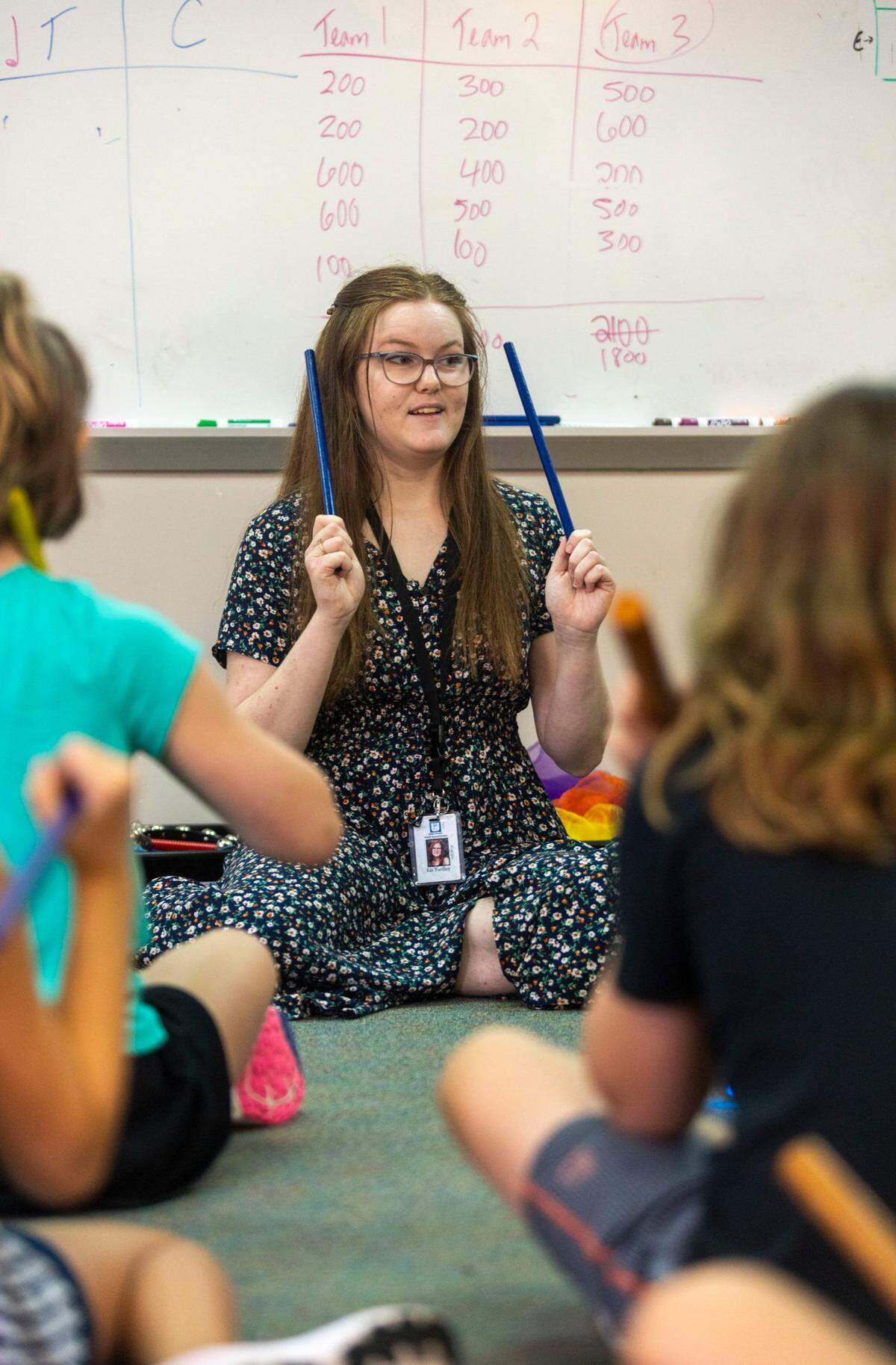
Schools were clamoring to hire Liz Yardley, a fully licensed music teacher who graduated from UNC-Chapel Hill in the spring. She had multiple interviews with different schools before accepting a position at Sycamore Creek Elementary in Raleigh.
“There were a few schools where I was at where I could tell that they really needed someone,” Yardley said in an interview. “I think with Sycamore I could tell this was a place that would probably be pretty desirable.”
The Wake County school system has been moving more quickly to hire student-teachers before they hit the open market. Maggie Rabil had been a student-teacher at Leesville Road Elementary in Raleigh before she was offered a full-time job when a position became vacant in January.
”I grew up here in the Raleigh area and am so excited to be able to help shape the next generation of students and children that will grow up in Raleigh,” Rabil, who is now a first-grade teacher at Barton Pond Elementary in Raleigh, said in an interview.
Salary concerns
Public education supporters say that the staffing shortages could be lessened if the state took steps such as substantially higher pay raises and restoring full retiree health benefits for newly hired workers.
The school year is starting just days before the N.C. Supreme Court will hear arguments about whether it should order the state to transfer an additional $785 million to fund public education as part of the Leandro lawsuit.
“We’re happy that the legislature increased the minimum wage for our non-certified staff to $15 per hour,” Shirley Prince, executive director of the North Carolina Principals and Assistant Principals’ Association, said in an interview. “But I know there are other businesses paying more than that. Walmart and McDonald’s are paying more than the $15 an hour.”
The new state budget also has an average 4.2% raise for teachers and a new starting salary of $37,000. State lawmakers are also providing $170 million this year to help school districts supplement the pay of teachers.
But Alvera Lesane, assistant superintendent of human resources for Durham Public Schools, said it’s still an environment where a person could make double the salary working at Research Triangle Park instead of becoming a math teacher. It’s forcing people to choose between their passion and their pocketbook, she said.
“We are no longer creating the most viable option for teachers to enter the profession and to stay for 30 years,” Lesane said in an interview. “Every person who enters the organization, it takes them a good four to five years to hone their skills. Ultimately that will have an impact.”
This story was originally published August 26, 2022 at 6:00 AM with the headline "NC schools have more than 4,400 teaching vacancies. How will that affect students?."