
A UNC student in a wheelchair was stuck in her dorm, spotlighting accessibility issues
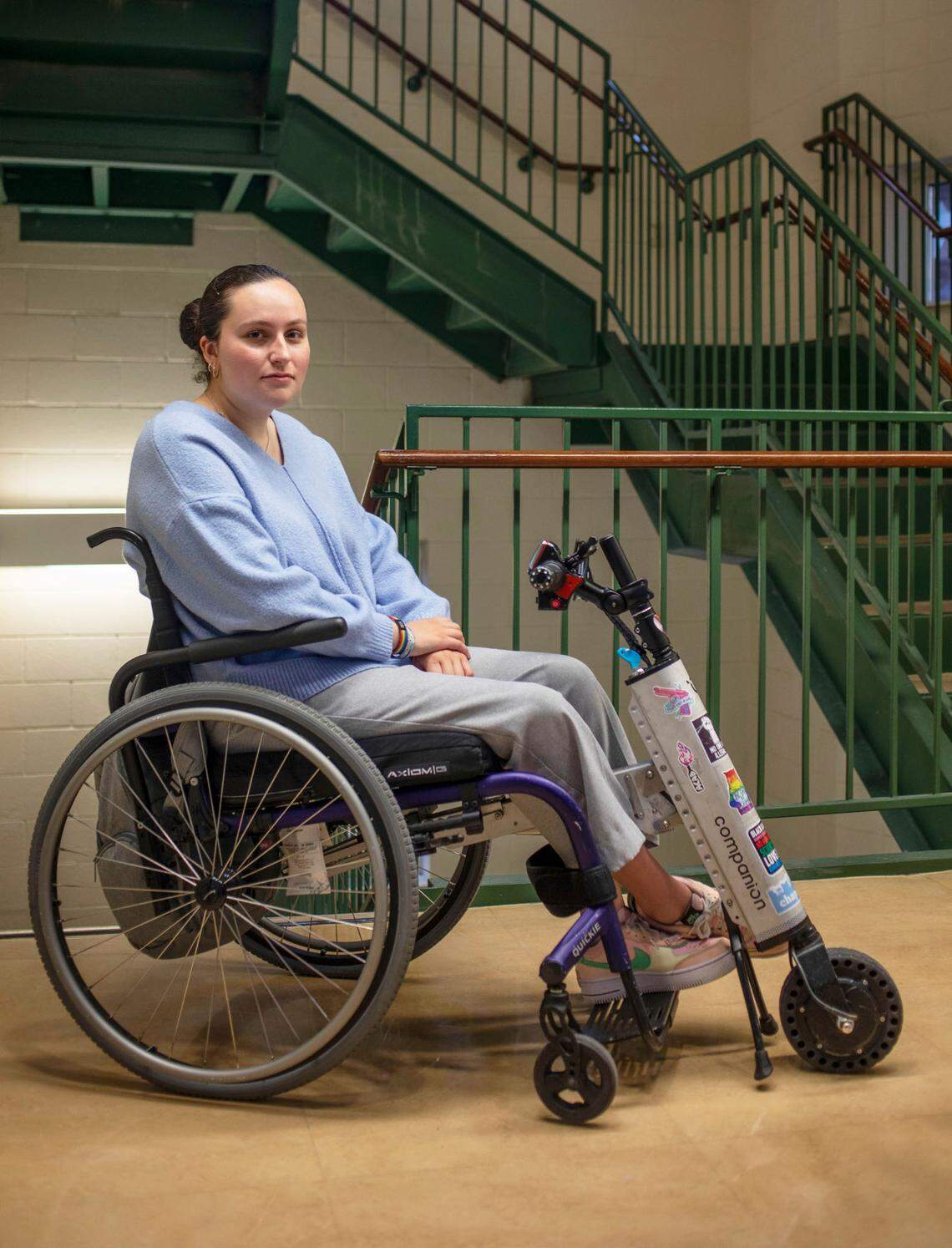
Laura Saavedra Forero was stranded in her dorm room on the fourth floor of Koury Residence Hall at UNC-Chapel Hill.
The elevator was broken, which she needed because she uses a wheelchair. It wouldn’t be fixed for at least a few days.
But Saavedra Forero, an 18-year-old freshman and Morehead-Cain scholar, was sick and wanted to see a doctor at campus health. She couldn’t wait that long.
She called university staff for help and they offered to move her temporarily to a different dorm on the ground floor. But it took two different emergency crews, an uncomfortable stair chair and about three hours to get her safely down three flights of stairs and out of the building.
“It was an excruciating, dehumanizing and disheartening experience to be taken down the stairs like a box basically,” Saavedra Forero said.
“In that moment I just wanted to pass out,” she said, “like I would rather be unconscious than live through that again.”
This wasn’t the first emergency situation that Saavedra Forero has faced this year due to problems with campus accessibility, and she’s been raising red flags since she arrived in Chapel Hill last fall. She also wasn’t the only student stuck in a dorm room in Koury.
Now, she expects the university to make immediate and long-term changes and offer transparency about the reality of “the Carolina experience” for students with disabilities.
A life-changing surgery
Saavedra Forero wasn’t expecting to start her college career in a wheelchair. She played soccer growing up in Charlotte, but a series of botched hip surgeries left her on the sidelines and going to doctor appointments and physical therapy instead of practices and games. In August 2020, she woke up from surgery paralyzed from the waist down.
She started applying to colleges shortly after that surgery. While she was bed-bound at the time, she didn’t expect to be a full-time wheelchair user going into college. She was told the neurological condition that paralyzed her would resolve much faster than it has. And she’s hoping another major hip surgery this summer, along with more strength work, will help her walk again.
Still, she saw that Carolina advertised itself as an accessible, equitable school with disability services and accommodations for students. As the fall semester approached, she had to figure out how to navigate the campus, physically and in terms of resources.
After talking to housing staff about her condition, she was placed in an ADA-compliant, fully wheelchair accessible room with an attached bathroom on the fourth floor of Koury Residence Hall.
She was surprised and didn’t see much common sense in that decision, but she didn’t have much of a choice and was told it would be fine, Saavedra Forero said.
During her freshman year, she realized how she and other students with disabilities miss out on Carolina traditions. Because of accessibility issues, they haven’t been able to sit in the student section at basketball games, participate in the Bell Tower climb or take a sip of water at The Old Well on the first day of classes.
And, while this isn’t the biggest obstacle, she’s had to pay to get her wheelchair fixed multiple times because of wobbly and missing bricks around campus.
“If I knew the reality of what my experience would’ve been like this year I don’t know if I would still be [at Carolina],” Saavedra Forero said.
Sounding the alarm
Saavedra Forero’s safety concerns were validated at orientation when a resident adviser told her if there was a fire in the building she should just wait by the stairs for help.
When the first fire alarm went off that semester, she never left the building. It took 11 minutes for someone to come up and tell her that it wasn’t a serious fire and she could go back to her room.
“That in itself was a little distressing just not knowing for so long and it seeming like no one really cared,” Saavedra Forero said.
The second time the fire alarm went off, she waited for seven minutes and was then told to take the elevator down.
She felt the irony as she approached the elevator doors and saw the sign that specifically instructs people to not use the elevator in case of a fire.
After her recent evacuation from the residence hall, the university offered her two different ground-floor rooms on north campus, but they are not wheelchair accessible and do not have bathrooms attached.
She declined those options, which weren’t feasible anyway.
Then, the university suggested she find off-campus housing and offered not to charge her for canceling her housing plan early. Or, she could move back into Koury when the elevator was fixed.
“With what money and what time” was she supposed to find a functional apartment at the last minute this spring, Saavedra Forero asked. Plus, she really needs to be on campus for the same accessibility reasons.
So, she took an opening on the second floor of the same residence hall, knowing that her chances of leaving the building are better with only one flight of stairs to get down in an emergency, she said. She still needs the elevator to get up to her room.
She’s raised concerns with administrators throughout the past few months, she said. In those meetings, phone calls and emails, it often felt like she was being talked about like an object or that she was talking to a wall, she said.
When housing assignments recently came up for next year, she tried to get into a ground-floor room but she was assigned to a second-floor room in a different building.
Saavedra Forero said she has told university staff that she refuses to live on a non-ground floor room. The responses she’s gotten are that the university just doesn’t have the rooms, capacity or accommodations or that some dorms aren’t accessible because they’re historic, she said.
“They all just seem to be excuses,” Saavedra Forero said. “They have time until the upcoming semester to make any changes necessary for wheelchair users and other disabled students to have the safety we deserve.”
UNC accommodations for disabled students
When Megan Castle, a sophomore resident advisor in Koury, saw the note about the elevator being broken, she immediately thought of the multiple students with accessibility related needs living on the upper floors of the building.
For her, the biggest inconvenience would be having to carry her laundry down the stairs. But she was angry knowing that other students were literally trapped.
“How is there no way that in the accessible building you can’t get someone to fix the one elevator in the building?” Castle asked.
Students with disabilities also shouldn’t have to wait to be carried down by fire and EMS crews in the event of an emergency, she said.
“It’s relying on a lot on things that are out of their own personal control,” Castle said. “It feels like there’s no reason for it to be this difficult.”
UNC students with chronic or severe medical conditions can request individual housing accommodations that are determined on a case-by-case basis and are limited by room space availability. The university offers “a number of rooms and bathrooms” in residence halls and apartments to accommodate residents using wheelchairs, power chairs, scooters and other mobility devices.
Students need to complete a form through the Accessibility Resources & Services office. Those requests are reviewed individually by the Accommodations and Modifications Committee, which typically takes about a week or two.
The university says those requests are taken seriously and kept confidential.
Students requiring mobility accommodations need to check their class schedules to make sure the courses they’re signed up for are in physically accessible buildings. The university notes that five classrooms in Caldwell, Davie and Smith Halls are inaccessible. Students can also request a standalone desk in their classroom.
Students affected by elevator outages in residence halls can work with Carolina Housing to temporarily relocate to another accessible room or arrange to have food delivered, according to the university. And when there are elevator outages in academic buildings, students can work with professors and university staff to temporarily move a class or tune in remotely.
UNC also provides a service called Point-to-Point on-demand where lift-equipped vans transport students between places on campus, though wait times can vary. UNC buses are also accessible.
An online campus map offers information about accessible entrances, ramps, restrooms and elevators.
“A safe and accessible campus is our priority, and we are committed to working through any accommodation requests or concerns that may arise,” a university spokesperson said, encouraging people with accessibility needs or concerns to reach out to Accessibility Resources and Service or the Equal Opportunity and Compliance office.
While UNC offers accommodations, students say there’s more to be done.
“What seems like an inconvenience to non-disabled people is often life-changing to disabled people,” Saavedra Forero said. “Listening to us and our experiences is vital.”
Taking action to fix accessibility issues
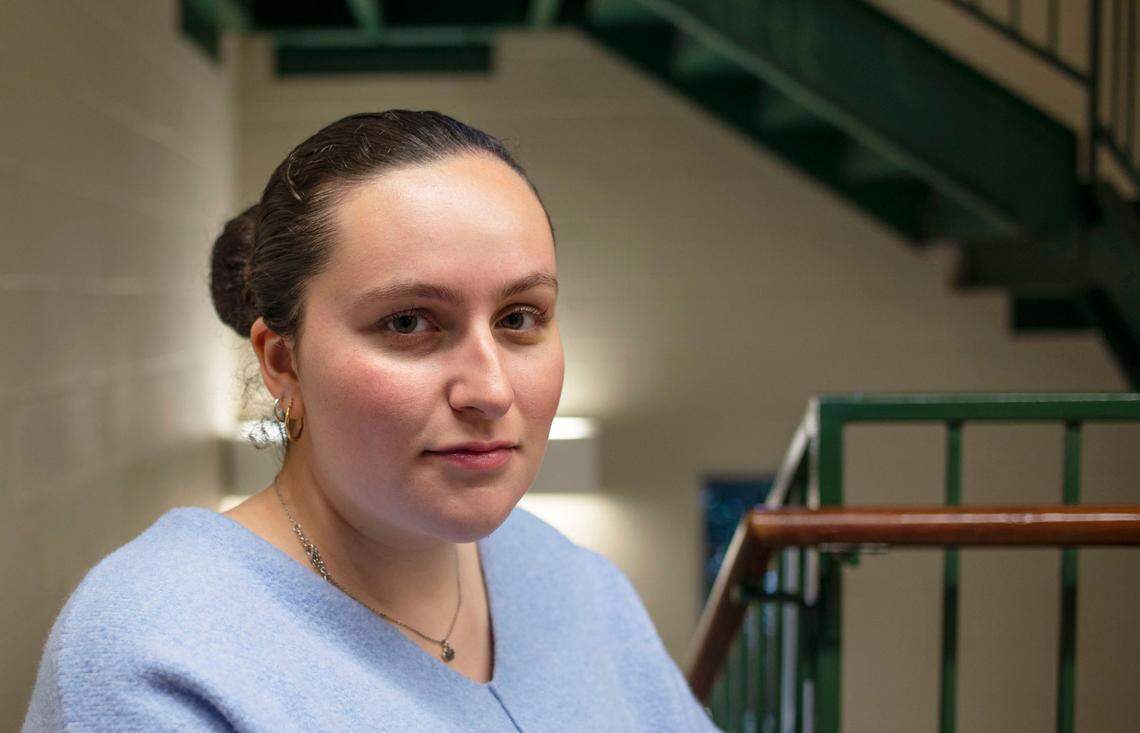
One immediate action the university could take is to guarantee ground floor housing for all wheelchair users so that some of the problems with emergency plans can be avoided. The university should also create an easier, quicker communications process to get someone to fix a power door or broken elevator buttons in campus buildings, Saavedra Forero said.
Disabled students should also have as equitable of an experience as possible when it comes to attending campus-wide events and eating at dining halls, instead of being an afterthought, she said.
Tar Heels at the Table, a student-run organization formed last academic year, is working with senior leadership and UNC trustees to address some of those necessary changes around accessibility, disability and inclusion. Duke University and NC State University also have established alliance groups tackling accessibility and equity issues on campus.
As a member of that group, sophomore Tessa Buscher helped get a permanent ramp installed at the Old Well in January. She’s also met with Chancellor Kevin Guskiewicz and other university officials about a handful of inaccessible residence halls, academic buildings and classrooms, particularly on north campus.
To get into the main entrance of Wilson Library, people need to go up a flight of stairs. There are alternative entrances for people in wheelchairs, but students said they’re hard to find and there aren’t many signs to help.
Other campus buildings don’t have ramps or elevators and are essentially off-limits to some students.
“That’s a human rights violation,” said Buscher.
While some fixes may be systematic changes and longer term projects, transparency in this moment about the university experience for disable students is crucial for the safety of students.
Saavedra Forero knows it will take a lot to change the culture at UNC because there’s a small number of wheelchair users on campus, she said, but she hopes to be the last student to experience this trauma.
“If the university is going to promote itself as the university of the people that has to include all people,” she said.
This story was originally published March 10, 2022 at 2:10 PM with the headline "A UNC student in a wheelchair was stuck in her dorm, spotlighting accessibility issues."
