NC schools face ‘destabilizing’ budget cuts because of drop in enrollment since pandemic
North Carolina school districts have not returned to pre-pandemic student enrollment totals, putting them in danger of losing $132 million in state funding this year.
Enrollment figures last week by the state Department of Public Instruction show that the 115 school districts are reporting 1.35 million students so far this school year. That’s 0.8% more than the same time last school year but 4.3% less than enrollment in the 2019-20 school year.
School districts were preliminary funded by the state this school year based on them having pre-COVID enrollment numbers. Unless state lawmakers enact a “hold harmless” budget provision. the N.C. Justice Center says “North Carolina schools may see destabilizing mid-year budget reductions totaling $132 million.”
“We do not have sufficient resources in place to serve the academic, social and emotional needs of our students and classrooms today, and we absolutely have to do more to ensure that every child has access to a sound basic education,” Mary Ann Wolf, president of the Public School Forum of North Carolina, said in a statement.
“In addition, it is imperative that looking at the short-term, lawmakers continue a hold harmless provision with regard to ADM (average daily membership) so that local district budgets do not suffer mitigable harm from this pandemic,”
But some say it’s time for school districts, which had been losing enrollment before the pandemic, to face the budget consequences of having fewer students.
“Enrollment adjustments are a reality for school districts so they should budget accordingly,” Terry Stoops, director of the Center for Effective Education at the John Locke Foundation, said in an interview Thursday. “A hold harmless simply delays the inevitable budget adjustments that districts need to make because of their declining enrollments.”
Sharp pandemic enrollment drop
Enrollment in the state’s traditional public schools has been falling since 2015 as more students have attended charter schools, private schools and homeschooling. For instance, enrollment in charter schools rose 4.2% this school year to 130,485 students.
Enrollment in charters has increased 188% since 2011, when state lawmakers lifted the cap on the number of charter schools.
The drop in traditional public school enrollment was particularly steep last year with 70,000 fewer students in the first month of classes than the same time in the 2019-20 school year. Districts were preparing for a potential surge this year in case families who held their children out during the pandemic returned.
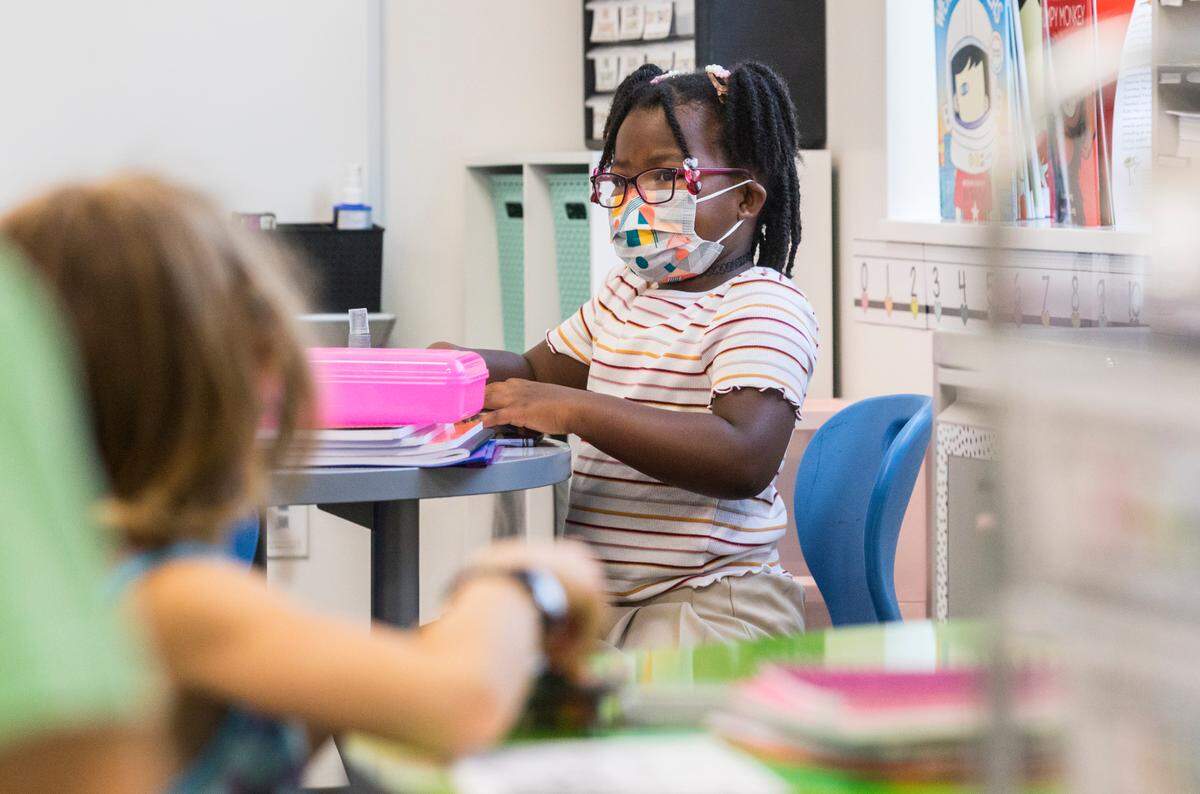
District enrollment went up 10,000 students this year, but it is still 60,000 students below the first month of classes two years ago.
“The good news is that this year, we do see a bit of a rebound in terms of public school student enrollments,” Wolf said. “But the truth is, all schools are still struggling to meet the needs of their students and educators.”
Stoops said school districts shouldn’t count on returning to pre-pandemic enrollment levels.
“The enrollment slide is permanent, and it’s a condition that district schools will need to get used to,” Stoops said. “We’re seeing more families opt for private, charter and home schools. We’re seeing the birthrate declining, and that decline will start to be seen in enrollment in district schools.”
‘Destabilizing reduction’ in funding
In the short term, state law calls for state funding to be reduced for school districts if they’re below their projected enrollment.
Last year, state lawmakers agreed to not reduce funding for districts when their enrollment dropped. It’s unclear whether that option will be included in the new state budget being negotiated by Republican legislative leaders and Democratic Gov. Roy Cooper.
Kris Nordstrom, a senior policy analyst for the N. C. Justice Center’s Education & Law Project, said in an analysis published in N.C. Policy Watch that 95 of the 115 districts face funding cuts based on their first month’s enrollment. Unless enrollment increases in the second month, those districts could lose $132.3 million in state funding.
Charlotte-Mecklenburg schools would see the largest drop statewide at $15.2 million, or the equivalent of 220 teachers. CMS reported 138,179 students in the first month of classes, which is 177 fewer children than this same time last year. But it’s also 7,441 students below the state projection.
Nordstrom said Wake County could lose $12.8 million. Wake reported 155,227 students in the first month of classes, 1,162 fewer than the same time last year. It’s also 6,064 students less than the state projection.
Stoops said school districts can use their federal COVID relief dollars to cushion any state funding reduction from the enrollment drop.
But Nordstrom said that not holding districts harmless from state funding cuts would continue a downward spiral that hurts the education students receive.
“This is a destabilizing reduction that is not needed at this time,” Nordstrom said in an interview Thursday. “So we might as well hold them harmless rather than create a problem that we don’t need to have.”
This story was originally published November 4, 2021 at 4:46 PM with the headline "NC schools face ‘destabilizing’ budget cuts because of drop in enrollment since pandemic."