One month into the fall semester, COVID-19’s impact varies across NC college campuses
In the month since North Carolina began returning to campuses, COVID-19 has been unpredictable, playing out differently on campuses and in college towns across the state.
Three large public institutions that started classes early — UNC-Chapel Hill, N.C. State University and East Carolina University — quickly moved classes online and students out of dorms. Other campuses, like Appalachian State University and UNC Wilmington, are staying the course and hope to make it through the fall semester without having to largely shut down.
When coronavirus case counts shoot up quickly, quarantine and isolation spaces can become overwhelmed in a way that raises a red flag, said Kevin McClure, a higher education professor at UNCW.
“My sense is that there are multiple other institutions in the system where the numbers are not trending the right direction, but they have not yet reached that crisis moment that played out at UNC-Chapel Hill,” McClure said.
UNC was the first major university to move online after seeing a spike in COVID-19 cases and clusters on campus. N.C. State and ECU quickly followed. Those three also started classes earlier than many other large state universities across the nation.
When UNC announced it was going all virtual, the Chapel Hill campus had about 130 reported cases. There were few other campuses nationwide to compare with at that time, McClure said.
Since then, he added, there’s been an increasing tolerance for higher case counts in other states. For example, more than 1,500 students at the University of Iowa have tested positive since the semester started. At the University of Alabama, there have been nearly 2,000 students with COVID-19 since classes began. Illinois State University has also seen more than 1,300 cases on its campus.
“It is not inevitable that every single institution is eventually going to land on switching to entirely remote,” McClure said. “There are going to be differences in how this plays out.”
But every campus that has brought students back with in-person instruction and campus housing has the conditions for COVID-19 to spread, he said.
Classes move online, students move off campus
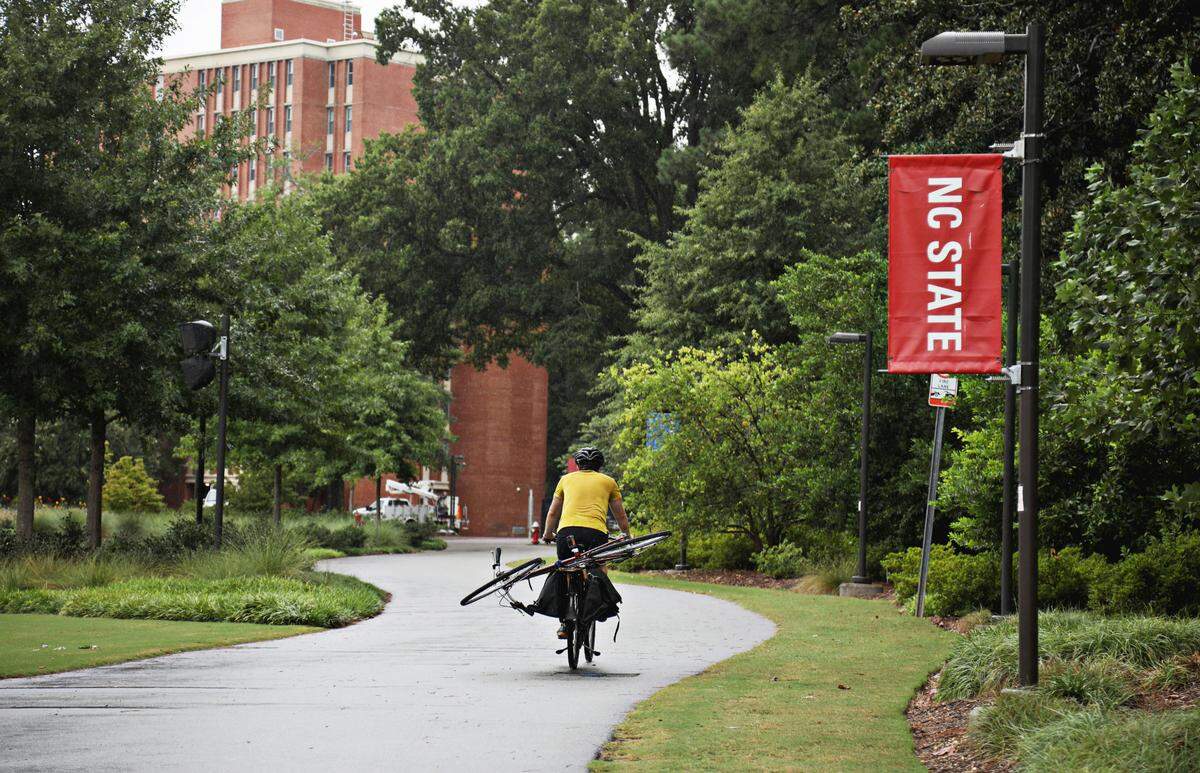
▪ UNC-Chapel Hill announced the switch to online classes a week after starting the fall semester in person. Most students living on campus canceled their housing contracts and moved out of their dorms and residence halls. UNC has reported 963 COVID-19 cases among students and employees and 13 clusters since the first day of classes. On Monday, UNC reported zero new cases — the first time that has happened in a daily update this fall.
UNC is closing 14 residence halls to have those students who still remain on campus living in fewer places. Students will move into single rooms, unless a specific request is approved. Their rates will not increase.
▪ N.C. State University also moved to online classes and closed dorms after seeing spikes in COVID-19 cases. The 32 clusters of cases have been in residence halls, off-campus apartments and fraternity and sorority houses. N.C. State has reported 886 cases since classes started; the vast majority have been among students. NCSU reported its first new COVID-19 cluster in more than a week on Tuesday night, which included 10 student cases at an off-campus apartment complex.
“I definitely expected the campus to close at some point, and it is kind of nice to have the decision made for me,” said Kiran Soma, a freshman at N.C. State. “However, I’m going to miss hanging out with my friends and interacting with other people, as well as just being on campus. The past few weeks have been fun and refreshing, but I understand the necessity of closing campus to keep everyone safe.”
▪ East Carolina University in Greenville reports more than 1,100 students and employees have tested positive for COVID-19 since the first day of classes. ECU moved to online instruction and asked students to move out of dorms about two weeks after the semester started.
The number of new daily or weekly cases have dropped since students moved out of residence halls at UNC, N.C. State and ECU.
▪ While those universities started the semester earlier than planned, UNC Charlotte took a different approach this fall. UNCC delayed its in-person start date to Sept. 7 and then announced that classes would be online-only and students won’t return to campus until Oct. 1. UNCC reported its first cluster of cases on Sept. 1, as some students returned to off-campus apartments before the switch to online was announced. The university has reported more than 100 total cases since July and 58 active cases, according to UNCC’s COVID-19 dashboard.
Each of those four universities has about 30,000 students enrolled, with N.C. State leading the pack at 36,000 students.
Other UNC System schools stick to in-person classes
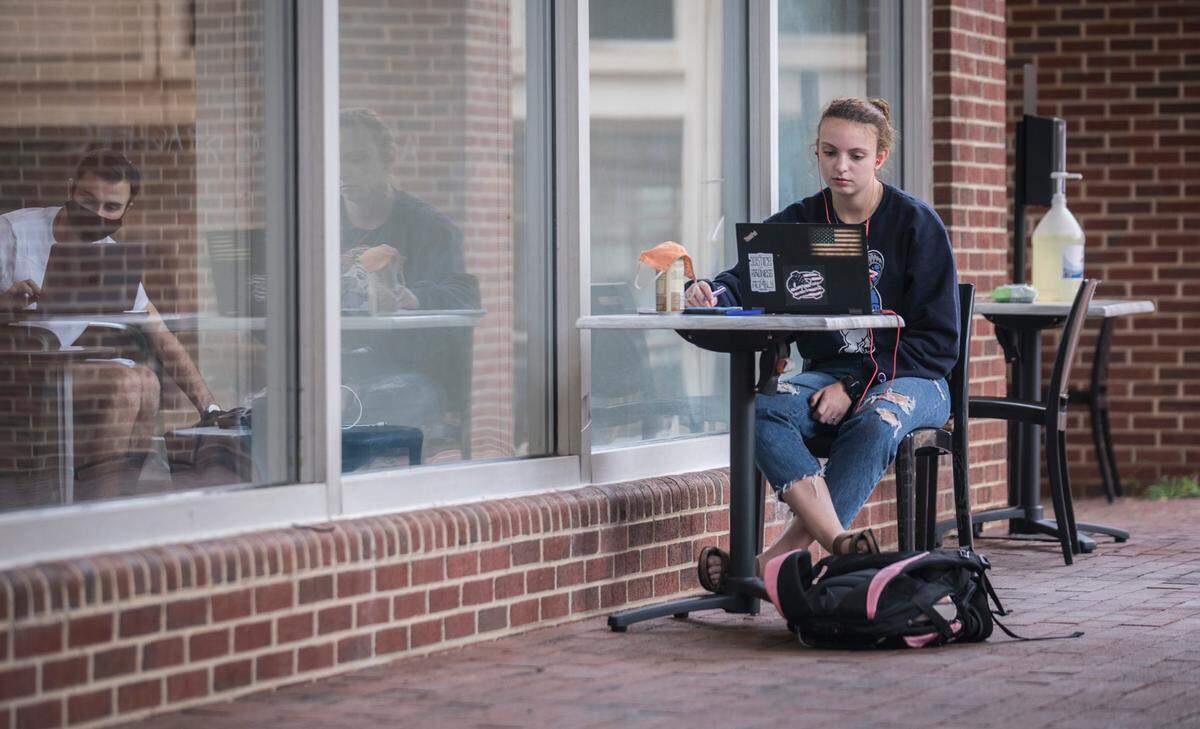
Several other universities in the UNC System began with some in-person classes in August and have yet to pivot to remote learning. Each institution has a smaller enrollment than the schools that have switched to online learning, and some campuses aren’t in traditional college towns.
The reality is the institutions themselves are very different in terms of their size, campus, cultures and geographies, McClure said.
Large universities like UNC-CH have a dense concentration of students around the campus area. Others have more commuter students, don’t make a true “college town” and may not have the same type of athletics, Greek Life or residence halls.
“Some of those distinct institutional features are going to shape the extent to which COVID-19 becomes an issue or not,” McClure said.
There also has been public pressure and vociferous faculty and staff concern at some institutions than others, he said.
“It doesn’t mean that they aren’t experiencing issues,” McClure said. “But the decision makers may not feels as much of a pressure to make a decision quickly because they don’t have the same level of scrutiny.”
Other universities may also have a greater financial incentive to stay in the game longer, he said. The longer students stay on campus, the lower pro-rated housing and dining refunds those schools may eventually have to pay out.
▪ At UNC Greensboro, which has about 20,000 students, there have been 61 cases among students and employees since July 1, including contractors, reported on the UNCG COVID-19 dashboard. The vast majority have been student cases, and 37 students have tested positive since classes started on Aug. 18. Twelve are currently in isolation or quarantine on campus. The number of positive cases on campus has been increasing each week.
▪ Appalachian State University, which sits in the mountains of Boone, is the next largest university in the UNC system with just under 20,000 students. App State has reported 146 positive cases among students and employees since the first day of classes and 308 total cases since March, according to ASU’s COVID-19 dashboard.
The App State Faculty Senate passed a resolution of no confidence in Chancellor Sheri Everts in August in part because of her plans to reopen the university this fall, ASU’s student-run news publication The Appalachian reported. Faculty members have been calling for online classes since the summer and were worried about the sudden influx of college kids living in close quarters and going to parties where they likely won’t be wearing masks, the News & Observer previously reported.
Fifty App State students currently have COVID-19 and are in isolation. The weekly average of active cases has been fluctuating between about 40 and 50 cases since classes began.
▪ UNC Wilmington, which has more than 70 students in isolation and quarantine, is the latest university to make changes to its campus operations. UNCW is asking first-year students living on campus with a roommate to move into single rooms for the rest of the academic year. More than half of the 3,600 UNCW students living on campus have single rooms and this move will affect about 800 students, according to the university.
The change came after the New Hanover County Health Department approached UNCW because 18-to-24-year-olds represent the largest source of new COVID-19 cases in the county. Reducing the number of students in shared spaces will make it easier to socially distance in campus housing. Students will not be allowed to move to off-campus housing unless they will be living at home.
UNCW has reported about 230 COVID-19 cases among students, faculty and staff since classes started on Aug. 19. The university has reported 255 total cases since July 1, according to the UNCW COVID-19 dashboard.
▪ UNC Asheville has reported 12 cases among employees and students since July 1, according to UNCA’s COVID-19 dashboard.
▪ Western Carolina University reports 115 COVID-19 cases among students, employees and subcontractors since July 1, according to WCU’s COVID-19 dashboard.
▪ At the University of North Carolina School of the Arts in Winston-Salem, one student and three staff members have tested positive for COVID-19 since July 1. The school has tested 14 students, according to UNCSA’s COVID-19 dashboard.
Most HBCUs report low COVID case counts
Minority-serving universities, including HBCUs, in North Carolina have taken note of state and national statistics indicating that Blacks have been disproportionately affected by the pandemic. During the first several months especially, Black people were more likely than whites to test positive for infection, and they remain more likely to die with COVID-19 and to be financially affected by it.
Students and employees have been urged to follow community standards designed to reduce the spread of illness, and most minority-serving universities have seen relatively low numbers of cases.
▪ N.C. A&T State University in Greensboro had seen 44 cases as of Sept. 4 among students, employees and subcontractors.
▪ N.C. Central University in Durham had 39 as of Sept. 4.
▪ Fayetteville State University had counted 36 cases as of Sept. 4.
▪ Elizabeth City State University reported 13 cases as of Sept. 7.
▪ Shaw University in Raleigh reported one case, an employee, as of Sept. 10.
▪ St. Augustine’s University in Raleigh reported one case, a student, as of Sept. 10. .
▪ Winston-Salem State University has reported 20 cases among faculty, staff and students since Aug. 1.
▪ UNC Pembroke is the exception. The school in Robeson County had counted 211 cases among students, employees and subcontractors as of Monday.
COVID-19 cases at private NC institutions
▪ Duke University reports 52 positive cases among students, faculty and staff since Aug. 1.
▪ Wake Forest University reports 56 positive cases among faculty, staff and students since Aug. 17, when students moved back to campus.
▪ Elon University reported 24 students and one employee have tested positive for COVID-19 since Aug 14, when students started moving in.
▪ Campbell University reports 15 positive cases among students and zero cases among faculty and staff.
▪ Davidson College reports 20 COVID-19 cases since Aug. 19 and classes began on Aug. 20.
▪ At Meredith College in Raleigh, 28 students and seven employees have tested positive, according to the school’s COVID-19 dashboard.
▪ William Peace University in Raleigh has reported four total COVID-19 cases since Aug. 1 on its dashboard.
This story was originally published September 9, 2020 at 3:24 PM with the headline "One month into the fall semester, COVID-19’s impact varies across NC college campuses."