Our reporters are writing about what they expect to be some of the big topics on their beats in 2020.
This was a busy year for the UNC System, particularly the Board of Governors and UNC-Chapel Hill. We should expect the same for 2020.
College campuses across the state will continue to grapple with issues of racial tensions and campus safety, as well as managing tuition and the student debt crisis. And new leaders will have to address the issues head on.
Here are some of thing to keep an eye out for in the world of North Carolina higher education in the next year.
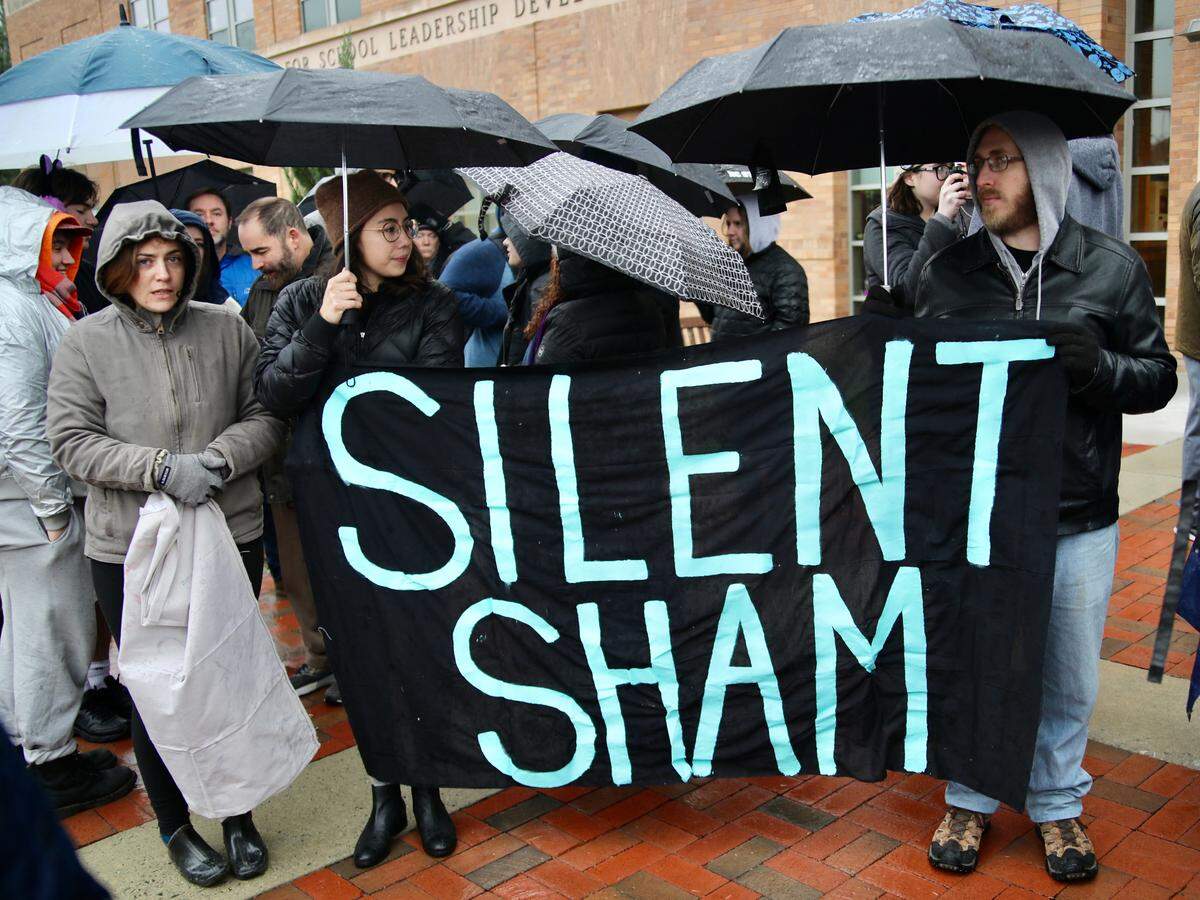
Protesters huddle under umbrellas while holding a large sign reading “Silent Sham” during protests over the recent Silent Sam deal made by the UNC Board of Governors. Caleb Jones cjones@newsobserver.com
Campus racial tensions and Silent Sam
The holiday season has been full of news about the Silent Sam Confederate statue that stood on UNC-Chapel Hill’s campus before it was illegally torn down by protesters in 2018.
On the day before Thanksgiving, the UNC System settled a lawsuit with the North Carolina Sons of Confederate Veterans that set up a trust of $2.5 million for the preservation and display of the monument, which the Confederate group got ownership of in the deal. UNC also paid the group $74,999 to keep its flags and banners off of campus.
Over the next three weeks, UNC students, faculty and alumni protested the decision, saying UNC is paying a white supremacy group. And a national civil rights group stepped in by taking legal action to intervene as defendants in the lawsuit that they say never should have existed. They’re also trying to get the case dismissed. The judge denied their claim, but opened up questions for the court to explore about the SCV and the trust that was set up through the settlement.
Members of the UNC community have made clear they are not letting this go and will continue to hold UNC accountable when they return to campus next year.
The SCV hasn’t detailed what it plans to do with the money or the statue, beyond saying it plans to build or buy a new facility for it.
So, keep an eye out as we continue to explore how this deal was made, who the N.C. Sons of Confederate Veterans are and where the Silent Sam statue might be re-erected.
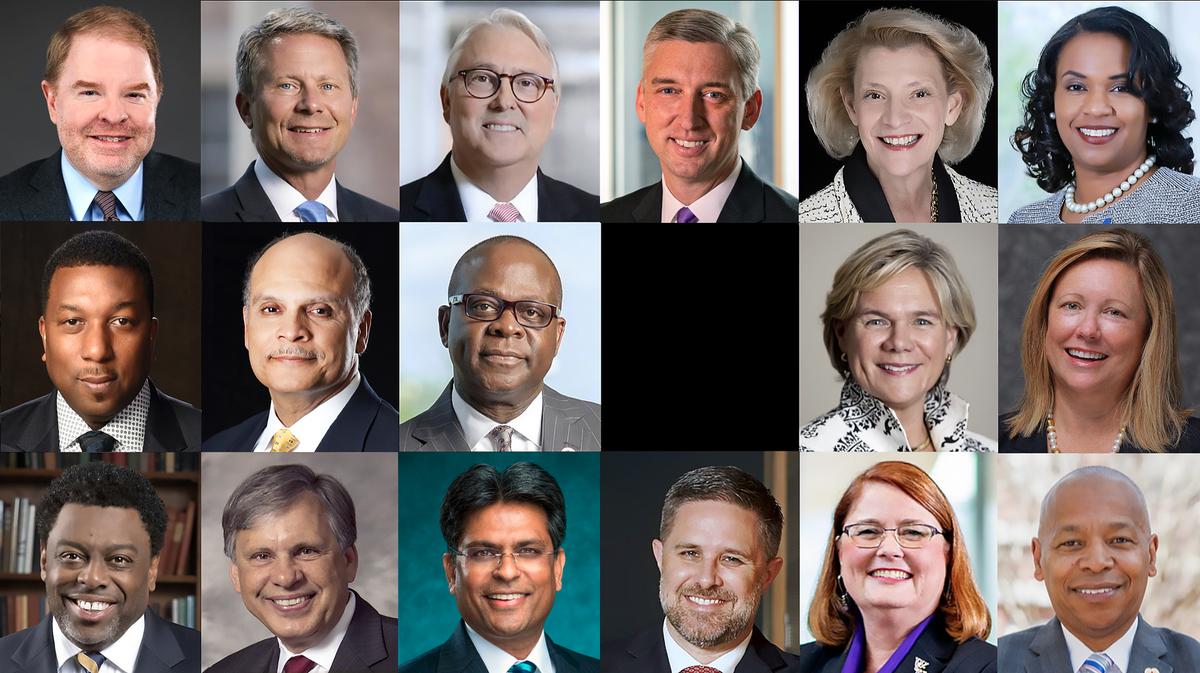
UNC System university leaders and chancellors top row from left: Bill Roper - UNC System president (interim), Kevin Guskiewicz - UNC Chapel Hill (interim), Randy Woodson - N.C. State, Ron Mitchelson - ECU (interim), Sheri Everts - Appalachian State and Karrie Dixon - Elizabeth City State. Middle row from left: Peggy Valentine - Fayetteville State (interim), Harold Martin - NC A&T, Johnson Akinleye - NC Central, Nancy Cable - UNC Asheville and Philip Dubois - UNC Charlotte (stepping down June 2020). Bottom row from left: Franklin Gilliam - UNC Greensboro, Robin Cummings - UNC Pembroke, Jose Sartarelli - UNC Wilmington, Brian Cole - UNC School of the Arts (interim), Kelli Brown - Western Carolina and Elwood Robinson - Winston-Salem State.
Leadership changes across the UNC System
The leaders across the UNC System are mostly white and mostly men, but that’s not what the student bodies look like at campuses across the state. Some people say that’s a problem.
There will be opportunities to fill leadership roles in the UNC System in 2020.
The system is searching for a new president (Bill Roper is currently the interim). It’s a big job to lead 17 institutions that serve nearly 250,000 students, all while managing the politics that are intertwined with the 26-person board.
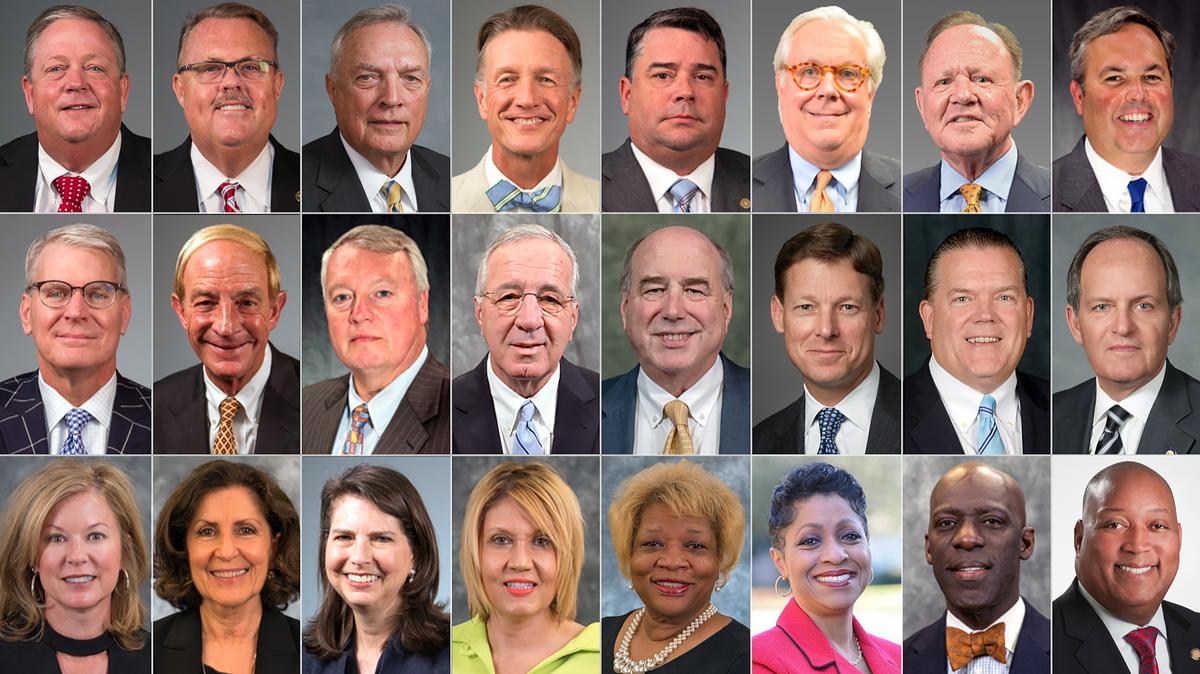
UNC System Board of Governors members top row from left: Randy Ramsey, Wendy Floyd Murphy, Pearl Burris-Floyd, Darrell Allison, W. Louis Bissette, Jr., Kellie Hunt Blue, and C. Philip Byers. Second row from left: Carolyn Coward, N. Leo Daughtry, Thomas H. Fetzer, Thomas C. Goolsby, Reginald Ronald Holley, and James L. Holmes, Jr. Third row from left: Mark Holton, Terry Hutchens, W. Marty Kotis, III, Steven B. Long, J. Alex Mitchell, and Anna Spangler Nelson. Bottom row from left: R. Doyle Parrish, David Powers, Robert Rucho, Adam Schmidt, Temple Sloan, Dwight Stone and Michael Williford.
It’ll also be Kevin Guskiewicz’s first year as the chancellor at UNC-Chapel Hill, which should be interesting given the controversy that’s marked his time as interim.
Some members of the Board of Governors (73% of whom are white men) could also resign in 2020, as we saw this past year. And the state legislature could choose to build a more diverse board as several board members’ terms end in 2021.
The Trump Administration is expected to finalize campus sexual assault rules that offer guidance on how universities should handle cases. It’s clear that the U.S. Department of Education will give accused students more rights in those new rules.
Sexual assault affects many students in North Carolina, particularly women, as we saw in a recent survey of UNC-CH students.
The issue also affects their families, friends and the community. It’s an enrollment issue, a public safety issue, a health issue and a social issue that campuses will be forced to address as the new rules are handed down.
College is what you make of it, no matter what you pay for it. Karen Roach
Cost of college
College is expensive. And it’s safe to say that tuition — and the student debt that often accompanies it — is a big issue for students and parents.
The UNC System and individual campuses have made affordability and accessibility a priority. So expect more news in the next year about their plans to alleviate the cost of college, particularly for North Carolina residents.
The issue will also be on the national stage as the 2020 election approaches and presidential candidates discuss their higher education policy proposals. Free (or less expensive) college and student loan forgiveness will definitely be part of the conversation.
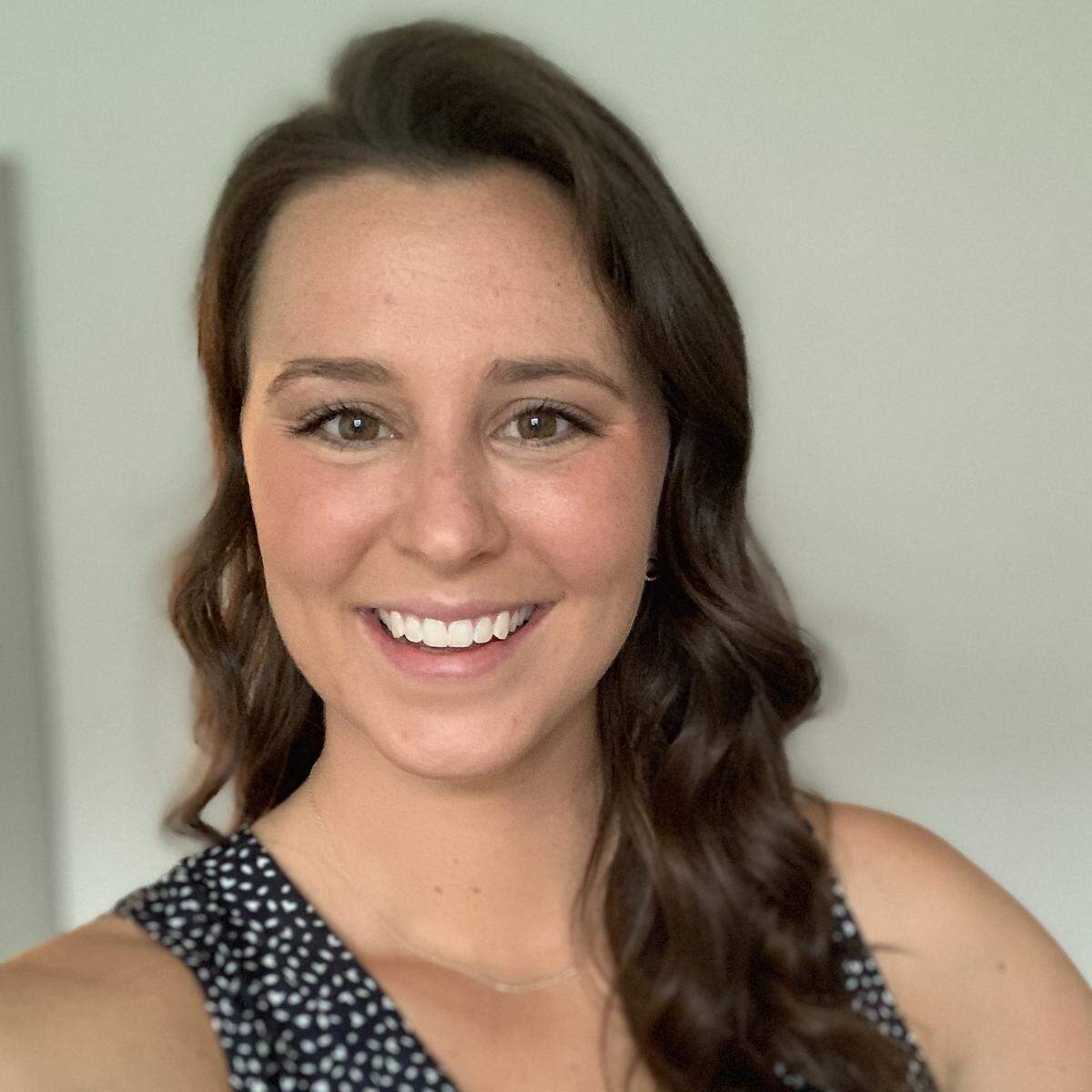
Kate Murphy covers higher education. For smart, reliable and timely coverage of the issues you care about, subscribe to The News & Observer at newsobserver.com/subscribe or subscribeto The Herald-Sun at heraldsun.com/subscribe.
Kate Murphy covers higher education for The News & Observer. Previously, she covered higher education for the Cincinnati Enquirer on the investigative and enterprise team and USA Today Network. Her work has won state awards in Ohio and Kentucky and she was recently named a 2019 Education Writers Association finalist for digital storytelling.Support my work with a digital subscription