
NC prisoner left disfigured, in pain after attack. Why guards may be held liable
AI-generated summary reviewed by our newsroom.
- Appeals panel revived lawsuit, saying it should go to a jury.
- Panel said a jury could find guards indifferent for not closing/locking doors.
- Split decision highlights tension over qualified immunity standards.
A fellow prisoner smashed Brandon Case’s face at Central Prison in Raleigh, leaving him with lifelong pain and disfigurement, according to his lawsuit. Now, he’s seeking to hold the guards responsible and prevent such attacks from happening to others.
Unlike most prisoner lawsuits, Case’s claims could reach a jury — unless the state settles first — after a ruling by a federal court of appeals panel.
A jury should decide whether guards knew, or should have known, that they endangered prisoners when they decided not to close and lock two prison doors, the ruling stated.
The action would have only required “a simple push of a button,” the decision said.
“They quite literally only needed to lift a finger,” states the ruling supported by two of the three judges on the panel for the U.S. Court of Appeals for the Fourth Circuit, which includes North Carolina and surrounding states.
Here’s what Case and his attorneys say happened
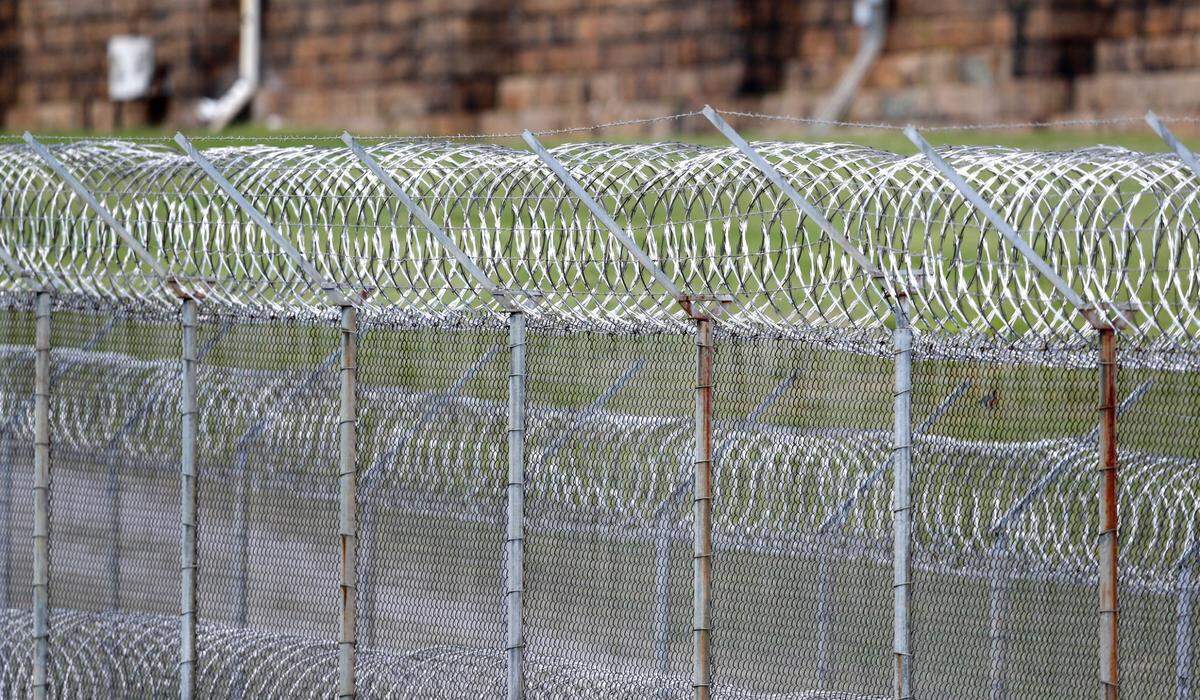
In January 2020, Case was being held behind the tall fences of Central Prison, a sprawling building on Western Boulevard that houses a variety of prisoners, including those confined to death and others who need medical and mental health treatment.
Case, convicted of second-degree murder in Henderson County in 2015, was confined on a unit’s first floor with other general population prisoners. Inmates classified as “safekeepers” stayed on the second floor. Safekeepers are inmates who are awaiting trial, but are moved from a county jail because they pose a risk for escape or violence or for other safety reasons.
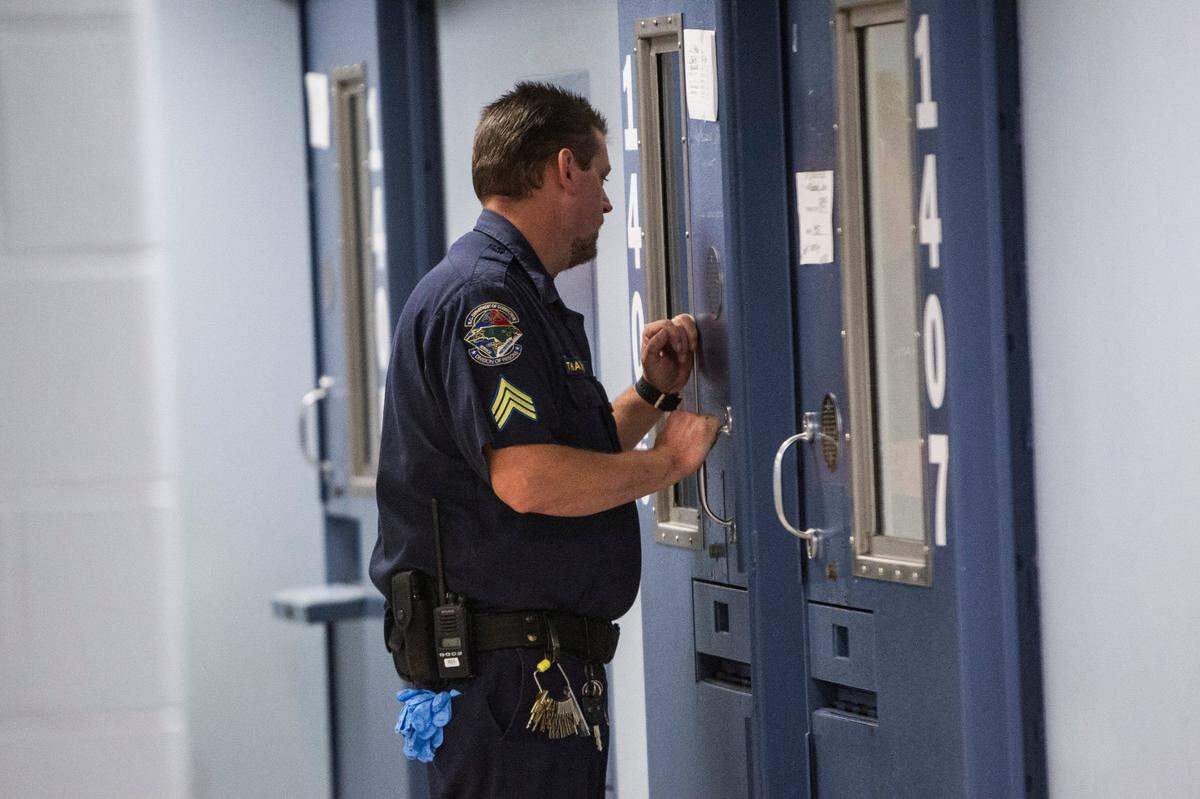
The two groups were separated by two “sallyport doors,” on each floor, which guards were supposed to open only after confirming it was safe, according to Case’s lawsuit.
But that is not what happened on Jan. 21, 2020, when Case was attacked by one of the safekeepers.
On that day, the safekeepers had left the second floor for their recreation time. That allowed Case and others to go upstairs to get their hair cut by a barber.
Doors left open
Officer Kenny Custodio, at his post in a second-floor control booth, decided to leave the door open to avoid repeatedly opening and closing it as the general population inmates passed through, the lawsuit states. Officer Eric Urieta, in the control booth on the first floor, did the same.
A third officer took control of the booth to allow Urieta to use the bathroom during his break.
As Case walked downstairs, his hair freshly cut, a group of safekeepers started walking back to the second floor after their recreation time. Another guard was supposed to notify the guards in the control booths that the safekeepers were returning, but the officers in the booths say they didn’t hear that message, according to court documents.
As Case stepped off the stairs into the first-floor hallway, one of the safekeepers started pounding him in the face, according to a video obtained by The News & Observer.
Officers separated the men, and Case stumbled down the hallway with blood running down his face, the lawsuit says. It doesn’t mention a motive for the attack.

‘Too many times’
Case, now 37, was eventually taken to a Duke University hospital, where doctors sliced one of the nerves in his face as they put in three plates and 21 screws, the lawsuit states. His face is now disfigured and always in pain, it states.
Three days after the attack, a Central Prison supervisor sent out a memorandum to officers in the unit, stressing the importance of separating safekeepers from others at all times and keeping the doors closed, Case’s lawsuit states.
“Staff [had] become complacent” about the “security and controlled movement” of incarcerated individuals living in the unit,” causing the safekeepers to encounter others “too many times,” the memo said.
Correctional officers have a duty to protect inmates, but, in most cases, qualified immunity shields them from prisoner litigation from ever reaching a jury.
To overcome that legal protection, prisoners have to prove that they suffered a serious injury because the guards “were deliberately indifferent” to the inmate’s safety, Donald Beskin, a Duke University law professor, told The News & Observer.
“It is persistent conduct, or conduct over a period of time, or particularly egregious conduct that tends to be sufficient,” to overcome the immunity and be given the chance to present a case to a jury, Beskin said.
The court rulings
In 2024, U.S. District Judge James Dever ruled in favor of the guards, who are represented by the N.C. Attorney General’s Office. Dever found that the guards were “at most negligent,” but didn’t violate Case’s constitutional right to be kept safe in prison.
But two of three judges on the federal appeals court panel disagreed and revived the lawsuit in February.
Federal Fourth Circuit appeals court Judges Nicole Berner and Toby Heytens, both appointed by former President Joe Biden, agreed that a juror could conclude the officers were indifferent to the risk.
Judge Marvin A. Quattlebaum Jr. saw it differently. In his dissent, the Trump appointee pointed to the U.S. Supreme Court’s narrow standard for overcoming qualified immunity — reserved for “the plainly incompetent” or “those who knowingly break the law.”
This story was originally published March 20, 2026 at 8:28 AM with the headline "NC prisoner left disfigured, in pain after attack. Why guards may be held liable."