How a Durham quilt records the lives lost to homicide in the Bull City each year
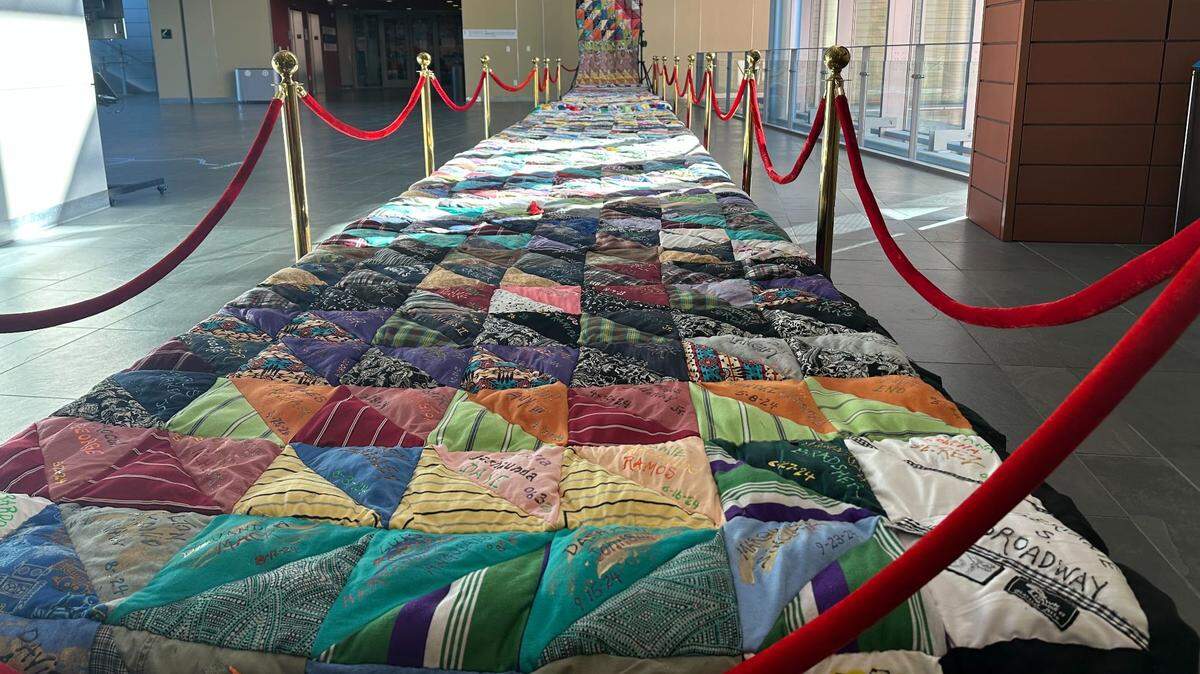
As sunlight poured in through the second-floor windows of the Durham County Human Services Building, a little girl stopped in her tracks and tugged on her mother’s hand.
“Mama, what’s that?” she asked, pointing to the rainbow of fabric hanging suspended and draped before her.
That rainbow, hundreds of fabric patches with names and dates painted on them, represented the lives lost to homicide in Durham, dating back to 1994.
Sidney Brodie, the creator of the Durham Homicide and Victims of Violent Death Memorial Quilt, stitched its first patch in 1996, horrified by the gun violence he encountered as a 911 operator in the city.
He went back and added victims from 1994 and 1995 because he wanted to include Shaquana Atwater, a toddler fatally shot while playing on her neighbor’s porch in 1994. It was Shaquana’s death that prompted him to act, he said.
“During that time, I think we were living in a society, especially right here in Durham, where we weren’t really owning our issues,” Brodie said. “I wanted to create a piece of art that could not be disputed — something that would tell the story.”
Brodie was already an artist, typically preferring woodworking and ceramics. He chose a quilt for its symbolism.
“It’s designed for comfort,” he said. “And it’s interactive. You throw a quilt over you, and you feel the comfort.”
Almost 30 years later, what Brodie thought would be a “manageable” project unfurls to at least 100 feet of weighty fabric, both physically and mentally.
“I think we’ve succeeded with making it a tool of awareness,” he said. “Durham has since become a city that sort of owns its issues regarding violence, and that’s a good thing to see.”
‘Nothing’s changing’
Brodie has partnered with local agencies to take the quilt throughout Durham since 2018, when it first went up at the Durham County Detention Center. This year, it was at the Durham County Human Services Building throughout December — a month Brodie chose because of the holidays, when many are thinking of peace and family.
It’s an arduous process to get the quilt on display because of its size. It hung from poles and snaked across at least seven tables in the Human Services Building. And Brodie continues to add new patches, often within 24 hours of learning a new victim’s identity, which he usually does by checking The National Gun Violence Memorial’s website.
“Just as fast as a murder happened, I wanted to be available for the public to see and the families to see that their loss is being noticed by someone,” he said. “I wanted families to know that somebody is also witnessing their loss, someone else is being affected by their loss, and that ‘somebody’ is the community.”
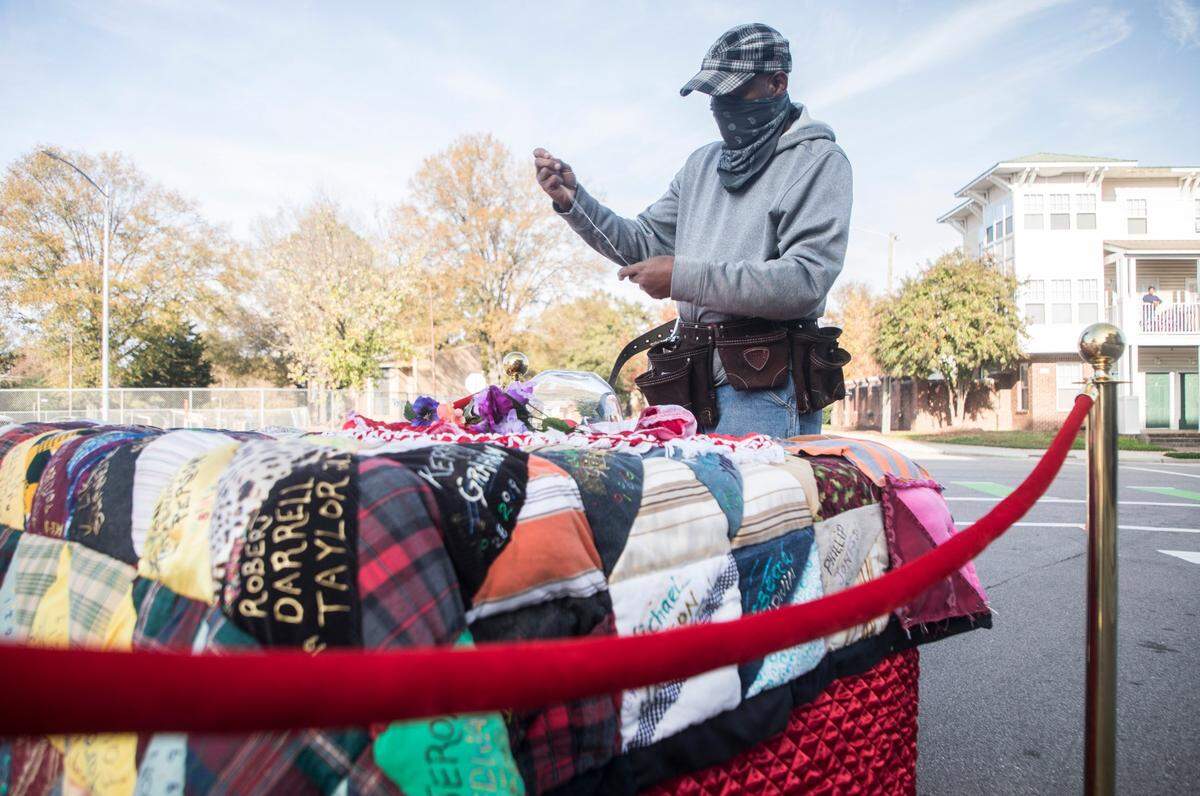
Early on, Brodie would bring the quilt to public vigils and other community events, creating a space for people to grieve. That’s rarer these days, and the quilt mostly lives in Brodie’s storage unit. But that’s not because there isn’t a need for it — in fact, Brodie said he’s increasingly concerned by gun violence everywhere.
“You often wonder, what magic potion are we looking for here in Durham that’s going to affect Chicago, Atlanta, Cleveland, L.A.?” he said. “What is the one common denominator that’s causing all of this? And I don’t have the answer to that … Nothing’s changing.”
Donna Bass Rosser, the coordinator of the Durham County Firearm Injury Prevention Partnership, helped arrange the quilt’s display at the Human Services Building. Its impact on visitors was evident, she told The News & Observer in December.
“They are taking pictures of the squares,” she said. “They really appreciate the fact that the quilt exists, but there’s still a sadness attached to it, because … someone had to die in order to be featured on the quilt.”
For Rosser, the quilt is especially important because of the role it plays in her work to educate the public on firearm safety.
“This quilt speaks to that in that it means a lot to the community, especially people who have lost friends and family members to gun violence,” she said.
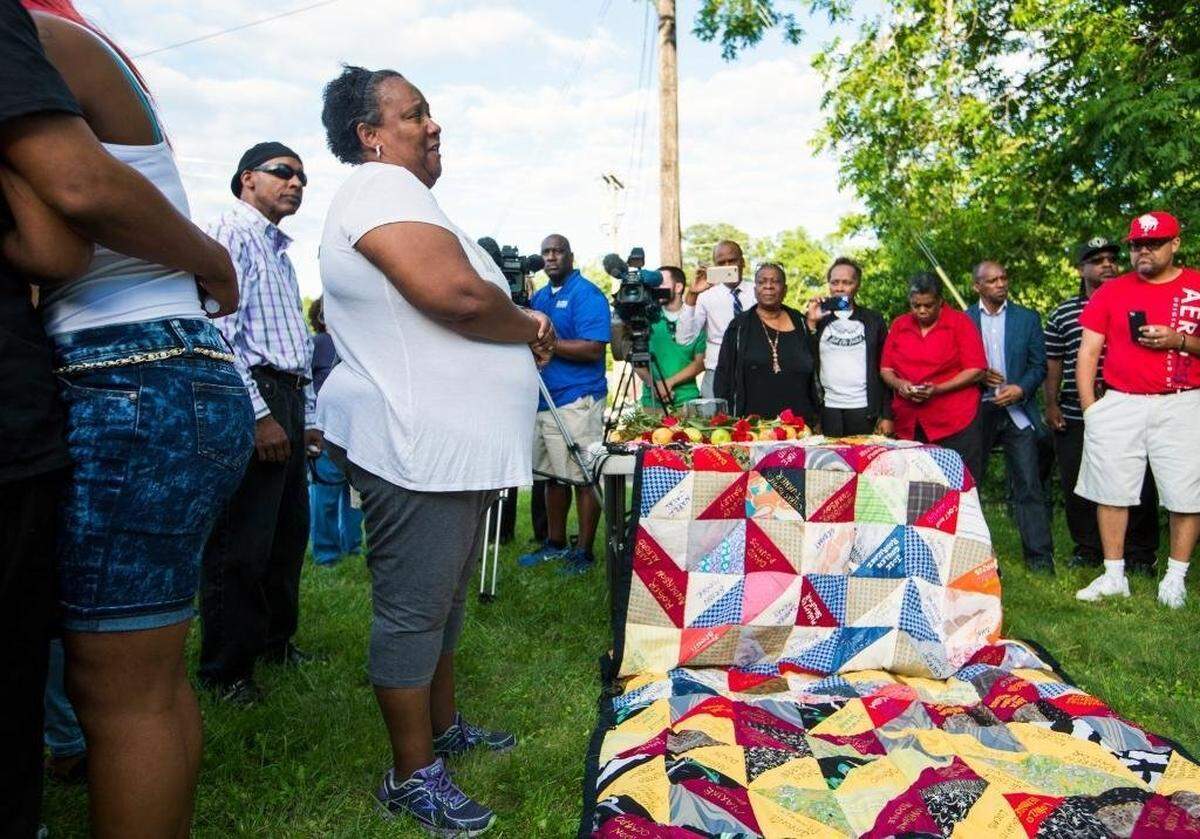
Both Rosser and Brodie hope for a day when there is no longer a need for the quilt.
“But I know that wherever it has residency, people really appreciate it being there,” Rosser said. “It actually speaks to the magnitude of gun violence and its effect on our community.”
A promising future
With three decades’ worth of victims stitched into its fabric, Brodie’s quilt will reach another milestone in 2025: its first permanent display.
“We are ready now to move to the next phase where the quilt will no longer be able to come to the community, but we want the community now to come to the quilt,” he said.
“It’s not officially in retirement, but it’s going to have its own space where people can come and see it,” he said.
That could happen as soon as the spring. Brodie isn’t certain if the quilt will be in the city, but it will be “very close” to Durham if it’s not, he said. He plans to announce the location soon.
“Let’s just say I did a whole lot of praying,” he said, smiling. “Because of where we’re looking at doing this, it’s going to be a greater reach to the Durham community as well as surrounding communities.”
This story was originally published January 6, 2025 at 7:00 AM with the headline "How a Durham quilt records the lives lost to homicide in the Bull City each year."