
Black jurors were excused at trial. Did NC defendants suffer racial discrimination?
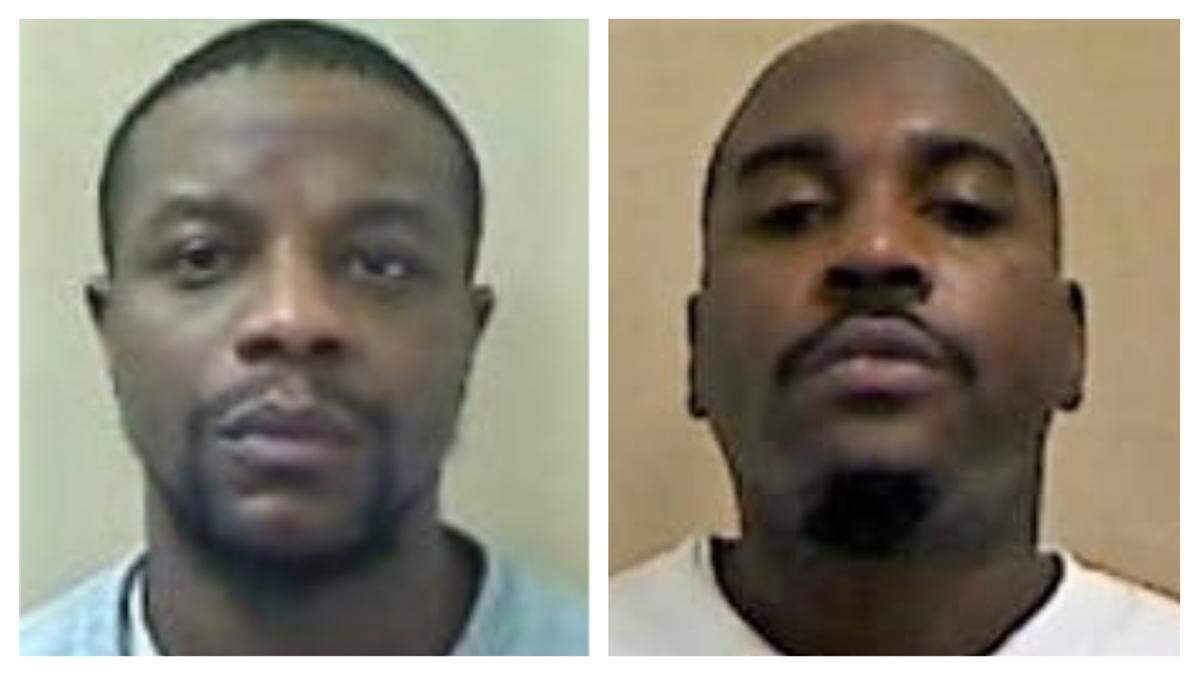
Attorneys argued to the state’s highest court Monday that a pair of criminal defendants — one convicted of murder, the other on drug charges — suffered racial discrimination because black jurors were improperly excused as their jurors.
In 2014, Cedric Hobbs went on trial for the robbery of a Cumberland County pawn shop and the murder of its 19-year-old clerk, Kyle Harris, along with other felonies. In the first-degree murder case against Hobbs, prosecutors chose 90% of qualified white jurors but only 45% of qualified blacks, said attorney Sterling Rozear.
Hobbs, now 38 and serving a life sentence in prison, seeks a new trial.
In 2016, Cory Bennett went on trial in Sampson County for making methamphetamines, along with other drug-related felonies. During his trial, prosecutors struck only two potential jurors, both of them black, said attorney Frank Wells.
Bennett, now 42, is seeking a new hearing at the trial court level to determine if those strikes were proper. In both cases, prosecutors used most or all of their “jury strikes” to eliminate black jurors, according to the nonprofit Center for Death Penalty Litigation.
“I was born and raised in North Carolina,” Wells told justices of the N.C. Supreme Court. “When I talk about the troubling, very uncomfortable history we have in this state with race, I’m talking about my history, too. Until we confront our history of discrimination, we’re going to continue to have problems in this state.”
Black jurors selected
Attorneys with the N.C. Department of Justice argued that, in Hobbs’ case, black jurors were struck for race-neutral reasons and that prosecutors did not eliminate as many jurors as they were legally allowed. In Bennett’s case, they said, records of all potential jurors’ race are not even available.
Blacks were selected for these juries, but Rozear said the legal standard for discrimination applies even if only one person can be shown to be stricken from the jury for racial reasons.
Recent studies show North Carolina’s courts have failed to enforce the law established in Batson v. Kentucky, a 1986 U.S. Supreme Court decision that outlawed pulling potential jurors for racial reasons, the center wrote in a press statement. In the decades since the Batson decision, more than 100 defendants statewide have raised discrimination challenges.
None of them has been upheld, the center said.
In August, attorneys argued that racial bias tainted the trials of six Death Row inmates, evidence of longstanding bias in North Carolina’s legal system.
Three of the defendants from Cumberland County — Quintel Augustine, Marcus Robinson and Christina Walters — had their sentences reduced to life in prison under the 2009 Racial Justice Act, but they returned to Death Row when the legislature repealed the law in 2013.
In 2009, when the Racial Justice Act was passed, the minority population in North Carolina had reached 34%, according to the Center for Death Penalty Litigation last year. But of the 142 prisoners on Death Row, nearly half were convicted by juries with little or no minority representation.
In Augustine’s case, court files said, the prosecutor’s notes described one potential black juror as a “blk wino” and a white one as a “country boy - OK.”
This story was originally published February 3, 2020 at 1:39 PM with the headline "Black jurors were excused at trial. Did NC defendants suffer racial discrimination?."