NC doesn’t have a ‘dooring’ law. Chapel Hill could add one after cyclist’s death.
Update: The story was updated at 9:55 p.m. on Feb. 9, 2022, to note that a driver passing a cyclist in no-passing zone should keep at least 4 feet of distance between their car and the bike.
A Chapel Hill transportation advocate has asked the town to make it illegal for drivers to open their car doors without making sure it is safe to do so.
Tab Combs, former chair of Chapel Hill’s Bicycle and Pedestrian Advisory Board, submitted a petition Jan. 31 asking the town to adopt a local anti-dooring ordinance.
The Chapel Hill Town Council will hear the petition and get a bike and pedestrian safety update Wednesday night, just five days after a cyclist died from injuries he suffered in a Jan. 25 crash on West Franklin Street. Council members typically schedule petitions for future discussion.
The News & Observer’s efforts to reach Combs were unsuccessful.
The crash that killed 43-year-old Nicholas Watson occurred when a driver parked and opened his car door without checking to see if the street was clear, police said. Watson died Friday at UNC Hospitals after suffering critical injuries; the driver was not charged.
North Carolina is one of eight states in the nation that does not have an anti-dooring law. Cities can make their own rules, including in Raleigh, where a driver can be charged with a misdemeanor, bringing a fine of up to $50 or up to 30 days in jail.
An online search did not find other North Carolina cities or towns with similar regulations.
Being doored rare but dangerous
The data is limited, but cities that have studied the issue say between 7% and 20% of crashes involved a cyclist who was doored, said Ken McLeod, policy director with The League of American Bicyclists. In North Carolina, the N.C. Department of Transportation reported 14 cyclists crashed into an “extended door” statewide from 2015 to 2019.
The data is insufficient, because of inconsistent reporting and because minor crashes involving a cyclist may not be reported at all, McLeod and others said. National data only goes back a few years, he said.
A state law won’t stop cyclists from being “doored,” but it will give them legal standing in court.
North Carolina is one of five states that assign contributory negligence in traffic crashes, meaning a cyclist found to have even a 1% role in a crash can’t seek damages. Juries aren’t likely to be on their side either, McLeod said.
“Our experience of contributory negligence, as kind of a liability practice, is it tends to not work out well for people biking, because most people don’t bike regularly and believe cyclists are negligent even if best practices and the law might say that they behaved perfectly appropriately,” he said.
Dooring can be especially dangerous, advocates said, because cyclists rarely have enough warning to avoid a crash that can cause serious back or head injuries. Cyclists who do react can end up swerving left into the path of oncoming cars, they said.
The problem is compounded on streets thick with traffic and people, utility poles, signs and landscaping that obscure sight lines, which is why some cities are installing raised bike lanes or separating lanes from traffic with planters, poles, or painted lines.
Others are adding bike lanes between on-street parking and the curb, similar to an update possible this summer on West Franklin Street. That, too, can pose challenges, from navigating driveways and curb cuts to avoiding passenger-side car doors, experts said.
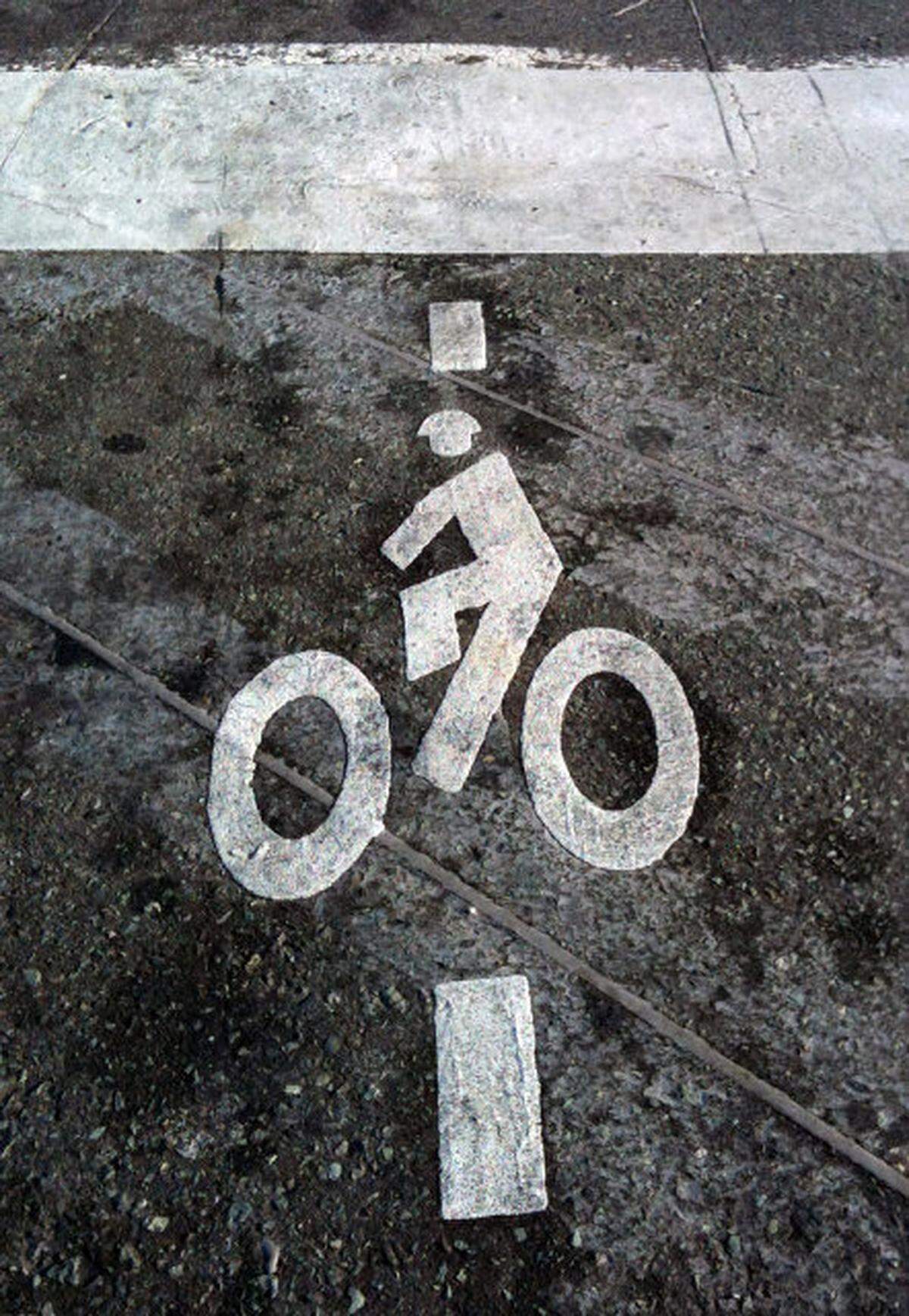
In North Carolina, cyclists are encouraged to avoid the dooring danger by riding defensively and in the center of the travel lane, rather than on the right shoulder. State law gives cyclists the right to use the full lane when needed, with signs and “sharrows” painted on the street often used to alert drivers to share the road.
BikeWalkNC board member Heidi Perry always encourages cyclists to take the full lane, because there can be trash, potholes and other dangers on the right side of the road.
“The bike rider has the right to take the lane — it even says it in the driver’s manual,” said Perry, a founding member of the Carrboro Bicycle Coalition. “But a lot of times bicycle riders feel intimidated when they take the lane, and the driver behind them is beeping his horn or breathing down the back of the bike rider, and they don’t want to be out there.”
“They feel very vulnerable out there, because they are very vulnerable out there, so they ride over to the right.”
State, local data show few changes
At least 1,000 cyclists are injured or killed each year in crashes with cars and other vehicles in North Carolina roads, the NCDOT reported. Of those, just over 20 people on average are killed each year, and 60 are seriously injured, reports showed.
Most of those crashes occurred because the cyclist or a driver ran a stop sign, turned left or right across the other vehicle’s travel lane, or failed to slow down for a car or cyclist ahead of them, data showed.
A large number of crashes also were reported as drivers entered or exited an alley or driveway.
In Orange County, the state reported 107 crashes involving cyclists from 2015 to 2019, over 80% of which occurred on an urban street, data showed. Of those crashes, 56 were reported in Chapel Hill, followed by 27 crashes in Carrboro and five in Hillsborough.
Roughly 80% of those crashes occurred at 20 mph or slower, and none involved excessive speed, the data showed.
Additional data that The News & Observer obtained from the Chapel Hill Police Department shows another 35 pedestrians and 31 cyclists were injured since January 2020. Sixteen of the 24 pedestrians hit last year in Chapel Hill were in a marked crosswalk, police spokesman Alex Carrasquillo said.
At least one fatal pedestrian crash has been reported each year since 2018, when there were two. This year’s Franklin Street bike crash was Chapel Hill’s first fatality involving a cyclist in the last seven years, data showed.
What can towns do?
▪ Narrow existing streets and install speed bumps, curb extensions and other road improvements to force drivers to slow down
▪ Use diagonal, back-in parking spaces instead of parallel parking to slow down drivers and improve safety, though this is not recommended for high-speed or busy streets.
▪ Add street lights at intersections and crosswalks.
▪ Install refuge islands and flashing pedestrian-activated signals or traffic lights at midblock crosswalks.
▪ Restrict right-on-red movements at traffic lights and prohibit left turns when the pedestrian walk signal is activated.
Perry also suggested using automated speed enforcement technology and banning cell phone use while driving, but she acknowledged those may be seen less favorably by state officials.
Her “bigger picture thoughts,” she said, include requiring all new cars sold in the United States to have Intelligent Speed Assistance, which limits a car’s speed in urban areas.
What can cyclists, drivers do?
Bikes are vehicles under North Carolina law, which means cyclists must stop at traffic lights and signs, ride in the same direction as traffic, yield to oncoming cars, pedestrians and bikes, and follow other rules of the road, even when on the sidewalk.
BikeWalkNC offers an online quiz to test your knowledge of bike safety. Here are some other tips for cyclists and drivers:
▪ Practice the “Dutch reach” when parking and exiting your car. The technique, developed in the Netherlands and adopted in Illinois and Massachusetts, uses the hand farthest from the door to open it, forcing the driver to look over their shoulder before exiting.
▪ Drivers should slow down when approaching a cyclist and pass on urban streets only when there is at least 2 to 3 feet of distance between the car and the bike. On rural roads and in no-passing zones, the distance should be at least 4 feet. Neither leaves room for passing safely when there is oncoming traffic on a two-lane road, in which case, a driver should slow down or stop until it is safe.
▪ Groups of cyclists should ride side-by-side to increase their visibility and give drivers more time to safely maneuver around them. The other option, particularly on rural roads, is to ride in multiple, smaller groups, leaving gaps between them for passing cars.
▪ Cyclists should wear helmets, although they are only required for children under age 16.
▪ Drivers should use turn signals and check carefully on all sides for approaching cars, cyclists and pedestrians before pulling out of a parking space, street or driveway. Use the horn to alert pedestrians who may be affected by the car’s movement.
▪ It is illegal for drivers to speed up and cut off a cyclist when making a right turn. However, cyclists riding beside trucks and buses should leave adequate room for the driver to see them and to swing the vehicle left when making a right turn.
▪ Cyclists riding at night should wear brightly colored clothing, and install a light on the front of their bike and a red light on the back.
▪ Cyclists and drivers can only pass on the right when there is more than one lane in the same direction. This includes at traffic lights, where cyclists should queue in line with drivers rather than pushing to the front. Some cities are adding queue boxes where cyclists can wait to turn safely at major intersections.
This story was originally published February 9, 2022 at 5:30 AM with the headline "NC doesn’t have a ‘dooring’ law. Chapel Hill could add one after cyclist’s death.."