
‘Black lives didn’t matter’: Chapel Hill community seeks justice in 50-year-old murder
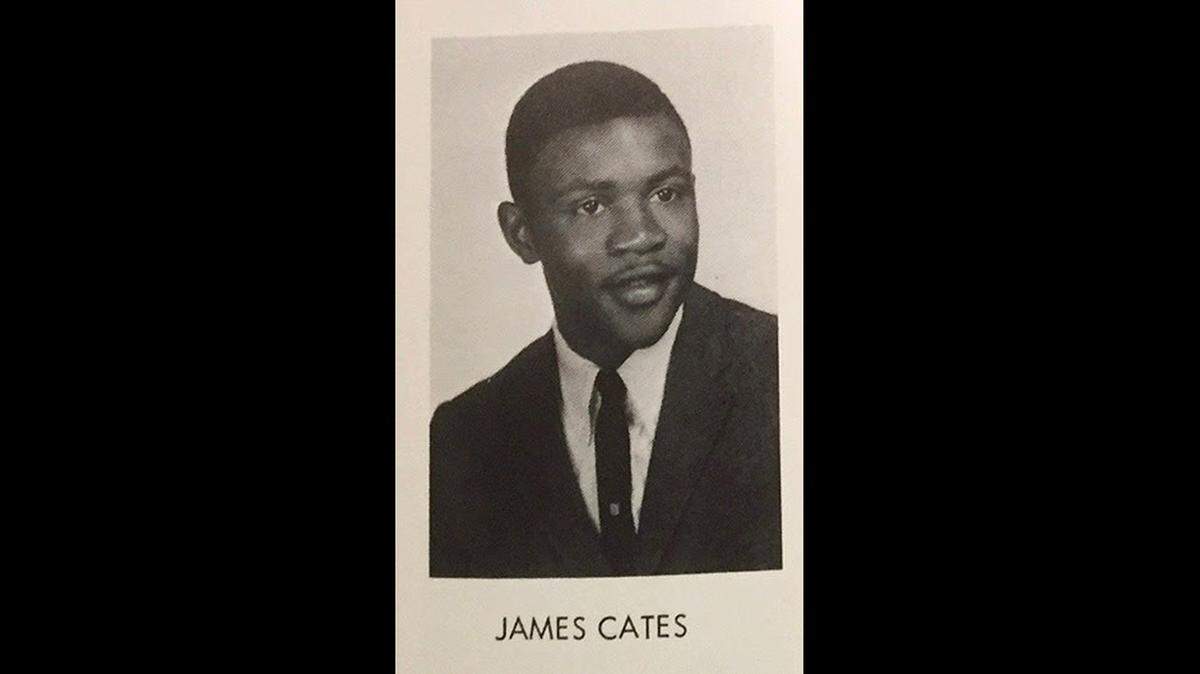
James Lewis Cates Jr. was just 22 when he was killed exactly 50 years ago, stabbed to death outside an all-night dance marathon on the UNC campus.
This weekend, people will remember the Chapel Hill native with a march and a renewed call for justice they say the young Black man has yet to receive.
Three members of a motorcycle gang called the Storm Troopers were arrested and charged with first-degree murder, The New York Times reported in 1971. They were eventually acquitted by an all-white Orange County jury, according to The Daily Tar Heel.
“There were widespread reports that Mr. Cates might have lived had the ambulance service been faster or had campus police men allowed friends to remove him to the hospital,” The New York Times wrote.
Marched against Jim Crow segregation
Cates was born in October 1948 and raised by his grandmother, Ms. Annie Cates, who lived on Graham Street, according to a town news release. Friends and family called him “Baby Boy.”
Cates attended Lincoln High School, an all-Black high school that later integrated with Chapel Hill High School in 1966. Cates wrote for the student newspaper there, and was part of the student government, according to the news release. He also marched in Chapel Hill against Jim Crow segregation.
Friday, Chapel Hill Mayor Pam Hemminger called for “a full accounting of the events that led to the attack on James Cates, his subsequent death, and all that occurred after he died.”
“We seek to learn why this tragedy happened in Chapel Hill, what role the Town of Chapel Hill played in these events, and how we can ensure that it never happens again,” Hemminger said in a statement.
On Dec. 9, the Town Council will recognize Cates and formalize its support of his work.
‘Black lives didn’t matter’
Carolyn Daniels graduated from high school the same year Cates did, in 1967. There were only a few Black people in the area, Daniels said, so she and Cates naturally developed a bond. When Cates was killed, she was away from Chapel Hill, attending college. But the news had quickly spread.
It is still hard for Daniels to think about Cates’ death, and she still has many questions about what happened.
“The lag in terms of the medical attention for him and the trial, there were no convictions,” Daniels said in an interview with The News & Observer. “It was inflammatory. It set off Chapel Hill, and all of us. It was an era that Black lives didn’t matter.”
She said it has been a long time, but she still remembers Cates’ kindness and his grin. “I wish we had more time together, but he was loved by many,” she said.
Daniels is pleased with the progress she has seen and the impact of the Black Lives Matter movement in recent years. People are reflecting on history and trying to bring about a resolution, she said. “This is an exciting time now.”
Daniels hopes a march Saturday afternoon helps the community reflect on what happened a half century ago. “It will be a time to hopefully try to have the town of Chapel Hill and UNC to look back at what happened to him and acknowledge what happened to him,” she said.
The march will start at 4 p.m. at the Hargraves Community Center near downtown Chapel Hill, and then go on to Saint Joseph’s Church, where Cates was a member. The group will stop for a prayer, then finish at Peace and Justice Plaza at East Franklin and Henderson streets, where community members can leave flowers and personal messages for the Cates family. People are asked to wear masks and maintain social distancing.
Then through Monday, community members can leave messages of remembrance and comfort to the family through the Chapel Hill Community History website.
The Chapel Hill Nine
Dr. John Allcott, who graduated from Chapel Hill High School in 1963, said he would show his support for the march for Cates from Eugene, Oregon. Allcott said he was studying medicine at UNC in 1970, the year Cates was killed.
Alcott and Daniels know each other from the time they spent working with Dave Mason Jr., one of the Chapel Hill Nine students from Lincoln High School, who sat in a booth at the Colonial Drug Store and asked for the same service as white customers in 1960. They worked together to set up the Lincoln High School-Chapel Hill High School Joint Alumni Service Award.
“We lived through integration, our country being at war, but we did not have the acknowledgment of our common humanity,” Allcott said, recalling his time in high school. He said if integration happened earlier, things may have turned out differently.
“There would have been less likelihood that James Cates would have been murdered had we all been living together, been going to school together in grade school and high school,” he said.
To learn more about Cates’ death, listen to Chapel Hill Public Library’s podcast, Re/Collecting Chapel Hill and engage with the research compiled by local journalist Mike Ogle.
This story was originally published November 21, 2020 at 10:16 AM with the headline "‘Black lives didn’t matter’: Chapel Hill community seeks justice in 50-year-old murder."