UNC kicks students out of dorms, off-campus residents warned, after COVID-19 violations
Updated: UNC-Chapel Hill will move to remote classes Wednesday, the university announced Monday. For more on this developing story, go here.
UNC has kicked three students out of campus housing just days after classes started in Chapel Hill amid COVID-19 concerns, according to a report published Wednesday.
The students were removed “for failing to follow standards,” UNC Chancellor Kevin Guskiewicz told The Washington Post in an interview Tuesday.
The university initially declined to comment Wednesday when The News & Observer asked about enforcement steps that have been taken. In a follow-up email, the university confirmed “the chancellor did say that” about the three students, but declined to provide additional information, citing privacy laws.
UNC Provost Bob Blouin has said students who violate the Community Standards on face masks and physical distancing can be removed from campus housing or disenrolled from classes or the university.
Off campus, the Chapel Hill Police Department already has put two student-affiliated houses on notice about violations.
Chapel Hill officers and other members of a town-gown task force visited a house just a few blocks from UNC’s campus on Thursday after a video showing about 50 young women gathering without masks spread across social media.
The home’s tenants were warned about the penalty for continued violations, Police Chief Chris Blue said last week. Gov. Roy Cooper’s order allows 10 people at indoor gatherings and 25 at outdoor events.
Police respond to weekend parties
Chapel Hill police also reported visiting seven houses in response to large parties or loud music between Friday and Monday. Two reports specifically cited a mass gathering or state-order violations. One was at the Zeta Psi fraternity on West Cameron Avenue. The other was at a duplex near Chapel Hill’s Town Hall.
At least one off-campus student residence was warned about a violation of the governor’s order limiting gatherings, town spokesman Ran Northam said. He did not respond to an email asking which house received the warning.
Police will cite anyone who has a second violation, Northam said. A citation would be a Class 2 criminal misdemeanor, which can result in community service, a fine of up to $1,000 and, in the case of multiple violations, jail time.
“We’re thankful that (at) each event to which officers responded attendees complied with the direction officers gave,” Northam said. “We’re hopeful everyone is taking this seriously and that compliance with state and local orders continues to increase.”
The student violations come as the UNC System faces a lawsuit from employees and their union representatives over working conditions they say are unsafe and the system’s failure to provide workers with adequate protective equipment against coronavirus.
In the lawsuit, the US150, N.C. Public Service Workers Union said housekeepers and other campus workers only get one or two masks a week and no other protective equipment. Multiple workers have tested positive for COVID-19, the union said.
“Essential workers across UNC System campuses continue to report to work with inadequate protective equipment to ensure their safety,” the union said in a statement Monday.
UNC’s coronavirus dashboard, which is updated each Monday, most recently reported 149 student cases on campus since February and 40 employee cases. In the past three weeks, 36 students and seven staff members have tested positive for COVID-19.
In addition, the Orange County Health Department reported 1,356 positive cases of coronavirus Wednesday morning and 48 deaths in the county. Roughly 22% of those cases were among people ages 18-24, while another 37% involved people ages 25-49, data showed.
Testing, community concerns
Health officials warn the data gathered in the last two weeks may not be accurate because of testing supply shortages and a longer delay in labs releasing test results.
The university clarified Thursday that information about students who test positive at Campus Health for COVID-19 will be provided to the Orange County Health Department.
The U.S. Centers for Disease Control guidelines advise that positive cases should be reported in the county where the person’s “usual residence” is located, or where they live and sleep most of the time. That can be different for students, depending on their individual circumstances.
Most UNC students who test positive for COVID-19 would be counted in Orange County, health department spokeswoman Kristin Prelipp said. Students who report their residence as being in another county or state would be counted as cases there, she said, but Orange County also should be notified within a week.
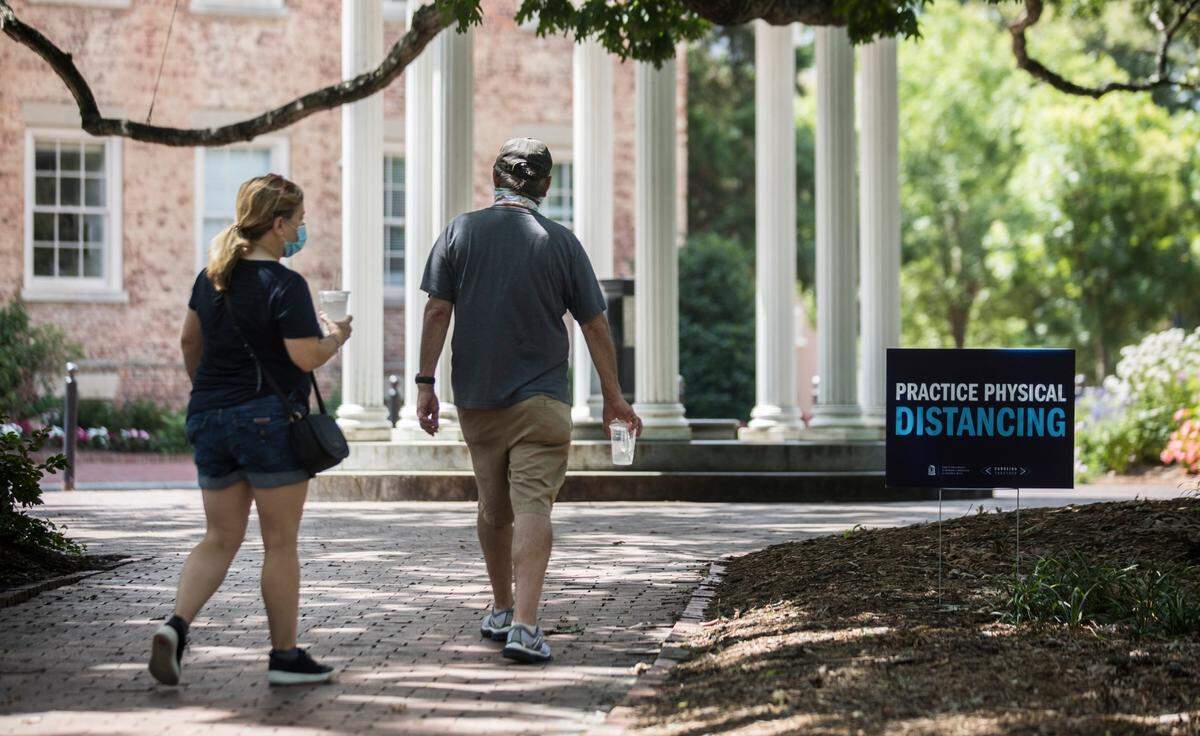
Students and faculty have joined a chorus of voices in the community, especially in Chapel Hill and Carrboro, calling for UNC to reconsider in-person classes out of concern that the campus will create a hotspot in Orange County.
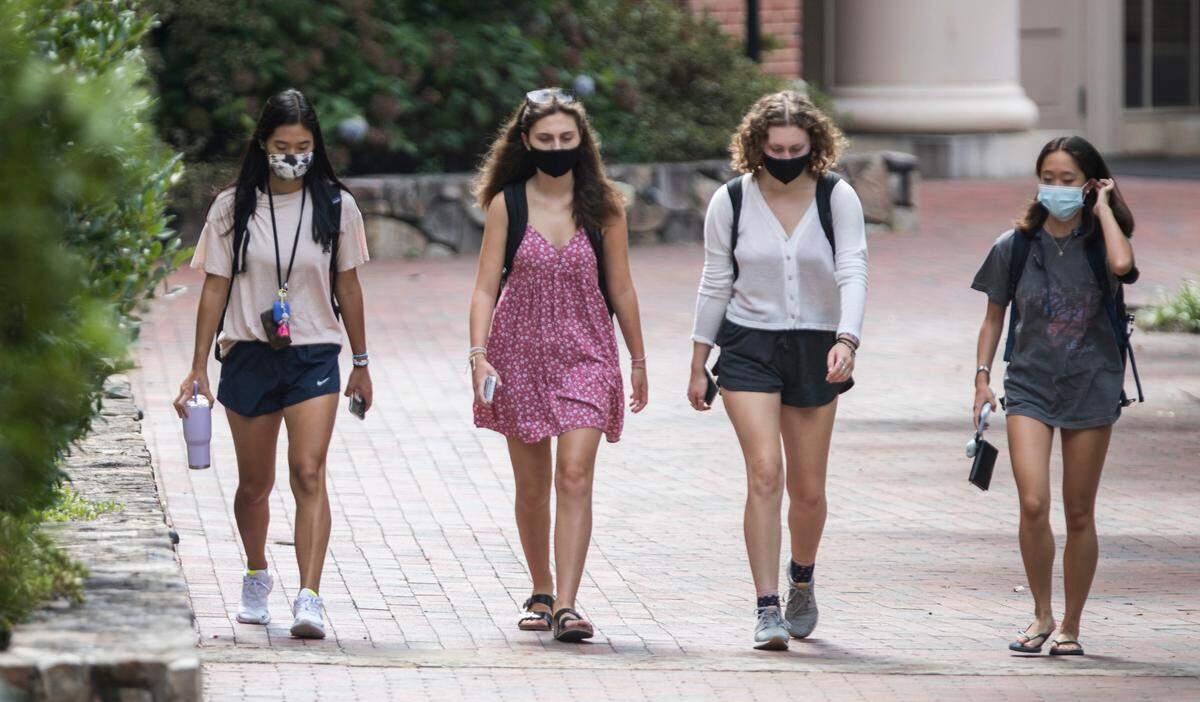
Orange County Health Director Quintana Stewart asked the university in a July 29 letter to only offer virtual classes for the fall semester or to at least delay in-person classes and offer online classes for the first five weeks of school. She also asked UNC to limit campus housing to only at-risk students and those who need it.
The letter was released to the public on social media.
Blouin told the UNC Faculty Council in an emergency Aug. 5 meeting about the letter that it was not made public sooner because he and Guskiewicz considered it a private, internal document.
UNC officials, including Blouin, have met with local leaders and health officials for several months, including at government meetings this summer. Blouin said he was surprised by the July 29 letter.
“I was not surprised by the fact they had concerns, because we talked openly in our meetings about the concerns, and they’ve identified areas and we’ve responded to many of them — not all of them,” he said. “I was surprised by the letter and surprised that we didn’t have a head’s up that the letter might be coming or that there was an issue that was of major concern, that perhaps we would have talked through that before they actually shared that with us in writing.”
Guskiewicz said he was not going to criticize local health officials when a faculty member asked why the health director would send a letter if there had been collaboration on the university’s reopening,
“They sent that letter for a reason obviously, and I don’t know what that reason is, other than the fact that I do feel as if we clarified a lot in those conversations that we had at the end of the week,” Guskeiwicz said. “I can’t answer the question as to why they wrote it.”
The university is holding roughly 30% of its classes in-person now, Blouin has said, and fewer students are living on campus.
UNC’s COVID dashboard reported Tuesday that 4,796 students were living on campus, or about 60.9% of occupancy. Another 1,002 students were reported living in Granville Towers, a privately run apartment complex affiliated with the university.
But most of the university’s roughly 19,000 undergraduate students and nearly 10,000 graduate and professional students live off campus. Many of those living on campus also go out into the community for jobs or entertainment.
It’s student behavior off campus that has local leaders and residents worried, Chapel Hill Mayor Pam Hemminger and others have said. The concerns about young people congregating at downtown Chapel Hill restaurants that sell alcohol led Orange County, in July, to prohibit dine-in service and alcohol sales after 10 p.m.
Staff writer Kate Murphy contributed to this report.
This story was originally published August 12, 2020 at 4:33 PM with the headline "UNC kicks students out of dorms, off-campus residents warned, after COVID-19 violations."
CORRECTION: The story was updated at 4:37 p.m. Aug. 13, 2020, to clarify where positive cases for UNC students would be reported.